
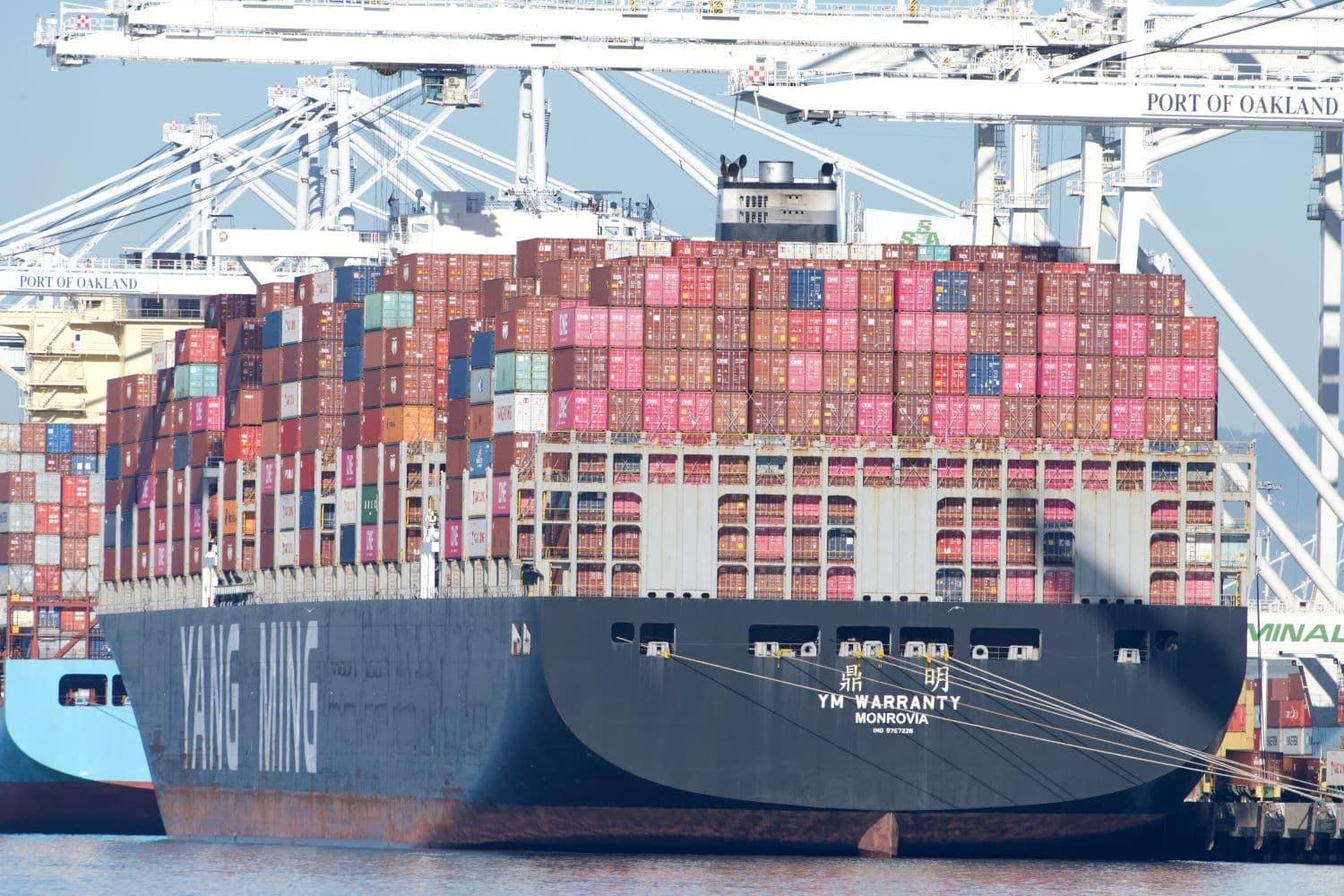
Asia-US Spot Freight Rates Keep Climbing — And Now Retail Restocking Is Fueling the Fire
The transpacific freight market was already running hot before retailers entered the picture. Now, with US retail inventories falling to their lowest levels in more than three years, a new layer of demand is piling onto a container shipping lane that was already stretched by aggressive frontloading activity. The result is a sustained — and potentially deepening — surge in Asia-US spot rates that is forcing shippers, retailers, and logistics managers to reassess their strategies for the months ahead.
Understanding the Current Freight Rate Environment
Spot rates on the Asia-US trade lane have been on a pronounced upward trajectory, driven primarily by the rush among importers to pull forward shipments ahead of anticipated tariff changes and broader trade policy uncertainty. This frontloading behavior — essentially buying time against potential cost increases by importing goods earlier than planned — flooded transpacific capacity with demand in a compressed window, pushing prices sharply higher.
What makes the current situation more complex, and arguably more durable, is that restocking activity is now entering the equation alongside frontloading. These are two distinct demand drivers, and the fact that they are overlapping is significant for anyone trying to gauge where rates go from here.
The US Retail Inventory Signal: What the Data Is Telling Us
The most telling indicator of where freight demand is heading comes from the US retail inventories-to-sales ratio. In April, that ratio fell to its lowest point in more than three years. This single data point carries substantial weight for the ocean freight market because it reveals the underlying state of supply across the retail supply chain.
A declining inventories-to-sales ratio means retailers are selling through their stock faster than they are replenishing it. When that ratio drops this sharply, it is typically a precursor to a wave of restocking orders — and restocking orders mean container bookings, port calls, and upward pressure on spot rates. The current reading suggests that even if the frontloading push were to cool tomorrow, there is an organic replacement demand waiting in the wings from retailers who simply need to restock shelves.
This dynamic fundamentally changes the narrative around the rate surge. What started as a policy-driven, arguably temporary spike now has a structural component grounded in real consumer demand and genuine inventory depletion.
Frontloading vs. Restocking: Two Forces, One Market
It is worth distinguishing between these two demand drivers because they behave differently and have different implications for rate sustainability.
- Frontloading is speculative and time-bound. Importers accelerate purchases to avoid anticipated cost increases, creating a burst of demand that eventually exhausts itself once inventory positions are filled or the policy trigger resolves. The question the market has been asking for weeks is how much steam this push has left.
- Restocking, by contrast, is reactive and necessity-driven. When inventory levels fall below operational thresholds, retailers have no choice but to order. This type of demand is less sensitive to rate levels because the cost of stockouts — lost sales, customer attrition, supply chain disruption — typically exceeds the incremental freight cost.
The convergence of both forces in the same market window is what makes the current rate environment particularly difficult to predict and particularly expensive to navigate without a well-structured logistics strategy.
Capacity Constraints Are Not Helping
Demand-side pressure does not exist in a vacuum. On the supply side, transpacific capacity has not been able to expand quickly enough to absorb the surge. Vessel space on the Asia-US lanes has been tight, with blank sailings adjusted but not yet fully restored, and port congestion at key West Coast gateways adding delays that effectively reduce available capacity further. When ships take longer to turn around, the total carrying capacity of the fleet decreases on a per-week basis, amplifying any rate pressure that demand is already creating.
Carriers have been deliberate in managing capacity, and while some have reintroduced additional sailings, the pace of supply-side response has lagged the pace of demand acceleration. That gap is where spot rates find room to climb.
What This Means for Shippers and Supply Chain Managers
For shippers managing transpacific supply chains, the current environment demands a more proactive and nuanced approach than simply reacting to rate movements. A few strategic considerations stand out.
- Locking in contract rates where possible provides a buffer against continued spot rate escalation. While spot rates are elevated, longer-term agreements negotiated now may offer relative stability if rates remain high or push higher through the second half of the year.
- Monitoring inventory positions closely allows supply chain teams to distinguish between genuine restocking needs and speculative orders, helping prevent over-ordering that could compound market tightness.
- Diversifying port entry points can reduce exposure to congestion at primary gateways, particularly for shippers with flexibility on routing through East Coast or Gulf ports.
- Building lead time assumptions that account for current transit delays will help prevent the kind of last-minute panic buying that further inflates spot rates.
How Long Can the Surge Last?
The honest answer is that nobody knows with precision — and that uncertainty is itself a market mover. The frontloading push will eventually plateau as inventory positions fill, but the April inventory-to-sales data suggests that the cushion retailers built up earlier may already be thinner than it appears. If consumer demand holds and restocking orders accelerate in Q3, the spot rate environment could remain elevated well into the second half of 2025.
Conversely, any meaningful easing of trade policy tension, a sharp pullback in consumer spending, or a sudden injection of capacity could change the picture quickly. The transpacific market has shown it can move in both directions with speed.
The Bottom Line
The Asia-US spot rate surge is no longer a single-cause story. What began as a frontloading-driven spike is evolving into a more complex demand environment as retail inventory depletion reaches a three-year low and restocking urgency builds across the supply chain. For shippers, carriers, and logistics planners alike, understanding the interplay between these forces — and building strategies that account for a prolonged period of elevated rates — is no longer optional. It is a competitive necessity in a market that has made clear it will not wait for anyone to catch up.