
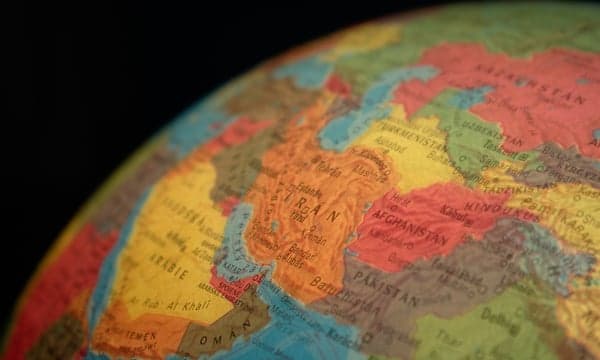
An Australian View of the New Trump Iran Deal: What It Means for the Indo-Pacific
When diplomats in Washington and Tehran exchange frameworks for a renewed nuclear agreement, the eyes of most analysts turn to the Middle East, Europe, and perhaps Israel. Australia, sitting comfortably on the other side of the world, rarely features prominently in those conversations. Yet Canberra has more at stake in the outcome of a new Trump-era Iran deal than many observers appreciate. Australia's geographic remoteness may shield it from direct military confrontation, but its profound dependence on maritime trade routes creates a distinct and often underappreciated set of vulnerabilities that demand serious strategic attention.
Geography as Both Shield and False Comfort
Australia's isolation has long been a strategic asset. No hostile power has successfully invaded the Australian mainland, and the vast oceanic distances separating the continent from flashpoints in the Middle East and East Asia have historically allowed Canberra to choose the timing and depth of its foreign engagements. This geographic buffer is real, and it would be foolish to dismiss it entirely when assessing the risks of renewed tensions with Iran.
However, treating geography as a complete answer to the Iran question would be a serious miscalculation. The modern Australian economy is not a closed, self-sufficient system insulated behind natural moats. It is deeply wired into global supply chains, energy markets, and shipping networks — all of which run directly through or near waters that Iran can threaten, disrupt, or hold at risk. The comforting distance that separates Canberra from Tehran is, in practical economic terms, far narrower than a map suggests.
The Strait of Hormuz and Australia's Energy Exposure
Approximately 20 percent of the world's oil and a significant proportion of liquefied natural gas (LNG) transits the Strait of Hormuz every year. While Australia is itself a major LNG exporter, its economy and its key trading partners — Japan, South Korea, and China — are deeply dependent on stable energy flows through this narrow chokepoint. Any Iranian move to threaten, mine, or blockade the Strait of Hormuz in response to a collapsed or poorly structured nuclear deal would send immediate shockwaves through Asia-Pacific energy markets.
The price of crude oil is a globally set benchmark. A spike caused by Hormuz instability would hit Australian consumers and businesses whether or not a single barrel of Iranian oil was ever destined for Australian shores. Aviation fuel costs, freight rates, manufacturing inputs, and consumer goods prices would all feel the pressure. Australia's trade-dependent economy, already navigating complex global headwinds, would absorb that shock in ways that would be felt in household budgets from Perth to Sydney.
Alliance Commitments and the Hidden Cost of an Iran Deal
Australia is a close ally of the United States and a member of both the Five Eyes intelligence partnership and the AUKUS security framework. This means that whatever the Trump administration negotiates with Iran does not remain a purely bilateral American concern — it becomes, in important ways, Australia's strategic reality as well. If Washington strikes a deal that emboldens Iranian regional ambitions, loosens sanctions in ways that fund proxy militias, or creates ambiguity around Iran's nuclear timeline, Australia's own strategic environment becomes more complicated.
Conversely, a well-structured deal that durably constrains Iran's nuclear program and stabilises Persian Gulf shipping lanes would ease some of the pressure on allied naval resources and reduce the risk of the kind of great-power entanglement that could drag Australia into conflicts far from home. Canberra therefore has a direct interest not just in whether a deal is struck, but in the quality and durability of its terms.
The Broader Indo-Pacific Dimension
Australia's strategic thinking has shifted decisively toward the Indo-Pacific over the past decade, and rightly so. The rise of Chinese maritime power, the nuclear ambitions of North Korea, and the fragility of rules-based norms in the region demand sustained attention. But the Middle East and the Indo-Pacific are not hermetically sealed theatres — they connect through energy markets, through the Indian Ocean, and through the alliance networks that bind American strategic commitments together globally.
An Iran deal that either succeeds or fails dramatically will have downstream effects on how Washington allocates its naval and diplomatic resources. A Persian Gulf in crisis draws American attention, assets, and political capital away from the Pacific — precisely at a moment when Australia is counting on reinforced American engagement in its own neighbourhood. Australian policymakers would be wise to monitor the Trump-Iran negotiations with this systemic lens in mind.
What Australia Should Do
Australia is not a passive observer in this process. As a respected middle power with credible intelligence relationships, a strong record of multilateral engagement, and an economy with direct exposure to global energy and shipping markets, Canberra has both the standing and the motivation to engage constructively on the Iran question.
- Australia should use its Five Eyes and broader allied relationships to ensure it is fully informed about the state and substance of any emerging Iran deal, rather than learning the details after the fact.
- Canberra should clearly articulate to Washington the ways in which Hormuz stability and Iranian regional behaviour affect Australian national interests, reinforcing that this is not solely an American or Middle Eastern concern.
- Australia should ensure its own naval and contingency planning accounts for the possibility of maritime disruption in the Indian Ocean and Persian Gulf corridors, particularly given its AUKUS commitments and regional leadership ambitions.
- Diplomatically, Australia should support robust international verification mechanisms for any agreement, understanding that a weak deal is, in many respects, worse than no deal at all.
Conclusion: Distance Is Not Detachment
The new Trump Iran deal is a developing story with outcomes that remain genuinely uncertain. What is already clear, however, is that Australia cannot afford to treat it as someone else's problem. The tyranny of distance that once defined Australian strategic thinking has been replaced by the reality of interdependence — economic, military, and diplomatic. Australia's maritime lifelines, its alliance obligations, and its Indo-Pacific ambitions are all touched by what happens in the waters between the Arabian Peninsula and the wider world. Watching carefully, engaging strategically, and planning prudently are not optional extras for Canberra. They are core requirements of responsible statecraft in an age where geography insulates less and less.