
Bangladesh's Myanmar Border Crisis Has Grown Far Beyond the Rohingya
For years, the world has associated Bangladesh's turbulent border with Myanmar almost exclusively with the Rohingya refugee crisis — one of the largest and most protracted displacement emergencies of the 21st century. More than a million Rohingya Muslims fled genocide and ethnic cleansing in Myanmar's Rakhine State, seeking refuge in Bangladesh's Cox's Bazar district. That crisis remains deeply unresolved. But a new and equally alarming dimension is now reshaping the security landscape along the Bangladesh-Myanmar border, and this time, it is Bangladeshi citizens themselves who are paying the price.
Reports of abductions, killings, and cross-border incursions involving the Arakan Army — the powerful non-state armed group that has emerged as the de facto authority across much of Rakhine State — have been mounting with disturbing regularity. Bangladeshi fishermen, border residents, and civilians are increasingly finding themselves caught in the crossfire of a conflict that Dhaka neither started nor controls. Yet the Bangladeshi government finds itself in an extraordinarily difficult diplomatic position: how do you formally negotiate with a group your country doesn't officially recognize?
Who Is the Arakan Army and Why Does It Matter to Bangladesh?
The Arakan Army (AA) is an ethnic armed organization representing the Rakhine Buddhist population of Myanmar. Founded in 2009, it has grown into one of the most militarily capable non-state actors in Southeast Asia. Over the past several years — and especially following Myanmar's military coup in February 2021 — the Arakan Army has dramatically expanded its territorial control across Rakhine State, effectively wresting administrative authority away from the junta in large swaths of the region.
This territorial expansion means the Arakan Army now controls significant stretches of Myanmar's border with Bangladesh. Where Dhaka once dealt with a recognized, if deeply problematic, state government in Naypyidaw, it must now contend with an armed organization that operates with state-like authority but carries none of the legal standing of a sovereign government. This is not a minor bureaucratic inconvenience — it is a fundamental breakdown in the diplomatic architecture that normally governs cross-border relations.
Bangladeshis Abducted and Killed: A Pattern of Violence
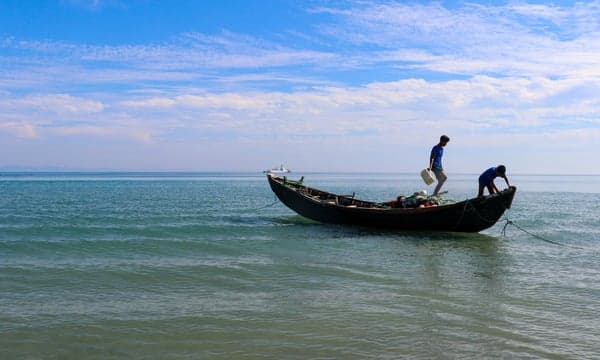
The most alarming evidence of this new crisis comes in the form of direct violence against Bangladeshi nationals. Fishermen operating along the Naf River — the natural waterway that demarcates much of the Bangladesh-Myanmar border — have been particularly vulnerable. Several have been abducted, held for ransom, and in some cases killed. Border communities in Bangladesh's Bandarban and Cox's Bazar districts have reported heightened fear and insecurity as a direct result of Arakan Army activity across the border.
These incidents are not isolated. They reflect a broader pattern in which the Arakan Army asserts its dominance over border areas in ways that directly impinge on Bangladeshi citizens' lives and safety. The group has reportedly used kidnappings as a revenue-generating tactic, holding Bangladeshi nationals — many of them poor fishermen with no political significance — for ransom payments that fund its military operations.
Why Bangladesh Cannot Use Official Diplomatic Channels
The core diplomatic dilemma is this: Bangladesh's government cannot officially engage with the Arakan Army through the standard channels of state-to-state diplomacy. To do so would risk appearing to legitimize a non-state armed group, potentially complicating Bangladesh's relations with Myanmar's junta government — the recognized state authority, however dysfunctional — and raising broader questions about Bangladesh's adherence to the principle of non-interference in internal affairs, a cornerstone of its foreign policy.
Yet not engaging carries its own serious costs. Without communication channels, there is no mechanism to demand the release of abducted citizens, negotiate border protocols, or deter future incidents. Bangladesh is effectively left watching its citizens suffer without a viable formal pathway to address the problem. Informal backchannel communications and third-party intermediaries have reportedly been explored, but these are fragile, unreliable substitutes for genuine diplomatic engagement.
The Rohingya Dimension Remains — and Complicates Everything
The situation is further complicated by the ongoing Rohingya crisis. Bangladesh continues to host over a million Rohingya refugees, a burden that strains its resources and its patience. The Arakan Army, despite representing an ethnic group historically in conflict with the Rohingya, has at times presented itself as a potential actor in Rohingya repatriation discussions. Bangladesh would logically need to engage with the AA if any meaningful return process is ever to begin — yet doing so remains diplomatically fraught for all the reasons outlined above.
- Bangladesh hosts approximately 1.2 million Rohingya refugees, primarily in Cox's Bazar.
- The Arakan Army now controls large portions of the Rakhine border region from which Rohingya would theoretically return.
- Any repatriation process that bypasses the Arakan Army would be practically unworkable in the current security environment.
- Formal engagement with the AA risks diplomatic backlash from Myanmar's junta and broader regional actors.
Regional Implications and the Need for a New Framework
Bangladesh's predicament is symptomatic of a wider regional challenge. As state authority crumbles across parts of Myanmar and non-state armed groups fill the vacuum, neighboring countries are increasingly forced to reckon with actors who wield real power but lack formal recognition. Thailand, India, and China have all grappled with similar dilemmas along their own borders with Myanmar, each arriving at different — and largely improvised — solutions.
For Bangladesh, the urgency is acute. The country cannot afford a prolonged security vacuum along its southeastern border. Its border guard forces are under strain, its refugee camps are already at a breaking point, and its citizens are dying. Dhaka needs a strategy that goes beyond the conventional diplomatic playbook — one that acknowledges the reality on the ground without formally compromising its legal and political positions.
What Needs to Happen Next
Analysts and regional security experts suggest several possible avenues. Quiet diplomacy through trusted intermediaries — regional organizations, UN bodies, or respected third-party nations — could open communication lines without formal recognition. Bangladesh could also push harder within ASEAN frameworks for collective engagement with Myanmar's armed actors, reducing the diplomatic exposure of acting alone. Strengthening border surveillance and coast guard capacities along the Naf River would provide immediate protection for vulnerable communities even while longer-term solutions are pursued.
Above all, Bangladesh needs the international community to understand that its Myanmar border challenge has fundamentally changed in character. This is no longer only a refugee crisis demanding humanitarian response — it is an active security threat demanding a calibrated, sophisticated political response. Ignoring that shift will only allow the situation to deteriorate further, at a cost measured not in policy papers but in Bangladeshi lives.