
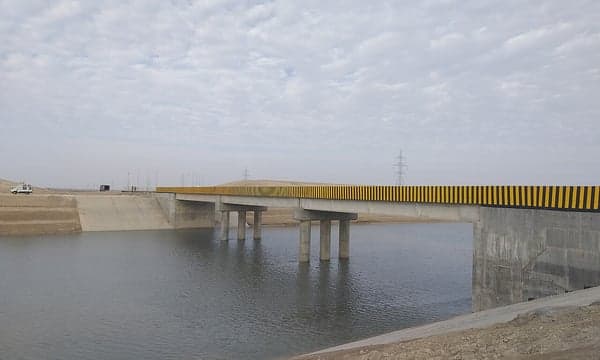
Afghanistan's Hydro-Political Trap: Why Building a Dam Can Start a Crisis
Water is life. But in Afghanistan's case, water is also leverage, conflict, and a geopolitical minefield. The country sits at the headwaters of some of Central and South Asia's most critical river systems, including the Amu Darya, the Helmand, and the Kabul River. For decades, Afghanistan has remained one of the least water-developed nations in the world—not entirely by accident, and not entirely by choice. It is caught in what analysts increasingly describe as a hydro-political trap: a self-reinforcing cycle in which its neighbors depend so heavily on unregulated river flows that any Afghan effort to develop water infrastructure is automatically perceived as an act of aggression.
Understanding this trap is essential not just for Afghanistan's future, but for the stability of an entire region already strained by poverty, climate change, and political fragility.
What Is a Hydro-Political Trap?
The term "hydro-political trap" describes a situation in which a upstream riparian state—one that controls the source of a river—is effectively prevented from using its own water resources because downstream neighbors have organized their economies, agriculture, and survival around receiving that water in its natural, unobstructed form. Any attempt by the upstream nation to dam, divert, or manage those flows is read as a hostile act, regardless of the upstream country's intentions or needs.
Afghanistan is a textbook case. Countries like Iran, Uzbekistan, Turkmenistan, and Pakistan have built irrigation networks, farming systems, and urban water supplies that are directly calibrated to receiving Afghan river water without interruption. When Kabul floats the idea of building a reservoir or a hydroelectric dam, these neighbors react with alarm—and sometimes with direct political or economic pressure to halt the project.
The Rivers at the Center of the Dispute
The Helmand River and Iran
The Helmand River flows westward from the Hindu Kush mountains through southern Afghanistan before crossing into Iran's Sistan Basin. Iran's Hamoun wetlands and the livelihoods of millions of people in the Sistan-Baluchestan province depend on this flow. A 1973 treaty nominally governs water sharing between the two countries, but it has been contested, ignored, and renegotiated repeatedly. Every time Afghanistan advances plans for dams along the Helmand—most notably the Kamal Khan Dam, inaugurated in 2021—Iran protests vigorously, accusing Kabul of violating its water rights and deliberately engineering drought conditions downstream.
The Amu Darya and Central Asia
The Amu Darya forms much of Afghanistan's northern border and flows into what remains of the Aral Sea basin. Uzbekistan and Turkmenistan have historically depended on its waters for massive Soviet-era cotton irrigation schemes. While Afghanistan currently extracts very little from the Amu Darya—largely due to decades of war and underdevelopment—any infrastructure investment along this corridor sends shockwaves through Central Asian capitals that remember the catastrophic desiccation of the Aral Sea all too well.
The Kabul River and Pakistan
The Kabul River feeds into Pakistan's Indus system, supplying crucial water to communities in Khyber Pakhtunkhwa. Pakistan has long been wary of upstream development that could reduce or destabilize those flows, adding yet another dimension to an already tense bilateral relationship.
Why Afghanistan Desperately Needs Water Development
The cruel irony is that Afghanistan, despite being the source of so much regional water, suffers from profound water insecurity itself. Roughly 80 percent of the population depends on agriculture for their livelihoods, yet irrigation infrastructure is antiquated, inefficient, and largely destroyed by decades of conflict. Groundwater is being depleted. Droughts are intensifying. The United Nations has consistently ranked Afghanistan among the countries most vulnerable to climate-related water stress.
Hydroelectric power is another critical need. Afghanistan has some of the lowest electricity access rates in Asia. Developing river systems for power generation could dramatically improve living standards, reduce dependence on expensive imported fuel, and provide the energy backbone for economic growth. Without it, the country remains trapped in poverty—which in turn fuels the instability that makes regional cooperation even harder to achieve.
The Core of the Trap: Asymmetric Dependency
What makes this trap so durable is the profound asymmetry in how water is currently used. Downstream neighbors have spent generations—and enormous sums—adapting their infrastructure to Afghan inaction. The moment Afghanistan acts, it disrupts an equilibrium that was never formally negotiated or fairly distributed, but that everyone has grown dependent on nonetheless.
This creates a perverse incentive structure. Afghanistan's poverty and political dysfunction have, paradoxically, served the water interests of its neighbors. A stronger, more capable Afghan state is, in certain narrow hydraulic terms, a threat to regional water security as currently configured.
Pathways Out of the Trap
Multilateral Water Treaties
The most sustainable solution is a framework of legally binding, equitably negotiated water-sharing agreements that explicitly account for Afghanistan's development rights. The 1973 Helmand treaty is a relic that satisfies no one. Modern agreements must include baseline environmental flow requirements, development corridors for Afghan infrastructure, and dispute resolution mechanisms backed by neutral international arbitration.
International Investment and Guarantees
External actors—the World Bank, Asian Development Bank, or regional bodies like the Shanghai Cooperation Organisation—could help finance water infrastructure projects in ways that include downstream stakeholders from the design phase. When neighbors are co-investors rather than passive recipients, their political incentives shift dramatically.
Climate Framing as Diplomatic Leverage
Framing Afghan water development as a climate adaptation necessity rather than a unilateral power grab can help reframe the conversation internationally. As glaciers retreat and rainfall becomes less predictable, the entire region will need cooperative water management. Afghanistan's infrastructure development can be positioned as a regional resilience asset rather than a threat.
Conclusion: Sovereignty, Survival, and the Need for Diplomacy
Afghanistan's hydro-political trap is not simply a technical water management problem. It is a sovereignty issue, a development issue, and a regional security issue all bound together. Escaping it will require courage from Afghan leadership, genuine flexibility from neighboring governments, and sustained engagement from the international community. The alternative—a permanently water-underdeveloped Afghanistan locked in recurring conflict with its neighbors over rivers it cannot use—serves no one's long-term interests, least of all those of the downstream countries who fear change the most.