
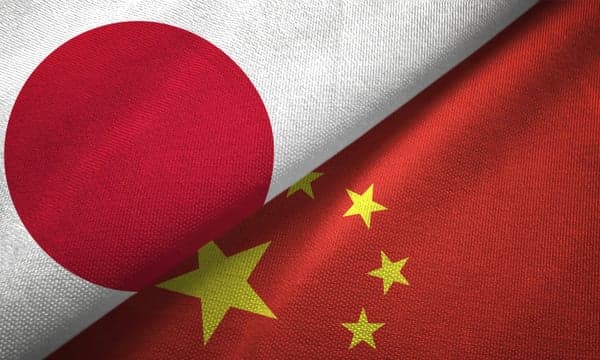
China and Japan Edge Toward Economic Reconciliation
In a region where geopolitical fault lines run deep, even a modest handshake carries enormous weight. The recent visit of a Japanese trade delegation to Beijing — led by a member of Japan's ruling Liberal Democratic Party (LDP) — has sparked cautious optimism among analysts, investors, and diplomats watching the China-Japan relationship with growing unease. While the two nations remain politically distant, the reopening of a business dialogue channel suggests that economic pragmatism may be quietly outpacing ideological standoffs.
For anyone tracking Asia-Pacific affairs, this development is anything but routine. China and Japan represent the world's second and fourth largest economies respectively, and the ebb and flow of their relationship has cascading consequences for global supply chains, regional security, and international trade architecture. Understanding what this moment means — and what it doesn't — requires stepping back and looking at the broader picture.
The Visit That Turned Heads
The Japanese trade group's trip to Beijing, with an LDP member of parliament at the helm, was notable not just for who attended, but for the timing and tone of the encounter. Official diplomatic channels between Tokyo and Beijing have been strained for years, weighed down by disputes over historical memory, territorial disagreements in the East China Sea, and competing alignments within the broader U.S.-China rivalry. Against that backdrop, a formal business visit — one with political legitimacy attached to it — reads as a deliberate signal.
Beijing, for its part, appeared receptive. Chinese officials welcomed the delegation in a manner that indicated the meeting was more than a perfunctory exchange. The conversations reportedly touched on trade facilitation, supply chain cooperation, and the potential for expanded investment flows — areas where both countries have much to gain from renewed engagement.
The choice to send an LDP lawmaker rather than a purely private-sector representative adds a layer of significance. It suggests that at least some within Japan's governing establishment see value in maintaining a functional economic bridge to China, even while formal diplomatic progress stalls.
Why Business Is Moving Before Politics
The divergence between political paralysis and business momentum is not unique to China and Japan, but it is particularly pronounced here. Several factors help explain why commerce is finding a path forward that diplomacy cannot yet travel.
- Mutual economic dependence: China remains one of Japan's largest trading partners, and Japanese corporations — from automotive manufacturers to electronics firms — have deep roots in the Chinese market. Severing or even seriously disrupting those ties would carry enormous costs for both sides.
- Supply chain recalibration: As global companies reconsider their reliance on any single manufacturing hub, both China and Japan have incentives to negotiate stable, predictable terms for their business interactions, independent of whatever political winds are blowing.
- Domestic economic pressures: Japan continues to navigate sluggish domestic growth, while China is managing a post-pandemic economic recovery that has been bumpier than many anticipated. Neither economy can afford prolonged commercial estrangement.
- Quiet back-channel diplomacy: Business delegations, particularly those with political backing, often serve as informal diplomatic instruments. They allow both governments to test the temperature of relations without the risks and public scrutiny that come with formal state-level negotiations.
What the Political Freeze Means for Business Confidence
Despite the optimism surrounding this delegation, it would be premature to declare a new era in China-Japan relations. The political freeze is real and its roots are structural rather than superficial. Tokyo remains a close security ally of Washington, and Japan has aligned itself with Western positions on issues ranging from technology export controls to concerns over China's military activities in the region. These alignments do not dissolve because a trade group books flights to Beijing.
For businesses watching these developments, the key question is whether this opening is durable. History offers mixed lessons. China and Japan have gone through multiple cycles of economic warming and political cooling, and companies that have invested heavily based on positive signals have sometimes found themselves caught in the crossfire when relations sour again.
That said, the structure of the current engagement — with political sponsorship but framed firmly as a business dialogue — gives it a degree of insulation. Both governments appear to understand the value of keeping economic and commercial channels at least partially open, even when broader ties are fraught. This "compartmentalization" strategy has become something of a feature of modern great-power relations: trade in one box, security rivalry in another, with varying degrees of success in keeping the two from bleeding into each other.
Regional and Global Implications
The China-Japan business thaw, however tentative, sends signals well beyond the two countries involved. For Southeast Asian nations that trade heavily with both powers, a more stable bilateral relationship reduces the risk of being forced to choose sides in an economic cold war. For multinational corporations managing complex Asia-Pacific footprints, even incremental improvements in China-Japan relations can ease logistics, reduce regulatory unpredictability, and open doors to collaborative ventures.
On the global stage, the visit also offers a quiet counternarrative to the dominant story of relentless decoupling between the world's major economies. While decoupling and supply chain diversification are real trends, they coexist with persistent economic interdependence — and moments like this serve as a reminder that neither China nor Japan can simply walk away from decades of intertwined commercial relationships.
Looking Ahead: Cautious Optimism, Not a Turning Point
The Japanese trade delegation's visit to Beijing is best understood as a carefully calibrated opening move rather than a breakthrough. It signals that both sides recognize the costs of prolonged commercial estrangement and are willing to explore a limited reset on economic terms, even as the larger political relationship remains frozen in place.
For businesses, investors, and policymakers alike, the smart response is measured attention rather than either euphoria or dismissal. China-Japan relations have a long history of confounding expectations in both directions. What this moment suggests, above all, is that economic logic has a persistent way of reasserting itself — even in the most politically complicated corners of the world.