
China's Hardware Tech Stocks Are Surging — But the Real Test Is Just Beginning
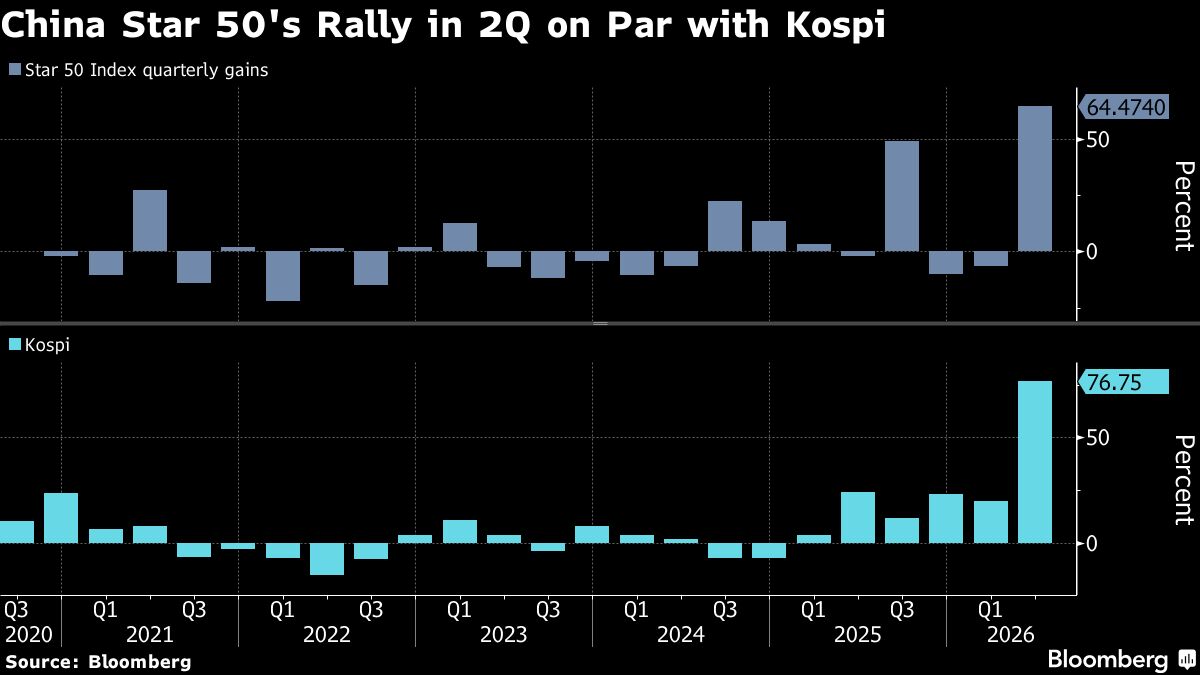
Chinese hardware technology stocks have delivered some of the most eye-catching gains in global equity markets this year. Fueled by a combination of government policy support, artificial intelligence tailwinds, and a renewed wave of domestic demand, the sector has attracted significant investor attention. But as any seasoned market watcher knows, a rally built on momentum and sentiment can only carry stocks so far. The next — and arguably most critical — hurdle is delivering the earnings to back it all up.
For investors watching China's hardware tech space, the coming earnings seasons represent a pivotal inflection point. Strong results could validate the optimism that has propelled valuations higher. Disappointing numbers, on the other hand, could send cracks through what has been a broadly bullish narrative. Understanding the forces at play is essential for anyone with exposure — or potential exposure — to this fast-moving sector.
What Has Been Driving the Rally in Chinese Hardware Tech?
The surge in Chinese hardware technology stocks has not happened in a vacuum. Several powerful forces have converged to push the sector higher, and knowing what they are helps contextualize both the opportunity and the risk.
Government Policy and Strategic Investment
China's central government has made technological self-sufficiency a cornerstone of its long-term economic strategy. In the face of ongoing export restrictions from the United States — particularly around advanced semiconductors — Beijing has poured resources into domestic hardware development. Subsidies, tax incentives, and state-backed investment funds have funneled capital into chipmakers, server manufacturers, networking hardware producers, and related supply chain companies. This policy backdrop has given investors confidence that demand for domestically produced hardware is not a temporary trend but a structural, multi-year growth story.
The Artificial Intelligence Hardware Boom
Globally, the artificial intelligence revolution has created an insatiable appetite for specialized hardware — from graphics processing units and AI accelerators to high-bandwidth memory and advanced cooling systems. China is no exception to this trend. As Chinese technology giants race to build and deploy large language models and AI-powered applications, demand for domestic AI hardware has skyrocketed. Companies capable of supplying AI chips, high-performance computing infrastructure, and data center components have seen their order books swell, and their stock prices have responded accordingly.
Geopolitical Decoupling and Supply Chain Restructuring
The broader geopolitical environment has also played a role. As tensions between the United States and China have intensified, Chinese companies have accelerated efforts to reduce their dependence on foreign technology. This has created a captive and growing market for domestic hardware producers. Where Chinese firms once turned to American or Taiwanese suppliers for critical components, they are increasingly sourcing from homegrown alternatives — a shift that has directly benefited hardware technology stocks listed on mainland and Hong Kong exchanges.
Why Earnings Are Now the Critical Variable
Despite the compelling macro narrative, valuation expansion can only take stocks so far. Markets are ultimately a discounting mechanism for future cash flows, and investors are now pivoting from story-driven momentum to fundamental scrutiny. The question being asked with increasing urgency is straightforward: are these companies actually making money, and can they sustain and grow their profitability?
Revenue Growth Must Match the Hype
For many Chinese hardware tech companies, the rally has pushed price-to-earnings ratios to levels that price in a significant amount of future growth. If revenue growth comes in below expectations — whether due to slower-than-anticipated AI adoption, supply chain bottlenecks, or softer end-market demand — the multiple compression that follows could be swift and painful. Investors will be watching top-line results closely for signs that demand is real, recurring, and expanding.
Margin Sustainability Is Under the Microscope
Revenue growth alone is not enough. Hardware manufacturing is an inherently capital-intensive business with often-thin margins, particularly as companies race to scale production and invest in research and development. Analysts will be scrutinizing gross margins and operating margins to determine whether Chinese hardware tech firms can translate top-line gains into genuine bottom-line improvement. Companies that show pricing power, operational efficiency, and the ability to manage input costs will be rewarded. Those that cannot will face tough questions from shareholders.
Guidance Will Be as Important as Results
In high-growth sectors trading at elevated valuations, forward guidance often matters as much as — or more than — reported results. Management teams that deliver confident, well-supported outlooks for the quarters ahead will help sustain investor enthusiasm. Conversely, cautious or vague guidance could undermine confidence even when historical numbers look solid. Investors should pay close attention not just to what companies report, but to what they say about where they are headed.
What Investors Should Watch Going Forward
The rally in Chinese hardware technology stocks is not necessarily over — but it is entering a more mature and demanding phase. Investors who benefited from the early momentum-driven gains now need to apply a more rigorous analytical lens. Key indicators to monitor include quarterly earnings releases from major hardware manufacturers, government procurement data for domestic technology products, export restriction developments from Washington, and broader macroeconomic signals from China's economy.
Diversification within the sector also warrants consideration. Not every hardware subsegment will perform uniformly. Semiconductor design firms, server manufacturers, and networking hardware producers each face distinct demand drivers and competitive dynamics. A nuanced approach that distinguishes between winners and laggards within the broader hardware tech universe is likely to outperform a blunt, index-level bet on the sector.
The Bottom Line
China's hardware technology stocks have had an impressive run, powered by structural tailwinds that are real and unlikely to disappear overnight. But markets are forward-looking, and the bar has risen. The next chapter of this story will be written in earnings reports, margin trends, and management guidance — not in policy headlines or geopolitical narratives alone. For investors, that means doing the fundamental homework, staying selective, and recognizing that the most durable gains in any rally are those built on genuine earnings power rather than sentiment alone.