
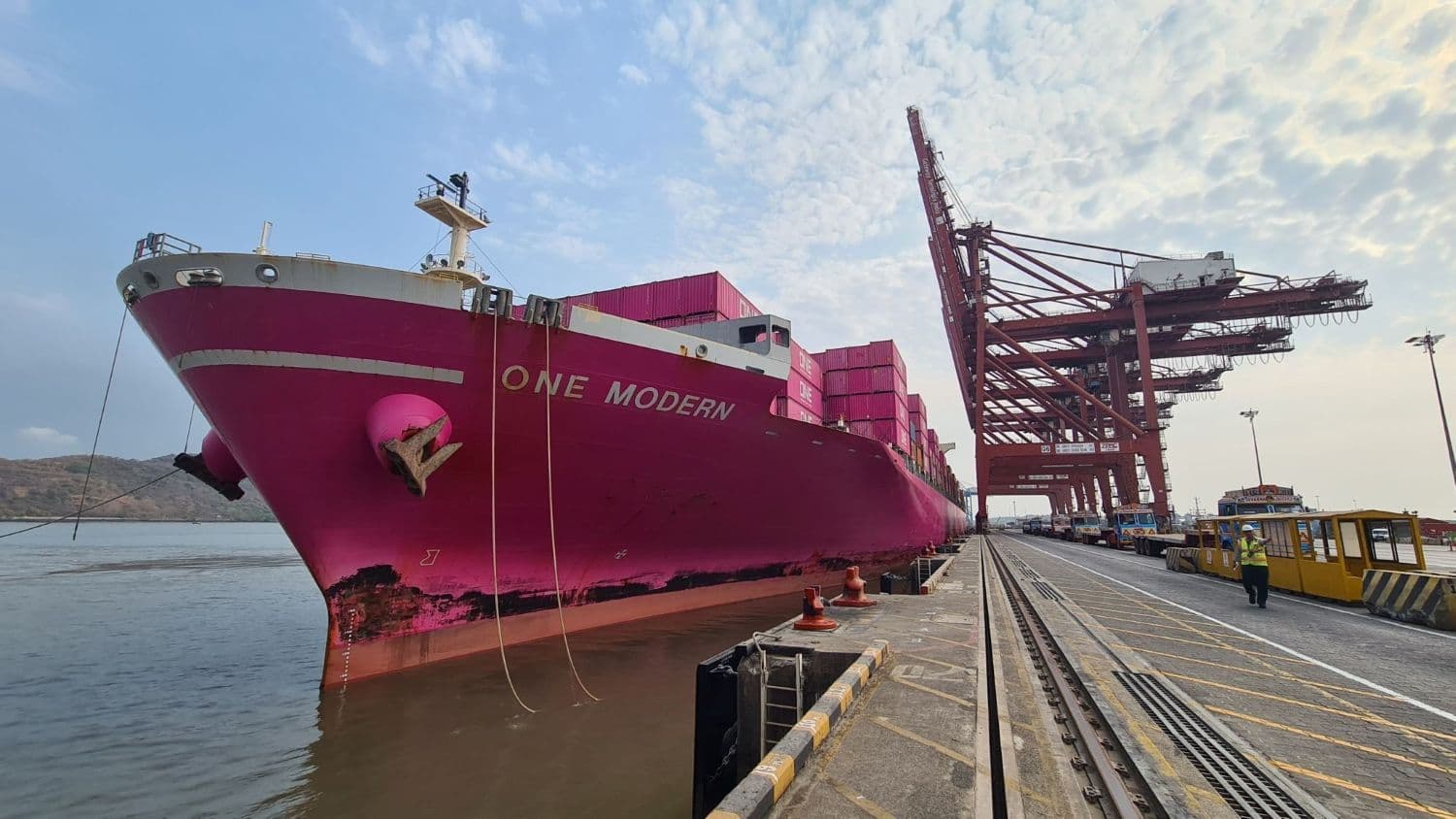
CMA CGM and ONE in Talks for India-USEC Vessel-Sharing Agreement
Two of the world's most significant container shipping carriers — CMA CGM and Ocean Network Express (ONE) — are reportedly in discussions to establish a vessel-sharing agreement (VSA) covering the India to United States East Coast (USEC) trade lane. According to industry sources familiar with the matter, both carriers have been grappling with operational challenges when operating independently on these routes, and a potential partnership could reshape how cargo moves between the Indian subcontinent and North America's eastern seaboard.
Sources believe that a potential vessel-sharing deal between the two could pave the way for a more balanced and resilient supply-demand environment for all participating carriers in India-North America trades. As global shipping continues to evolve in the post-pandemic era, strategic collaborations of this kind are increasingly viewed as essential tools for maintaining competitiveness and operational efficiency.
Understanding the India-USEC Trade Lane
The India-USEC corridor is one of the more complex and commercially significant trade routes in international container shipping. It connects major Indian ports — including Nhava Sheva (Jawaharlal Nehru Port), Mundra, and Chennai — with key East Coast US gateway ports such as New York/New Jersey, Savannah, and Charleston. The route has grown in strategic importance as US importers look to diversify their sourcing away from China, and as Indian manufacturing continues its upward trajectory fueled by government initiatives like "Make in India."
Despite its growing relevance, the India-USEC lane presents genuine operational challenges. The distances involved, the relatively fragmented nature of cargo volumes compared to the dominant Asia-USEC corridor, and the complexity of port rotations all contribute to thinner margins for carriers operating standalone services. These pressures have made it difficult for individual lines to maintain consistent weekly sailings with optimally sized vessels, leading to service reliability concerns and less competitive freight rates for shippers.
Why Standalone Operations Have Struggled
Sources indicate that both CMA CGM and ONE have experienced the pressures of operating independently on the India-North America trade lane. Running a standalone loop requires a carrier to commit a full set of vessels to maintain weekly frequency — an expensive proposition when cargo volumes are not sufficient to fill those vessels consistently. Under-utilization leads to elevated unit costs, which in turn puts pressure on freight rates and profitability.
For CMA CGM, which has been expanding its global network aggressively and recently restructured its alliance affiliations following the dissolution of the Ocean Alliance in its previous form, maintaining niche trade lanes independently is increasingly difficult to justify without a partner. Similarly, ONE — the Japanese joint venture formed by NYK Line, MOL, and K Line — has been seeking to optimize its network across multiple corridors where solo operations have proven less efficient than anticipated.
The result is that both carriers are looking at collaboration not as a fallback but as a proactive strategy to stabilize operations, reduce costs, and ultimately deliver more reliable services to their customers.
What a Vessel-Sharing Agreement Would Mean
A vessel-sharing agreement, or VSA, allows two or more carriers to share space on each other's vessels along a defined trade route without merging their commercial operations or freight pricing. Each carrier continues to sell its own slots independently, but the shared deployment of ships allows both parties to reduce the number of vessels needed while maintaining sailing frequency and capacity levels.
For the India-USEC market, a CMA CGM and ONE VSA would likely bring several meaningful benefits:
- Improved sailing frequency: By pooling vessel assets, the partners could offer more consistent weekly or near-weekly departures from Indian ports to USEC destinations, something that has been difficult to sustain under solo operations.
- Better capacity utilization: Sharing slots means each carrier can fill its allocated space more efficiently, reducing the risk of sailing with significant empty space and improving the economics of the service.
- More competitive freight rates: Lower operating costs per TEU typically allow carriers to offer more stable and competitive pricing in the market, which benefits importers and exporters on both ends of the trade lane.
- Enhanced resilience: A two-carrier partnership creates redundancy and flexibility in case of equipment shortages, port delays, or unexpected demand surges — scenarios that have become increasingly common in global shipping over recent years.
- Broader network reach: Both CMA CGM and ONE bring extensive feeder and inland distribution networks in their respective strongholds, which could translate into wider door-to-door coverage for shippers using the joint service.
Broader Implications for India-North America Shipping
The potential VSA between CMA CGM and ONE does not exist in a vacuum. It reflects a broader trend in container shipping toward selective, bilateral cooperation in secondary and emerging trade lanes, even as mega-alliance structures are being reconsidered at a global level. As carriers exit or restructure long-standing alliances, they are forming more targeted agreements tailored to specific corridors — a more nimble approach that responds to the unique supply-demand dynamics of each market.
For the India-USEC trade specifically, a stabilized carrier environment would be welcome news for shippers, freight forwarders, and beneficial cargo owners (BCOs). The lane has at times been characterized by unpredictable capacity, fluctuating spot rates, and limited service options compared to more mature routes. Greater carrier collaboration could address these pain points directly.
Moreover, as India's export profile continues to expand — encompassing textiles, pharmaceuticals, engineering goods, chemicals, and electronics — the importance of reliable, affordable shipping connections to the US East Coast will only grow. A well-structured VSA between two major carriers could serve as a catalyst for further investment in the route, potentially attracting additional carriers or service upgrades over time.
What Shippers Should Watch For
If the CMA CGM and ONE VSA talks progress to a formal agreement, shippers trading between India and the US East Coast should pay close attention to several key developments. These include the specific port rotations announced for the joint service, the vessel sizes deployed, the transit times offered, and how the two carriers plan to allocate slots commercially. Booking lead times, equipment availability at Indian origin ports, and the roll-out timeline of the new service structure will all be factors that affect day-to-day logistics planning.
Freight forwarders and logistics managers are advised to maintain open communication with both carriers during this period and to monitor announcements closely. While the talks are still ongoing and no formal agreement has been publicly confirmed, the strategic logic behind such a partnership is compelling — and the shipping community will be watching closely to see how negotiations unfold.
Conclusion
The reported vessel-sharing agreement talks between CMA CGM and ONE on the India-USEC trade lane represent a significant potential development for one of global shipping's most strategically important emerging corridors. Driven by the operational and commercial challenges of standalone service deployments, the two carriers appear to be moving toward a pragmatic solution that could benefit shippers, stabilize the market, and strengthen both companies' competitive positions in the India-North America trade. As the negotiations continue, the industry will be watching with considerable interest.