
DHL and Zelostech Bring Autonomous Vehicles Into Daily Singapore Logistics Operations
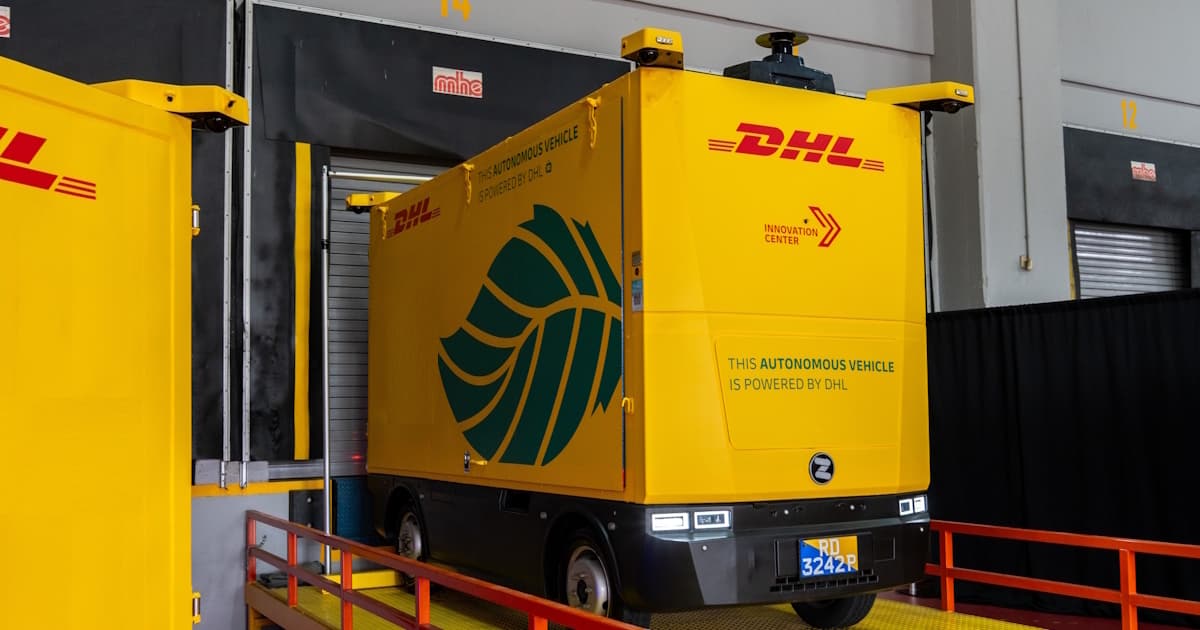
The future of logistics is no longer a concept confined to pilot programs and innovation labs. DHL has officially transitioned autonomous vehicles developed through its Fast Forward Challenge into full-scale, daily operations at its Advanced Regional Center (ARC) in Singapore. In partnership with Zelostech, the global logistics giant now operates a fleet of fully electric, driverless vehicles that handle point-to-point freight transfers between logistics facilities on campus — around the clock, every day of the week.
This deployment marks a significant milestone in the evolution of smart, sustainable supply chain management, and signals how quickly autonomous technology is moving from concept to concrete operational infrastructure in the Asia-Pacific logistics sector.
What Are the Zelostech Autonomous Vehicles and How Do They Work?
The vehicles deployed by DHL in partnership with Zelostech are purpose-built for repetitive, high-frequency hub-to-hub logistics movements. These are the kinds of transfers that may seem straightforward on paper but can cause significant disruption when delayed — whether due to traffic congestion, driver availability issues, or scheduling conflicts. Every late pallet movement in a busy logistics hub can ripple outward and impact shipper timelines across the entire supply chain.
Each autonomous vehicle is capable of carrying up to three pallets or 1.5 tons of freight per trip. Employees load the vehicles and dispatch them using a dedicated mobile application that provides real-time tracking and visibility. From that point forward, the vehicle operates entirely on its own, navigating campus routes using a sophisticated combination of sensors, pre-loaded mapping data, and artificial intelligence. These systems allow the vehicles to independently manage on-site traffic, react to obstacles, and complete deliveries without any human driver involvement.
Staff at the destination facility handle unloading, keeping human expertise focused where it adds the most value — at the point of physical handling — while the transport function itself is fully automated.
Impressive Performance Metrics From Day One
Early operational data from the Singapore deployment paints a compelling picture of what autonomous logistics vehicles can achieve at scale. Each vehicle averages 40 individual trips per day and covers approximately 28 kilometers across the campus. A small fleet working together moves dozens of pallets daily, demonstrating that this technology is not just a novelty — it is a genuine workhorse capable of sustaining high-volume logistics throughput.
The 24/7 operational capability is particularly noteworthy. Unlike human drivers who require rest, shift changes, and supervision, autonomous vehicles can maintain continuous operations with consistent performance regardless of the hour. This eliminates one of the most persistent constraints in logistics: the dependency on driver availability during overnight and weekend periods.
Cost Savings and Environmental Benefits Align With Business Goals
One of the most commercially compelling aspects of this deployment is the cost efficiency it delivers. According to DHL, the autonomous Zelostech vehicles deliver consistent performance at roughly half the operating cost of equivalent diesel trucks. For a logistics operation handling thousands of pallet movements per year, that cost reduction translates into substantial savings that can be passed on to customers or reinvested into further network improvements.
Beyond the financial case, the shift to fully electric autonomous vehicles contributes directly to DHL's broader sustainability commitments and supports the environmental goals of its customers. Eliminating diesel-powered short-haul movements from campus operations reduces carbon emissions in a measurable, reportable way — a growing priority for shippers who face increasing regulatory and stakeholder pressure to demonstrate supply chain sustainability credentials.
The advanced sensor systems integrated into the vehicles also improve safety in high-traffic logistics zones, where forklifts, pedestrians, and freight vehicles must often share constrained spaces. By removing the unpredictability of human drivers from routine transfer routes and replacing it with AI-governed navigation, DHL has reduced a key category of operational risk on campus.
Reshaping the Role of Logistics Workers
A common concern around autonomous vehicle adoption is its impact on the workforce. DHL's Singapore deployment offers an instructive example of how the technology is being integrated in a way that reshapes rather than simply eliminates roles. As autonomous vehicles take over the driving component of hub transfers, team members are being transitioned from driver supervision responsibilities into system oversight and data management functions.
This shift reflects a broader trend in logistics automation: rather than replacing workers wholesale, advanced technology tends to elevate the nature of the work, requiring employees to develop new skills in monitoring, data interpretation, and exception handling. DHL's approach at the Advanced Regional Center demonstrates a model for responsible automation that keeps human expertise central to operations while delegating repetitive physical tasks to machines.
A Strategic Step Forward for Smart Logistics in Singapore
Singapore has long positioned itself as a testbed for advanced logistics and supply chain innovation, and DHL's partnership with Zelostech reinforces that reputation. The Advanced Regional Center is one of the most technically sophisticated logistics hubs in the Asia-Pacific region, making it an ideal environment for deploying and scaling emerging technologies.
Wei Kieng Eunis Hew, Managing Director of DHL Supply Chain Singapore, captured the significance of the milestone: "We're excited to see autonomous technology in full-scale operation here in Singapore and explore how it can transform the way we move goods between sites. It's an important step in strengthening our ability to deliver smarter, greener logistics solutions for our customers."
What This Means for the Future of Autonomous Logistics
The DHL and Zelostech deployment in Singapore is more than a regional technology story — it is a proof point for the global logistics industry. As pressure mounts to reduce costs, cut emissions, and improve supply chain resilience, autonomous electric vehicles designed for campus and hub operations offer a practical, scalable solution that is ready for real-world deployment today.
- Half the operating cost of traditional diesel trucks makes the business case immediately compelling for large logistics operators.
- 24/7 autonomous operation eliminates driver dependency and enables continuous throughput without staffing constraints.
- Fully electric powertrains support decarbonization goals and help customers meet their own sustainability reporting requirements.
- AI-driven navigation and real-time tracking provide the operational visibility that modern supply chains demand.
- The workforce transition model demonstrates that automation can be implemented responsibly, upskilling employees rather than displacing them.
As DHL continues to assess performance data from the Singapore hub and explores further applications across its global network, the Zelostech partnership stands as a clear indicator of where enterprise logistics is heading. Autonomous, electric, and data-driven operations are no longer the future — in Singapore, they are already the present.