
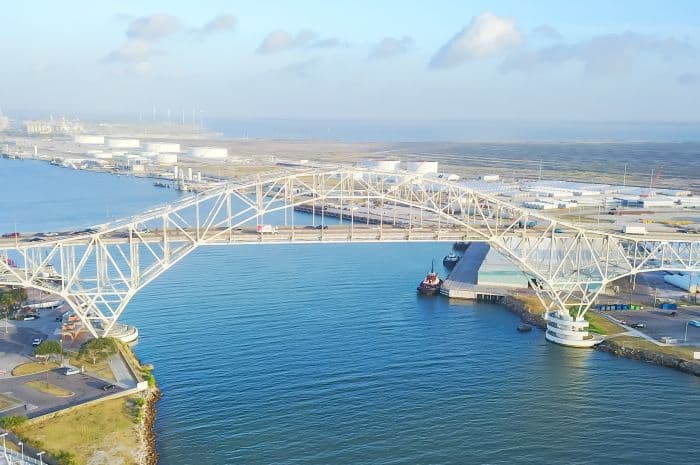
DP World Eyes Long-Term Lease at Port of Corpus Christi for New Container Terminal
Global logistics and port operator DP World has entered into preliminary negotiations with the Port of Corpus Christi, Texas, to secure a long-term lease with the goal of developing a brand-new container terminal on the U.S. Gulf Coast. The Dubai-based company's move signals a significant vote of confidence in the port's growing strategic importance, particularly following the recent completion of a major ship channel deepening project that has dramatically expanded the port's capacity to accommodate the world's largest vessels.
If the deal moves forward, it would mark one of the most consequential port infrastructure investments along the Gulf Coast in recent years — a development with far-reaching implications for U.S. trade, supply chain resilience, and regional economic growth.
Why Corpus Christi? The Case for Gulf Coast Expansion
The Port of Corpus Christi has long been recognized as a major energy export hub, ranking among the top ports in the United States for total tonnage. However, its container handling capacity has historically lagged behind larger Gulf Coast rivals such as the Port of Houston. That dynamic is now beginning to shift, and DP World appears to be positioning itself to capitalize on it early.
The centerpiece of the port's recent transformation is its newly deepened ship channel. The Corpus Christi Ship Channel Improvement Project has widened and deepened the waterway to accommodate ultra-large container vessels — the kind of massive, cost-efficient ships that major carriers now deploy on key global trade lanes. This infrastructure upgrade fundamentally changes the port's competitive profile, making it attractive to global terminal operators like DP World that require deep-water access as a baseline requirement for investment.
Beyond physical infrastructure, Corpus Christi offers several other compelling advantages. Its location on the western Gulf of Mexico provides relatively fast transit times to and from major Latin American markets. It also sits within reach of a growing industrial and manufacturing base in South Texas and northern Mexico, a region increasingly benefiting from nearshoring trends as companies look to reduce their dependence on distant overseas suppliers.
Who Is DP World and Why Does This Matter?
DP World is one of the largest port operators on the planet, managing a portfolio of more than 80 marine and inland terminals across six continents. Headquartered in Dubai and owned by the government of Dubai, the company handles tens of millions of containers each year and has made aggressive investments in port infrastructure globally as it looks to expand its footprint in key trade corridors.
The company's interest in Corpus Christi fits squarely within a broader strategy of establishing a stronger presence in the Americas. DP World already operates terminals in various ports across North and South America, and a new greenfield terminal on the U.S. Gulf Coast would add a critical node to its North American network — one positioned to serve both import and export cargo flows in a part of the country that has seen explosive industrial and population growth.
For the Port of Corpus Christi, landing a partner of DP World's caliber would be transformative. It would bring world-class terminal operating expertise, cutting-edge cargo handling technology, and the kind of global carrier relationships needed to attract major shipping lines to a container facility.
What a New Container Terminal Could Mean for the Region
The economic ripple effects of a new container terminal at Corpus Christi would extend well beyond the port's gates. Container terminals generate significant direct employment during construction and throughout operations, with jobs ranging from crane operators and longshoremen to logistics coordinators and customs brokers. Indirectly, a functioning container terminal attracts warehousing and distribution centers, manufacturing operations, and other trade-dependent businesses that cluster around efficient port infrastructure.
For South Texas more broadly, a world-class container facility could serve as an anchor for a more diversified logistics and industrial economy — one less exclusively reliant on the energy sector. This diversification would provide greater economic stability to a region that has historically experienced boom-and-bust cycles tied to oil and gas prices.
The timing also aligns with a national policy push to strengthen American port infrastructure and reduce supply chain vulnerabilities exposed during the COVID-19 pandemic. Federal investment through programs like the Port Infrastructure Development Program has created new funding pathways for projects exactly like this one, which could potentially accelerate the terminal's development timeline if negotiations succeed.
Negotiations in Early Stages — Key Questions Remain
While the announcement of formal talks is a meaningful milestone, it is important to note that negotiations between DP World and the Port of Corpus Christi are still in their early stages. A long-term lease agreement of this nature involves complex commercial, environmental, and regulatory processes that typically unfold over months or even years before construction can begin.
Key questions that will need to be resolved include the specific location and size of the terminal footprint, the financial structure of the lease, investment commitments from both parties, environmental review requirements, and labor agreements. Community stakeholders and local government officials will also likely play a role in shaping the terms of any final agreement.
A Pivotal Moment for Gulf Coast Port Competition
The Gulf Coast is rapidly emerging as one of the most contested arenas in North American port development. The Port of Houston continues to dominate container volumes in the region, but investments at ports like Mobile, New Orleans, and now potentially Corpus Christi are reshaping the competitive landscape. Shippers and carriers are increasingly evaluating Gulf Coast options as alternatives or complements to congested East and West Coast ports.
DP World's interest in Corpus Christi is a clear signal that global operators see long-term value in the Gulf's growth trajectory. As talks progress, the industry will be watching closely to see whether this partnership can turn the Port of Corpus Christi into a genuine container powerhouse — and what it means for the future of American trade infrastructure.