
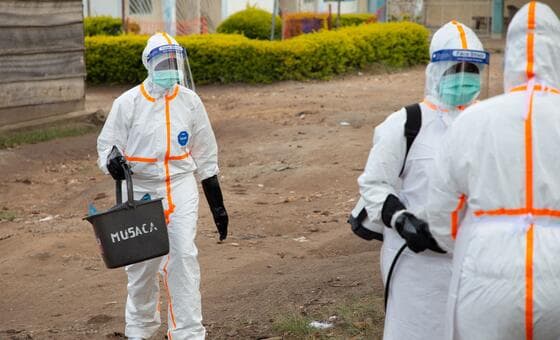
DR Congo Ebola Outbreak Spreads Beyond Borders as Crisis Deepens
The Ebola virus is spreading at an alarming rate in the eastern Democratic Republic of the Congo (DRC), and the crisis is no longer contained within the country's borders. United Nations agencies issued stark warnings on Friday, describing the situation as a grave and growing risk to the broader Central and East African region. With armed conflict continuing to destabilize response efforts, health workers, governments, and international organizations are racing against time to prevent a full-scale regional epidemic.
This outbreak is unfolding against one of the most challenging humanitarian backdrops in the world. Eastern DRC has been embroiled in decades of armed violence, displacing millions of people and systematically undermining the health infrastructure that would otherwise serve as the first line of defense against infectious disease. The combination of a deadly pathogen and an active conflict zone has created conditions that make containment exceptionally difficult — and the consequences potentially catastrophic.
What Is Ebola and Why Is This Outbreak So Dangerous?
Ebola virus disease (EVD) is a severe, often fatal illness caused by the Ebola virus. It spreads through direct contact with the blood, secretions, organs, or other bodily fluids of infected people or animals. The virus can be transmitted through contact with contaminated objects such as bedding or clothing, and it carries a fatality rate that, without proper medical care, can reach as high as 90 percent in some outbreaks.
What makes the current outbreak in eastern DRC particularly dangerous is not just the virus itself, but the context in which it is spreading. Armed groups operating throughout the region have repeatedly targeted health workers, destroyed medical facilities, and restricted access to affected communities. This security environment has made it nearly impossible for responders to implement the kind of systematic surveillance, contact tracing, and vaccination campaigns that successfully ended previous outbreaks.
Furthermore, the mass displacement of people fleeing violence has significantly increased the risk of cross-border transmission. Refugees and internally displaced persons moving across porous borders into neighboring countries carry with them not only their suffering but also the potential to introduce the virus into new, unprepared communities.
UN Agencies Sound the Alarm
On Friday, multiple United Nations agencies issued coordinated warnings about the rapidly deteriorating situation. The agencies noted that the outbreak is not only accelerating within the DRC but has already demonstrated the capacity to move beyond its borders — a development that elevates the threat from a national emergency to a regional and potentially global health security concern.
The World Health Organization (WHO), UNICEF, and other UN bodies have been working in partnership with the DRC government and local health authorities to scale up response measures. Efforts include deploying emergency medical teams, distributing personal protective equipment, and accelerating vaccination programs in affected and at-risk areas. However, responders have consistently highlighted that security constraints are the single greatest obstacle to an effective response.
UN officials have also called on the international community to increase funding and political support for both the health response and for broader peace-building efforts in eastern DRC. They argue, compellingly, that there can be no sustainable public health victory in a war zone — and that addressing the violence and the virus must go hand in hand.
The Impact of Armed Conflict on Disease Containment
The relationship between armed conflict and infectious disease outbreaks is well established in public health literature, and the DRC is a tragic illustration of that relationship. When health systems are weakened by years of underinvestment and active destruction, communities become far more vulnerable to outbreaks that would otherwise be manageable.
- Disrupted surveillance: Ongoing violence prevents epidemiologists from conducting the community-level monitoring needed to detect cases early and map transmission chains.
- Restricted access: Armed groups frequently block humanitarian convoys and health teams from reaching affected villages, allowing the virus to spread unchecked in isolated communities.
- Overwhelmed facilities: Hospitals and clinics in conflict zones are chronically understaffed and under-resourced, reducing their capacity to isolate and treat Ebola patients safely.
- Community mistrust: Years of violence and perceived neglect have eroded trust between local populations and outside responders, making community engagement and voluntary participation in health measures more difficult.
Cross-Border Risks and Regional Preparedness
Eastern DRC shares borders with several countries, including Uganda, Rwanda, Burundi, and South Sudan — all of which face their own humanitarian and health system challenges. The cross-border movement of people, which intensifies during periods of heightened conflict, creates corridors through which the virus can travel rapidly into new territories.
Regional health authorities have been urged to strengthen border health screening, improve coordination on surveillance data, and stockpile vaccines and medical supplies in preparation for potential spillover cases. While some neighboring countries have robust Ebola preparedness plans developed in the wake of previous outbreaks, others remain vulnerable due to limited resources and health infrastructure.
International organizations are working to support national governments in developing and activating contingency plans, but experts warn that preparedness alone is insufficient without a parallel effort to contain the outbreak at its source in eastern DRC.
The Path Forward: What Needs to Happen Now
Addressing this outbreak requires a multi-layered response that integrates public health, humanitarian assistance, and conflict resolution. Health authorities are calling for an immediate and significant scale-up of vaccination efforts using the rVSV-ZEBOV vaccine, which has proven effective in previous DRC outbreaks. Rapid deployment of mobile health teams capable of operating in insecure environments is also critical.
Beyond the immediate medical response, the international community must apply diplomatic pressure to reduce violence in affected areas and ensure safe access for health workers. Sustained funding commitments — not just emergency grants but long-term investment in health system strengthening across the region — are essential to breaking the cycle of outbreaks that has repeatedly plagued eastern DRC.
The Ebola outbreak in the DRC is a reminder that global health security is indivisible. A virus spreading in a conflict zone thousands of miles away can reach any corner of the world. Containing it requires not only medical expertise and supplies, but courage, coordination, and a collective commitment to protecting the most vulnerable populations on earth.