
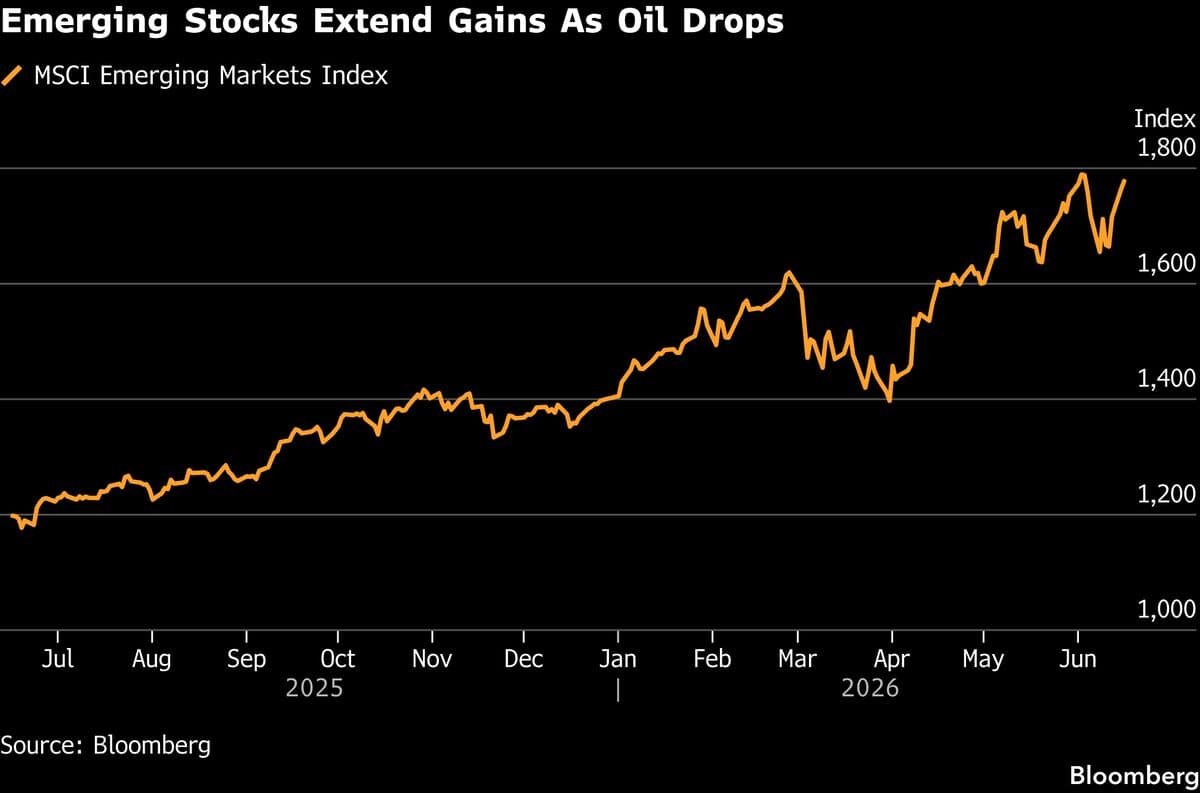
Emerging FX Index Edges Up on Peace Deal Ahead of Fed Meeting
Global currency markets shifted into a cautious optimism mode on Monday as an index tracking emerging-market currencies edged modestly higher ahead of the end-of-day adjustment session. The tentative gains came as traders across the world began digesting a significant geopolitical development — an interim peace deal between the United States and Iran — while simultaneously bracing for one of the most closely watched events in the financial calendar: the Federal Reserve's upcoming policy meeting. The combination of these two forces created a delicate balancing act for investors operating in the often-volatile emerging-market foreign exchange space.
What Is the Emerging FX Index and Why Does It Matter?
The emerging-market FX index is a composite measure that tracks the performance of currencies from developing economies against major reserve currencies, most notably the US dollar. It serves as a broad barometer of investor risk appetite in the developing world, capturing shifts in sentiment driven by everything from commodity prices and global trade flows to interest rate differentials and geopolitical events.
When the index rises, it generally signals that investors are moving capital into higher-yielding emerging-market assets, a behavior often described as "risk-on" positioning. Conversely, a falling index reflects flight-to-safety dynamics, where traders retreat toward the US dollar, Japanese yen, or Swiss franc. Monday's modest uptick in the index was therefore notable, arriving as it did against a backdrop of competing bullish and bearish catalysts.
The US-Iran Peace Deal: A Geopolitical Game Changer for Markets
The most immediate catalyst lifting emerging-market sentiment was the announcement of an interim peace deal between the United States and Iran. While full details of the agreement were still being absorbed by markets at the time of writing, any diplomatic breakthrough between Washington and Tehran carries enormous implications for global oil prices, Middle Eastern stability, and the broader risk environment.
Iran holds some of the world's largest proven oil reserves, and prolonged tensions between the US and Iran have historically kept a geopolitical risk premium embedded in crude oil prices. A credible peace framework, even an interim one, has the potential to ease that premium, which in turn can benefit a range of emerging economies that are large oil importers. Lower energy costs reduce inflationary pressure, improve current account balances, and free up fiscal space for government spending — all of which are positive for currency stability.
Beyond oil, reduced geopolitical tension in the Middle East tends to lift global investor confidence more broadly. Risk assets across the spectrum — from equities to emerging-market bonds and currencies — often gain ground when the geopolitical temperature drops. Monday's FX move appears to reflect exactly this dynamic, with traders cautiously positioning for a more stable global environment.
Which Emerging-Market Currencies Stand to Benefit Most?
Currencies from oil-importing emerging economies such as India, Turkey, and several Southeast Asian nations are historically among the biggest beneficiaries when crude oil prices soften on geopolitical relief. At the same time, currencies from commodity-exporting nations may face some headwinds if lower oil prices take hold on a sustained basis. The net effect on the overall index, however, tends to skew positive in the near term when major geopolitical risk is removed from the table.
The Federal Reserve's Shadow: Uncertainty Ahead of the Policy Meeting
Counterbalancing the geopolitical tailwind was the looming uncertainty of the Federal Reserve's upcoming policy meeting. The Fed remains the single most influential institution in global financial markets, and its interest rate decisions reverberate far beyond American borders. For emerging-market currencies in particular, Fed policy is a critical driver of capital flows.
When the Fed raises interest rates or signals a hawkish outlook, the yield advantage of US Treasuries increases, drawing capital away from higher-risk emerging-market assets and putting downward pressure on EM currencies. Conversely, when the Fed signals rate cuts or a more dovish stance, the relative appeal of emerging-market investments rises, supporting currency values.
Ahead of this week's meeting, markets were grappling with considerable uncertainty about the Fed's next move. Persistent inflation data, mixed employment signals, and shifting commentary from Fed officials had left traders divided on whether the central bank would hold rates steady, signal a cut, or maintain a firmly hawkish tone. This uncertainty was acting as a natural cap on any emerging-market currency rally, keeping gains modest rather than allowing them to run freely.
How Fed Rate Expectations Shape Emerging Market FX
- A hawkish Fed stance typically strengthens the US dollar, putting downward pressure on emerging-market currencies and widening dollar-denominated debt burdens for EM governments and corporations.
- A dovish pivot or rate cut signal tends to weaken the dollar and create room for EM currencies to appreciate, improving investor sentiment toward developing-world assets.
- Prolonged uncertainty, as seen ahead of this week's meeting, tends to suppress volatility and limit directional moves in either the dollar or the EM FX index.
Reading the Signals: What Traders Are Watching This Week
For currency traders and emerging-market investors, this week presents a dense schedule of market-moving events. Beyond the Fed decision itself, market participants will be closely monitoring the press conference and any updated dot plot projections for signals about the future path of US monetary policy. Any language around inflation tolerance, employment targets, or the pace of potential rate changes will be parsed with extreme care.
On the geopolitical front, developments surrounding the US-Iran peace framework will also continue to draw attention. Whether the interim deal holds, what sanctions relief may be included, and how Iran's oil-exporting capacity might be affected are all questions that will influence commodity markets and, by extension, a wide range of emerging-market currency dynamics.
Broader Implications for Emerging Market Investors
Monday's modest FX index gain is a reminder that emerging-market currency investing is rarely a straightforward exercise. Even when positive catalysts emerge — as they did with the peace deal announcement — countervailing forces can quickly limit upside potential. Investors operating in this space must maintain a dual lens, evaluating both the geopolitical climate and the macroeconomic policy environment simultaneously.
Portfolio managers focused on emerging markets would be wise to monitor how the Fed communicates its intentions this week, given that a surprise hawkish shift could quickly erase the gains driven by geopolitical optimism. Diversification across regions and asset classes within the EM universe remains a prudent strategy given this dual uncertainty.
Conclusion: A Delicate Balance Between Hope and Caution
The emerging-market FX index's modest advance on Monday encapsulates the complex environment facing global currency markets right now. The US-Iran interim peace deal provided a genuine positive signal, easing geopolitical risk and lifting risk appetite across developing-world assets. But the Federal Reserve's upcoming policy meeting has kept a firm lid on enthusiasm, reminding traders that monetary policy uncertainty can quickly overshadow even significant geopolitical improvements. As the week unfolds, the interplay between these two powerful forces will continue to define the direction of emerging-market currencies and the investment strategies that depend on them.