
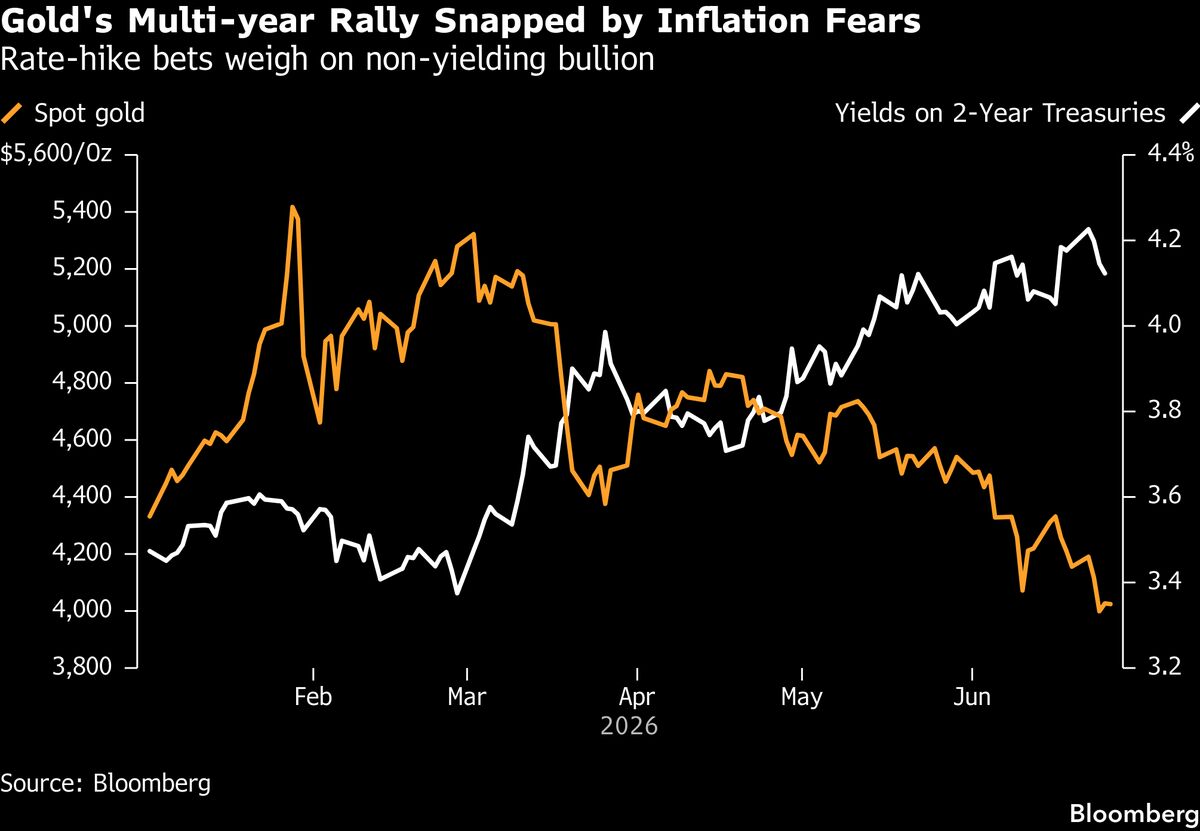
Gold Steadies Near $4,000 as Inflation Data Eases Rate-Hike Bets
Gold prices found their footing near the psychologically critical $4,000-per-ounce threshold after the latest US inflation reading came in softer than feared, cooling expectations for an imminent interest-rate hike. The development brought a measure of calm to a bullion market that had endured one of its most volatile stretches in months, with prices sliding to their lowest level since November before recovering. For investors watching the precious metals space, the interplay between inflation data, Federal Reserve policy signals, and gold's safe-haven appeal has never been more consequential.
What Happened to Gold Prices This Week?
After briefly flirting with historic highs above $4,000 an ounce earlier in the year, gold entered a turbulent stretch that sent prices tumbling sharply. The sell-off reflected a confluence of factors: profit-taking at elevated levels, a stronger US dollar in certain sessions, and uncertainty surrounding Federal Reserve policy. At their worst point during the week, spot gold prices dropped to the lowest level since November, rattling bullish sentiment and prompting questions about whether the metal's powerful uptrend had finally run its course.
However, the release of the latest US inflation gauge — widely watched by traders and policymakers alike — helped stabilize the market. The data suggested that inflationary pressures, while still present, are not accelerating at a pace that would compel the Federal Reserve to resume rate hikes aggressively. That single data point was enough to calm nerves and allow gold to steady itself near the $4,000 mark as the week drew to a close.
Why Does Inflation Data Matter So Much for Gold?
Understanding why an inflation report can move gold prices requires a grasp of the relationship between interest rates and bullion. Gold is a non-yielding asset, meaning it pays no dividends or interest. When interest rates rise, yield-bearing assets like government bonds become more attractive relative to gold, putting downward pressure on bullion prices. Conversely, when rate-hike expectations diminish — as they did following this week's inflation reading — the opportunity cost of holding gold falls, making it more appealing to investors.
The Federal Reserve has maintained a data-dependent stance on monetary policy, meaning each inflation print carries outsized significance for asset markets. A cooler-than-expected inflation reading can shift market expectations almost overnight, repricing everything from bond yields to commodity futures. This week's episode was a textbook example of that dynamic playing out in real time.
Gold's Role as an Inflation Hedge in 2025
Despite the week's volatility, gold's long-term bull case remains firmly intact for many analysts. The metal has surged dramatically over the past year, driven by a combination of central bank buying, geopolitical uncertainty, de-dollarization trends, and persistent inflation in key economies. The fact that gold is even hovering near $4,000 — a level that would have seemed extraordinary just a few years ago — speaks to the structural demand underpinning the market.
- Central bank demand: Global central banks, particularly in emerging markets, have continued to accumulate gold reserves as a hedge against currency risk and geopolitical instability.
- Geopolitical uncertainty: Ongoing tensions in various regions have reinforced gold's appeal as a safe-haven asset, drawing in investors seeking shelter from risk.
- Dollar diversification: Growing efforts by some economies to reduce dependence on the US dollar in international trade have supported alternative stores of value, including gold.
- Retail and institutional demand: Exchange-traded funds (ETFs) backed by physical gold have seen sustained inflows, reflecting broad-based investor interest across asset classes.
What the $4,000 Level Means Psychologically and Technically
In financial markets, round numbers carry enormous psychological weight. The $4,000 level for gold is not just a price — it is a landmark that represents a new era for the precious metal. Traders and technical analysts watch these levels closely because they often attract heightened buying and selling activity. A sustained hold above $4,000 would reinforce bullish momentum and potentially attract a new wave of buyers who had been waiting on the sidelines for confirmation of the trend.
From a technical analysis perspective, gold's ability to recover from its intraweek lows and reclaim the $4,000 zone is an encouraging sign. It suggests that dip-buyers remain active and that the broader uptrend has not been decisively broken. That said, analysts caution that further volatility is likely as markets continue to digest economic data and evolving Federal Reserve communications.
What Should Gold Investors Watch Next?
Looking ahead, several key catalysts will determine whether gold can consolidate its gains or faces renewed selling pressure. Chief among them is the trajectory of US monetary policy. Any signal from Federal Reserve officials suggesting that rate hikes are back on the table could weigh on bullion, while dovish commentary or weak economic data would likely provide support.
Beyond the Fed, investors should monitor global geopolitical developments, the trajectory of the US dollar index, and physical demand trends from major consuming nations including China and India. Seasonal factors also play a role, with certain periods of the year historically associated with stronger jewelry and investment demand in key markets.
The Bottom Line
Gold's steadying near $4,000 after a bruising week serves as a reminder that even the strongest bull markets are rarely a straight line. The latest US inflation data provided the market with exactly the breathing room it needed, easing rate-hike fears and allowing bullion to find its footing. For long-term investors, the fundamental case for gold — rooted in central bank demand, geopolitical risk, and the search for inflation protection — continues to support a constructive outlook. Near-term volatility may persist, but the $4,000 milestone remains a powerful symbol of gold's enduring relevance in the modern investment landscape.
As always, investors are encouraged to consult with a qualified financial advisor before making decisions based on commodity price movements, as gold markets can be subject to rapid and unpredictable changes driven by macroeconomic shifts and global events.