
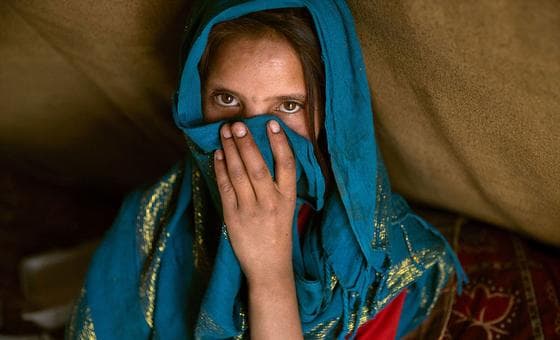
UN Women Raises Alarm Over Mass Arrest of Afghan Women for Dress Code Violations in Herat
The United Nations gender equality agency, UN Women, has expressed it is "gravely concerned" following the arrest of at least 30 women in Herat city, Afghanistan, last weekend. The women were detained by Taliban authorities for allegedly violating dress code requirements enforced by the Taliban regime. The incident has drawn swift international condemnation and renewed attention to the rapidly deteriorating human rights situation facing women and girls across Afghanistan.
This latest crackdown represents yet another alarming chapter in a broader, systematic effort by Taliban authorities to restrict the freedoms of Afghan women — freedoms that have been methodically dismantled since the Taliban's return to power in August 2021.
What Happened in Herat?
According to reports confirmed by UN Women, Taliban morality police detained at least 30 women in Herat city over a single weekend. The arrests were allegedly made on the grounds that the women had failed to comply with strict dress code mandates imposed by Taliban authorities, which require women to cover themselves fully in public — including the face and hands — under threat of punishment.
Herat, historically one of Afghanistan's most culturally vibrant and relatively progressive cities, has become a focal point for Taliban enforcement of its hardline gender policies. The mass arrest underscores just how aggressively these policies are now being implemented across the country, even in urban centers with long traditions of cultural openness and education for women.
UN Women's Response and International Reaction
UN Women, the United Nations entity dedicated to gender equality and the empowerment of women, responded quickly and forcefully to news of the arrests. The agency stated it was "gravely concerned" by the detentions, calling them a serious violation of the fundamental rights and dignity of Afghan women.
The international community has repeatedly called on Taliban authorities to respect the basic human rights of Afghan women and girls, including the right to freedom of movement, access to education, and participation in public life. However, Taliban officials have largely dismissed such calls, framing their policies as consistent with their interpretation of Islamic law.
Human rights organizations around the world have echoed UN Women's alarm. Groups including Amnesty International and Human Rights Watch have long documented a relentless pattern of gender-based repression under Taliban rule, and incidents such as the Herat arrests confirm that this pattern is intensifying rather than abating.
A Systematic Erosion of Women's Rights Under Taliban Rule
Since seizing control of Afghanistan in August 2021, the Taliban has issued a sweeping series of decrees that have effectively erased the civic, educational, and professional lives of Afghan women. What began as restrictions on movement and dress quickly escalated into a comprehensive system of gender apartheid, a term now used by numerous international bodies to describe the situation on the ground.
Among the most devastating measures imposed by the Taliban are the following:
- A nationwide ban on secondary and university education for girls and women, cutting off millions of young Afghans from academic opportunity and future economic independence.
- A prohibition on women working in most sectors, including NGOs and the United Nations, severely limiting access to humanitarian aid delivery as well as women's own livelihoods.
- Restrictions on women traveling without a male guardian, or mahram, effectively trapping many women inside their homes.
- Mandatory full-body coverings in public, with morality police authorized to detain, punish, and imprison women deemed non-compliant.
- Closure of beauty salons and women's public spaces, further isolating women from community life.
The arrest of 30 women in Herat for dress code violations is not an isolated incident. It is the visible surface of a deeply entrenched system designed to remove women from public life entirely.
The Humanitarian Cost of Gender Persecution
Beyond the political and legal dimensions, the Taliban's gender policies are inflicting a profound humanitarian toll. Afghanistan is already one of the world's most acute humanitarian crises, with millions of people dependent on international aid for basic survival. The exclusion of women from the workforce — including the aid sector — has compounded this crisis dramatically.
Women-led and women-focused NGOs have been among those hardest hit by Taliban decrees. The effective removal of women from humanitarian operations has reduced the capacity to reach vulnerable populations, particularly women and children in remote areas who are disproportionately affected by poverty, malnutrition, and lack of healthcare.
Mental health experts working with Afghan refugee communities outside the country report alarming rates of depression, trauma, and despair among Afghan women, both those who have fled and those still living under Taliban rule. For many, the loss of identity, purpose, and basic freedoms has created a mental health crisis that receives far too little global attention.
What the World Must Do
UN Women and its partners continue to call on the international community to maintain pressure on Taliban authorities, support Afghan women's rights defenders both inside and outside the country, and ensure that Afghan women have a meaningful voice in any future diplomatic discussions regarding Afghanistan's political future.
The arrests in Herat are a stark reminder that silence and inaction carry consequences. Every week that passes without sustained international engagement is another week in which Afghan women lose ground that may take generations to recover.
Conclusion: Afghan Women Deserve More Than Concern
UN Women's declaration of "grave concern" is an important signal — but concern alone is not enough. The arrest of at least 30 women in Herat city for dress code violations is a microcosm of a much larger and deeply troubling reality facing Afghan women every single day. The international community, global institutions, and civil society must translate their expressions of alarm into concrete, sustained action. Afghan women are not statistics or policy footnotes — they are teachers, doctors, mothers, students, and leaders whose futures are being forcibly stolen from them. The world must not look away.