
The Quad in a Shifting Geopolitical Landscape
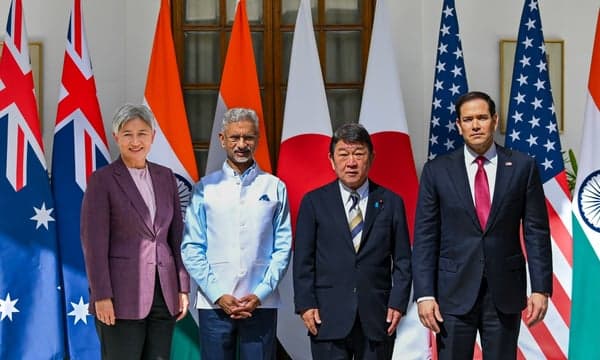
The world's strategic map is being redrawn at a pace few analysts predicted even a decade ago. Great-power competition has intensified, regional tensions in the Indo-Pacific have sharpened, and the post-Cold War multilateral order is under sustained pressure. In this turbulent environment, one grouping continues to attract both cautious optimism and genuine skepticism: the Quad. Comprising the United States, Australia, India, and Japan, the Quadrilateral Security Dialogue represents one of the most watched strategic partnerships of the modern era. Yet its staying power remains a subject of active debate. Can a grouping with a deliberately lean institutional structure truly deliver in a new strategic era?
The short answer, according to a growing body of evidence, is yes — and the reasons why are more instructive than most headlines suggest.
Understanding the Quad's Institutional DNA
Critics of the Quad frequently point to its thin institutional architecture as a fundamental vulnerability. Unlike NATO, which possesses a standing secretariat, a unified command structure, and binding collective defence commitments, the Quad operates without a permanent headquarters, a formal charter, or a treaty obligation among its members. It convenes through summits, ministerial meetings, and working groups — none of which carry the bureaucratic weight of a fully institutionalised alliance.
This design is not an accident. Each Quad member brings its own set of strategic priorities, domestic political constraints, and historical sensitivities to the table. India, in particular, guards its tradition of strategic autonomy carefully, making a NATO-style binding commitment politically untenable. The Quad's loose structure is, in many ways, a feature rather than a bug — allowing four diverse democracies to cooperate flexibly without forcing premature consensus on the most contentious questions.
But looseness cuts both ways. A grouping without institutional anchors can drift when political winds shift at the top. Leadership transitions, electoral cycles, and bilateral frictions among member states all have the potential to disrupt momentum. The real question, then, is whether the Quad has developed enough practical weight at the working level to survive turbulence at the political level.
The Power of On-the-Ground Cooperation
What is often underappreciated in public discourse about the Quad is the sheer density of practical cooperation that has accumulated beneath the headline summits. The four nations now collaborate regularly across a remarkably broad portfolio: maritime domain awareness, cybersecurity, critical and emerging technologies, infrastructure financing, vaccine distribution, humanitarian assistance, disaster relief, and supply chain resilience.
These are not aspirational talking points. They represent active, functioning programmes involving government agencies, scientific institutions, military establishments, and private sector partners across all four countries. The regularity of this on-the-ground tempo has created bureaucratic constituencies for the Quad's continuation — officials, officers, and technical experts whose professional work is now meaningfully tied to the partnership's survival.
This dynamic provides a crucial buffer. When political leaders are distracted, when bilateral relationships hit friction, or when a change of government introduces new foreign policy priorities, the working-level machinery of cooperation tends to continue operating. It is much harder to dismantle a network of active relationships and ongoing programmes than it is to cancel a summit or delay a ministerial communiqué.
Why Political Volatility Need Not Spell Disaster
History offers instructive precedents. The Quad itself was effectively dormant between 2008 and 2017, shelved after early diplomatic pressure from China unsettled some members. Its revival and subsequent deepening suggest that the partnership has proved more resilient than its original critics expected. Each time the Quad has been tested — by changes in US administrations, by India-China border tensions, by shifting Australian political priorities — it has not only survived but in several cases accelerated its practical agenda.
This resilience stems in part from a shared strategic logic that transcends any single leader or government. All four Quad members have converging interests in a free and open Indo-Pacific, in protecting undersea cable infrastructure, in securing reliable semiconductor supply chains, and in maintaining freedom of navigation against coercive pressure. These interests do not disappear when governments change; if anything, they tend to deepen as the strategic environment grows more complex.
The Quad's Delivery Agenda: Where It Matters Most
For the Quad to genuinely deliver in this new strategic era, its members will need to translate cooperation into tangible outcomes that regional partners can see and benefit from. Three areas stand out as particularly consequential.
Critical infrastructure and connectivity: The Quad's infrastructure initiatives, including undersea cable projects and clean energy investments across the Pacific Islands and Southeast Asia, offer a credible alternative to debt-laden financing models. Delivering these projects on time and on budget will do more for the Quad's regional credibility than any number of joint statements.
Technology governance and supply chains: Semiconductor cooperation, trusted telecommunications networks, and shared standards for emerging technologies are areas where the Quad's combined industrial and research capacity is genuinely formidable. Progress here addresses both economic security and strategic competition simultaneously.
Maritime security and domain awareness: The Indo-Pacific's maritime commons remain contested. Quad navies and coast guards cooperating on information sharing, joint exercises, and capacity building for smaller regional states contributes directly to deterrence and regional confidence.
A Resilient Partnership Built From the Ground Up
The most durable alliances and partnerships in history have not always been those with the most elaborate institutional structures. They have been those that developed genuine interdependence at the working level — where the costs of disengagement became real and widely felt. The Quad is building that kind of weight, quietly and methodically, across dozens of programmes and thousands of professional relationships.
Its thin institutional frame may actually serve it well in an era of political volatility, allowing each member state the flexibility it needs domestically while sustaining a practical cooperative relationship that quietly advances shared strategic objectives. The Quad's future will not be written in summit communiqués alone. It will be written in the accumulated work of the officials, engineers, officers, and diplomats who show up, day after day, to make it function.
In a new strategic era defined by uncertainty, that kind of resilience may prove to be the most valuable asset of all.