
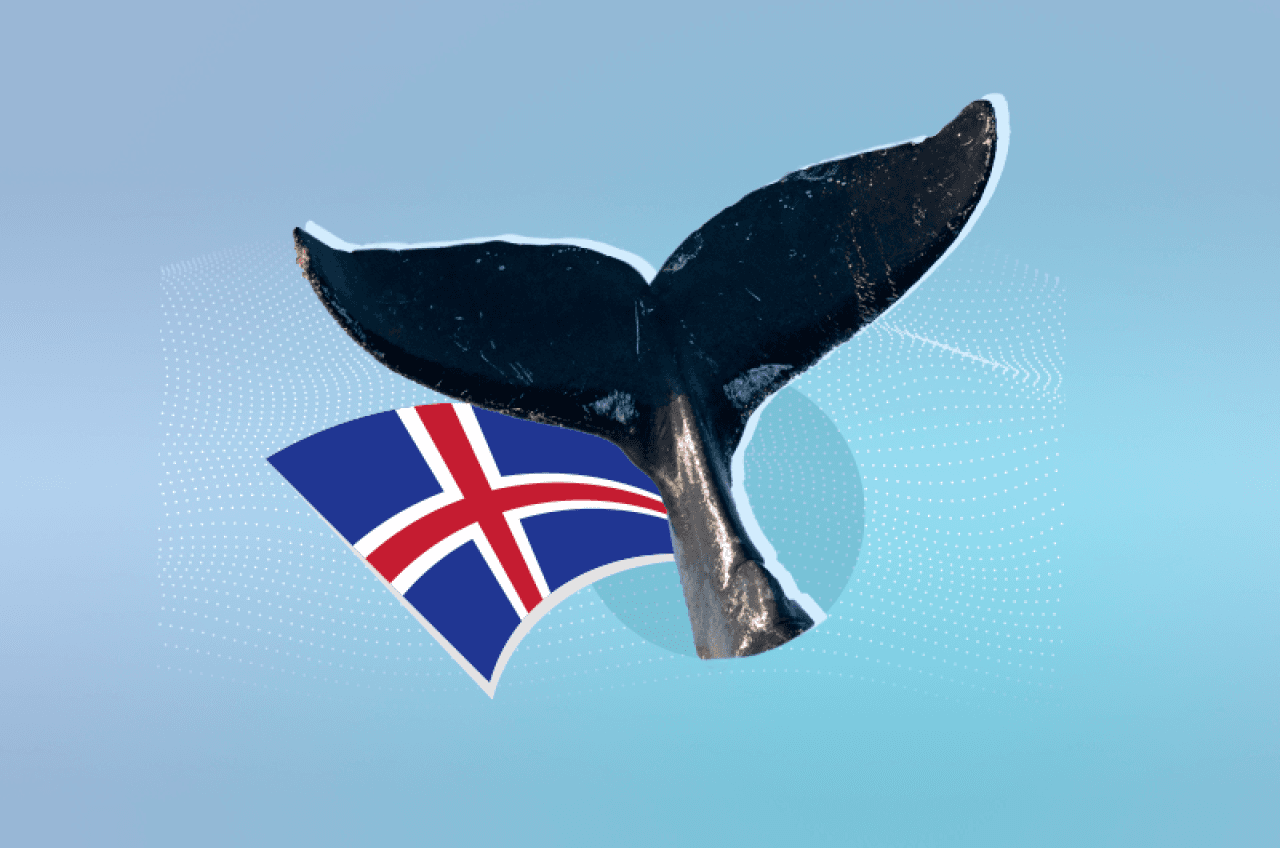
Iceland Resumes Commercial Whale Hunting After Two-Year Pause
After a two-year hiatus, Iceland has officially resumed commercial whale hunting, drawing renewed international attention and fierce criticism from conservation organizations around the world. The whaling vessel Hvalur, one of Iceland's last two remaining whaling ships, departed from the port of Reykjavik on a Friday night alongside a second vessel, marking the start of a controversial new hunting season. The boats had their harpoons tested before setting sail, according to Icelandic media outlets MBL and RUV, signaling a full operational readiness to resume large-scale whale captures.
The departure was not without drama. A protester reportedly chained himself to the mast of one of the whaling vessels as it left Reykjavik's harbor in a bid to delay or halt the expedition. He was eventually escorted off the ship by police, but the act underscored the deep-seated public opposition that continues to surround Iceland's whaling industry — both domestically and globally.
Why Did Iceland Pause Whale Hunting for Two Years?
Iceland's whaling operations were suspended in both 2024 and 2025, not because of ethical or environmental pressure, but largely for economic reasons. The industry had been struggling with difficult financial conditions, and operators determined that whale hunting simply would not be profitable enough to justify the expedition costs. With global demand for whale meat shrinking and domestic consumption at historically low levels, the industry found itself at a crossroads.
This pause gave conservation groups cautious optimism that Iceland might be edging toward a permanent end to commercial whaling. However, the 2026 resumption has dashed those hopes — at least for now — and reignited the debate over whether commercial whaling has any place in the modern world.
How Many Whales Are Authorized to Be Hunted in 2026?
According to Iceland's Marine and Freshwater Research Institute, strict catch limits have been set for the 2026 season, which runs from mid-June to mid-September. The quotas are as follows:
- Fin whales (rorcual común): A maximum of 150 individuals may be captured — representing a 28% reduction compared to the recommended quotas set between 2018 and 2025.
- Minke whales: The catch limit has been set at 168 individuals, a 23% decrease from previous recommended levels.
While these reduced quotas are being presented as a more cautious, science-based approach, environmental organizations argue that any level of commercial whaling is unacceptable given the precarious state of global whale populations and the well-documented suffering involved in the hunt.
Iceland, Norway, and Japan: The Last Three Nations Permitting Commercial Whaling
Iceland is one of only three countries in the world that still authorize commercial whale hunting, alongside Norway and Japan. Most nations suspended commercial whaling following the 1986 moratorium established by the International Whaling Commission (IWC). Iceland initially adhered to the moratorium but officially objected to it in 2002 and resumed commercial whaling in 2006, making it a frequent target of criticism from environmental non-governmental organizations and animal rights groups.
The fact that Iceland, Norway, and Japan continue to permit commercial whaling places them at odds with the vast majority of the international community, which views the practice as both ecologically damaging and inhumane. Fin whales, in particular, are classified as a vulnerable species on the IUCN Red List, making their commercial harvest even more contentious in the eyes of conservationists.
Animal Welfare Concerns: How Whales Are Killed
One of the most persistent criticisms of commercial whaling is the manner in which whales are killed. Unlike livestock slaughter in regulated facilities, whale hunting at sea cannot guarantee a swift or painless death. Harpoons are used to strike the animals from the deck of a ship, and it often takes multiple strikes and a prolonged period before the whale dies.
Joanna Swabe, a senior official at the NGO Humane World for Animals, was pointed in her condemnation of the renewed hunt. She stated that the whales "will in all likelihood suffer an agonizing death for a meat that almost nobody in Iceland wants to eat." Her comments highlight the disconnect between the whaling industry's economic justification and the reality of public demand. Surveys have consistently shown that whale meat consumption within Iceland is extremely low, with much of the product historically exported to Japan — a market that has also seen declining appetite for whale meat over recent decades.
A Potential End in Sight? Iceland's Proposed Whaling Ban
Despite the resumption of hunting this season, there is a significant political development on the horizon. Iceland is expected to introduce a legislative bill in the coming boreal autumn — likely in late 2026 — aimed at prohibiting commercial whale hunting altogether. This proposed legislation has been discussed for several years and would represent a historic shift in Icelandic policy.
If passed, the ban would remove Iceland from the small club of nations still engaged in commercial whaling and could mark the end of an industry that has defined parts of Icelandic coastal culture for centuries. Conservation groups are cautiously optimistic but emphasize that until the bill becomes law, whales remain at risk each hunting season.
What This Means for Global Whale Conservation
The resumption of Icelandic whaling serves as a stark reminder that the battle to protect whale populations is far from over. While international pressure, shifting economic realities, and evolving domestic attitudes have all pushed whaling toward obsolescence, the practice persists as long as legal frameworks allow it.
Conservationists argue that reduced quotas are not enough. The vulnerability of fin whales, combined with the ongoing threats of climate change, ocean pollution, ship strikes, and entanglement in fishing gear, means that every additional human-caused death matters. The hope for many advocates is that Iceland's proposed ban will become law swiftly — and that Norway and Japan will eventually follow suit, bringing the era of commercial whaling to a permanent close.
Key Takeaways
- Iceland resumed commercial whale hunting in 2026 after a two-year economic pause.
- The 2026 season allows up to 150 fin whales and 168 minke whales to be caught.
- Iceland is one of only three countries — alongside Norway and Japan — that still permit commercial whaling.
- Animal welfare organizations have strongly condemned the hunt, citing the suffering involved and minimal domestic demand for whale meat.
- Iceland plans to introduce a whale hunting ban bill in autumn 2026, potentially signaling the end of the country's whaling era.