
Indian Joint Air Defense Doctrine: Reshaping South Asian Strategic Stability
In the complex and densely armed South Asian strategic environment, even inherently defensive military measures can produce profoundly destabilizing consequences. India's development and formalization of a joint air defense doctrine — integrating its army, navy, and air force into a unified defensive network — represents one of the most consequential shifts in regional military posture in recent decades. While New Delhi frames this evolution as a necessary modernization of its defensive capabilities, the ripple effects across South Asia demand careful, nuanced analysis. The doctrine does not exist in a vacuum; it operates within a volatile regional context shaped by unresolved territorial disputes, nuclear arsenals, and deep-seated strategic mistrust.
What Is the Indian Joint Air Defense Doctrine?
India's joint air defense doctrine is a coordinated military framework designed to integrate the air defense assets of all three branches of the Indian Armed Forces into a seamless, layered defensive architecture. At its core, the doctrine seeks to eliminate operational gaps that have historically existed between service-specific air defense systems, ensuring that any aerial threat — whether conventional aircraft, cruise missiles, ballistic missiles, or unmanned aerial vehicles — is detected, tracked, and neutralized through a unified command-and-control structure.
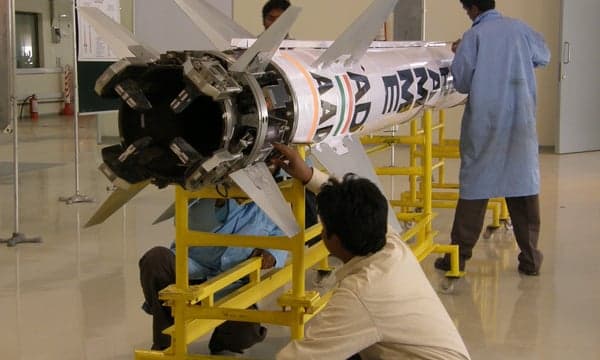
This integration draws on a combination of advanced radar networks, surface-to-air missile batteries, airborne early warning and control systems, and electronic warfare platforms. The procurement of systems such as the S-400 Triumf from Russia has added considerable range and altitude coverage to India's defensive envelope, complementing indigenous developments like the Akash missile system. Together, these assets form a multi-tiered defensive shield that military planners describe as capable of protecting critical national assets and population centers from a broad spectrum of aerial threats.
The Security Dilemma in South Asia
The fundamental problem with deploying sophisticated air defense architecture in South Asia is rooted in what strategists call the security dilemma: one nation's defensive buildup can appear threatening to its neighbors, compelling them to respond with countermeasures that further erode stability. South Asia, home to two nuclear-armed states — India and Pakistan — with a history of four wars and persistent border skirmishes, is particularly susceptible to this dynamic.
From Pakistan's perspective, India's enhanced joint air defense capabilities do not merely protect Indian territory; they potentially degrade Pakistan's second-strike nuclear deterrent. If India can intercept Pakistani ballistic missiles in the boost or midcourse phase, Islamabad may begin to doubt the reliability of its nuclear arsenal as a credible retaliatory threat. This crisis in deterrence confidence can push Pakistani military planners toward adopting more aggressive or hair-trigger postures — precisely the kind of instability that defensive investments are supposed to prevent.
China, India's other nuclear-armed neighbor and a state with whom India fought a war in 1962 and continues to experience border friction, presents an additional layer of complexity. Beijing is acutely sensitive to any developments that could neutralize elements of its strategic strike capabilities, even partially. India's joint air defense doctrine, when viewed from Beijing, is therefore not merely a bilateral India-Pakistan issue but part of a broader Indo-Pacific strategic competition.
Operational Implications and Regional Reactions
The operationalization of India's joint air defense architecture carries several concrete implications for regional military balances. First, it fundamentally alters the calculus of any conventional military confrontation. Pakistan's air force, for example, would face a far more complex threat environment than in previous decades, potentially compelling Islamabad to invest heavily in penetration aids, low-observable platforms, or hypersonic delivery systems to maintain credible conventional strike options.
Second, the doctrine accelerates an arms race dynamic that South Asia can ill afford economically or strategically. Every rupee or Pakistani rupee spent on offensive penetration technology or countermeasures is a rupee not invested in economic development or conflict resolution. The region already suffers from some of the world's highest levels of poverty and inequality; a sustained military buildup driven by defensive doctrinal changes on one side compounds these human costs.
Third, there is the question of crisis escalation. Advanced air defense systems require rapid, automated decision-making processes that leave little room for the kind of diplomatic signaling and de-escalation that have, historically, pulled India and Pakistan back from the brink of full-scale conflict. As response windows compress, the risk of miscalculation grows.
The Case for Confidence-Building Measures
Recognizing the destabilizing potential of even defensive military doctrines, regional and international security experts have long advocated for robust confidence-building measures between India and Pakistan. These include:
- Hotline communications: Direct, reliable communication channels between military commands to prevent miscalculation during periods of heightened tension.
- Notification protocols: Advance notification of large-scale military exercises or major system deployments that could be misread as offensive preparations.
- Track II dialogues: Non-governmental, academic, and think-tank exchanges that allow for frank strategic discussions outside official diplomatic constraints.
- Arms control frameworks: Bilateral or multilateral agreements that place verifiable limits on certain destabilizing capabilities, particularly ballistic missile defense.
These measures do not require either state to compromise its core security interests. They instead create the communication infrastructure necessary to manage misperceptions before they escalate into crises.
Balancing Modernization and Regional Responsibility
India has every sovereign right to modernize its military and protect its territory and people from aerial threats. No serious strategic analyst disputes this. The challenge lies in doing so in a manner that accounts for the systemic effects such modernization produces in a nuclearized, tension-prone regional environment. Transparency, engagement, and proactive diplomacy must accompany military modernization if South Asia is to avoid a future in which defensive investments paradoxically make war more, not less, likely.
The Indian joint air defense doctrine is, in many respects, a reflection of a broader global trend toward integrated, network-centric defense architectures. But South Asia's particular history, geography, and nuclear realities mean that doctrinal developments here carry consequences that extend well beyond the subcontinent. Strategic stability in South Asia is not simply a regional concern — it is a global one, and it demands global attention.