
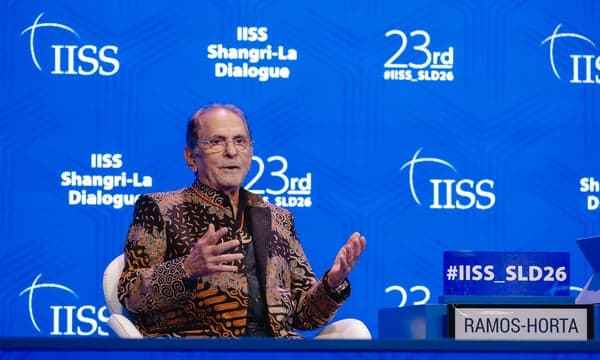
Indonesia-Timor Leste Reconciliation: Through Memory Towards Hope
In a world where historical grievances continue to fracture relationships between nations, the reconciliation between Indonesia and Timor-Leste stands out as a rare and remarkable achievement. Two countries bound together by one of Southeast Asia's most turbulent modern histories have managed to forge a relationship grounded not in denial or forgetfulness, but in the courageous acknowledgment of the past. Their journey — captured in the phrase Through Memory Towards Hope — offers a blueprint for post-conflict diplomacy that the rest of the world would do well to study.
A History Defined by Conflict and Separation
To understand the significance of the reconciliation between Indonesia and Timor-Leste, it is essential to first understand the depth of the wound. Indonesia occupied the territory of East Timor from 1975 until 1999, a period marked by violent military repression, widespread human rights abuses, and the deaths of an estimated 100,000 to 180,000 people through conflict, famine, and disease. The occupation followed Portugal's withdrawal from its colonial possession and Indonesia's subsequent military invasion, which was internationally condemned but largely left unchecked during the Cold War era.
When a United Nations-sponsored referendum in August 1999 saw an overwhelming majority of East Timorese vote for independence, the response from pro-Indonesian militias was a wave of devastating violence that left much of the territory in ruins. It was only after the intervention of an international peacekeeping force that the violence subsided. In May 2002, Timor-Leste formally became the world's newest nation and one of the youngest democracies on Earth.
The scars left by that period were immense — not just physically and politically, but psychologically and socially. For any meaningful relationship between the two countries to develop, both sides would need to confront truths that were painful, complex, and deeply contested.
The Architecture of Reconciliation
What followed over the subsequent two decades was a deliberate, painstaking, and ultimately successful effort to build bridges across a canyon of mutual suffering. A cornerstone of this process was the Commission on Truth, Reception and Reconciliation (CAVR), established in Timor-Leste to document human rights violations committed during the Indonesian occupation. Its landmark report, Chega! (meaning "Stop!" or "Enough!" in Portuguese), remains one of the most comprehensive truth commission documents ever produced and laid the factual groundwork for acknowledgment and dialogue.
Alongside this, the two governments established the Commission of Truth and Friendship (CTF) in 2005, a bilateral body uniquely tasked with promoting reconciliation while recommending amnesty rather than prosecution. While this approach attracted criticism from some human rights organizations who argued it sacrificed accountability for the sake of diplomatic comfort, others recognized it as a pragmatic concession to political realities — one that kept both governments at the table and the broader peace process moving forward.
The Role of Leadership and Political Will
No reconciliation process succeeds without political will at the highest levels, and Indonesia-Timor Leste is no exception. Indonesian President B.J. Habibie's decision to allow the 1999 independence referendum in the first place was itself a watershed moment of political courage — widely unexpected and deeply consequential. In the years that followed, Indonesian leaders including Presidents Abdurrahman Wahid and Susilo Bambang Yudhoyono made formal visits to Dili and expressed regret for the suffering caused during the occupation.
On the Timorese side, figures such as founding President Xanana Gusmão were instrumental in choosing reconciliation over retribution. Gusmão, who had himself been imprisoned by Indonesian authorities for years, publicly advocated for a forward-looking approach. His moral authority as a former resistance leader lent considerable weight to the reconciliation narrative and helped bring along those in Timorese society who remained skeptical or deeply wounded.
People-to-People Connections and Cultural Diplomacy
Formal diplomatic gestures, while vital, are rarely sufficient on their own. The Indonesia-Timor Leste reconciliation has also been nurtured through people-to-people engagement — exchanges between civil society organizations, academics, religious communities, and youth groups that have worked to humanize the other side and build shared narratives.
Trade and economic cooperation have further deepened the relationship. Indonesia remains one of Timor-Leste's most important trading partners, and thousands of Timorese students have pursued education in Indonesian universities. These everyday connections create a web of interdependence that reinforces the diplomatic relationship and makes a return to hostility increasingly unthinkable.
Lessons for the World
The Indonesia-Timor Leste reconciliation holds lessons that transcend the region. In an era when historical memory is weaponized to fuel conflict across the globe — from Eastern Europe to the Middle East to East Asia — the example of these two nations suggests that a different path is possible. Several principles stand out:
- Truth before healing: Lasting reconciliation requires honest acknowledgment of what happened. Denial or minimization of historical wrongs undermines trust and prolongs grievance cycles.
- Pragmatism alongside principle: Perfect accountability is not always achievable in fragile political environments. Bilateral frameworks that prioritize relationship-building, while imperfect, can still open the door to meaningful change.
- Leadership matters enormously: Reconciliation requires courageous individuals on both sides willing to absorb political risk in the service of a longer-term peace.
- People-to-people ties are irreplaceable: Government declarations set the tone, but durable peace is built through relationships between ordinary people, communities, and institutions.
A Relationship Still in Progress
It would be a mistake to characterize the Indonesia-Timor Leste relationship as fully resolved. Unresolved questions remain — including Timor-Leste's long-standing bid for ASEAN membership, border management challenges, and the ongoing quest by some victims for fuller acknowledgment and justice. Memories of violence remain raw for many families on both sides of the border.
Yet the trajectory is unmistakably positive. The two countries cooperate on security, trade, education, and disaster management. Leaders meet regularly and speak with warmth about a shared future. That this is possible — after everything that happened — is indeed a true feat of diplomacy.
Conclusion: Memory as a Bridge, Not a Barrier
The phrase Through Memory Towards Hope captures something profound about the Indonesia-Timor Leste experience. Memory, in this context, is not a weapon to be wielded or a wound to be endlessly reopened. It is instead the honest foundation upon which a new relationship can be built. By facing the past with clarity and choosing to move forward with intention, both nations have demonstrated that even the deepest divisions can be bridged when the will to do so is genuine.
In a world badly in need of models for peaceful coexistence, Indonesia and Timor-Leste offer exactly that. Their story deserves to be told, studied, and remembered — not just within Southeast Asia, but by every society wrestling with the weight of its own history.