
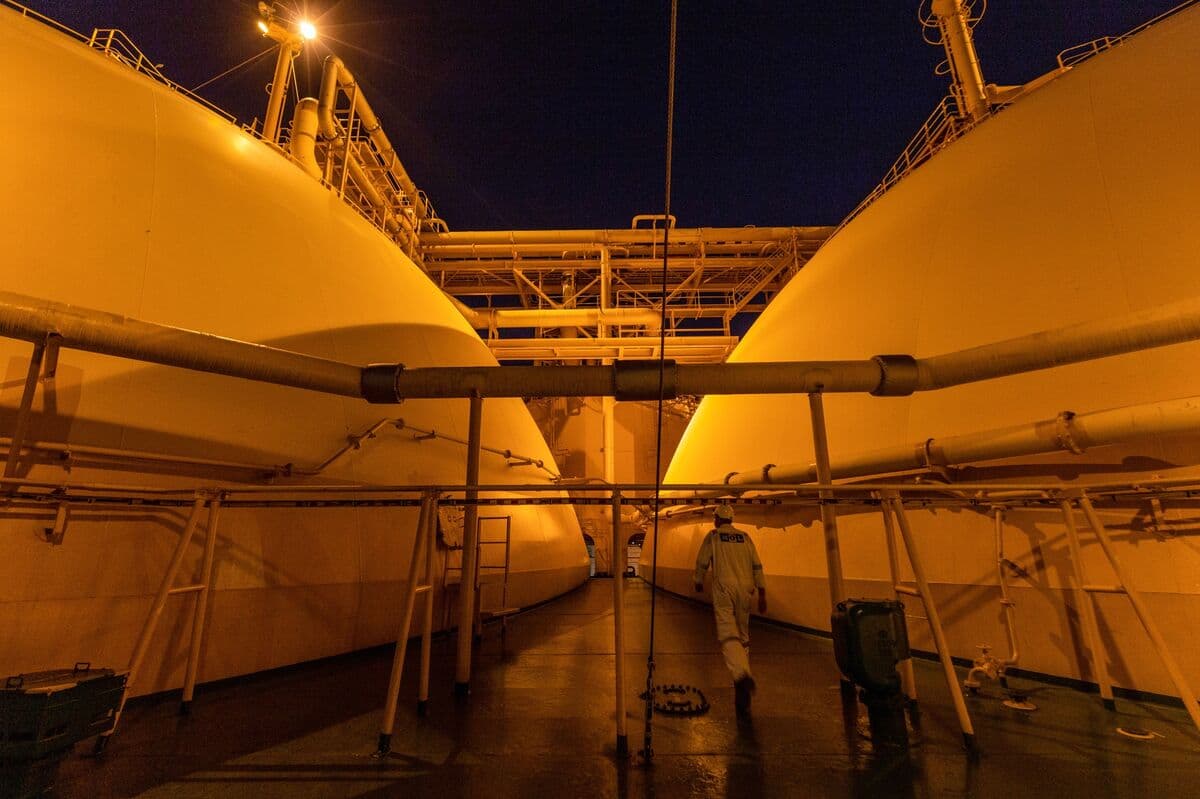
LNG Tanker Moves Toward the Strait of Hormuz as US-Iran Deal Raises Reopening Hopes
A liquefied natural gas (LNG) tanker that has been stranded in the Persian Gulf for more than three months is now reportedly heading toward the Strait of Hormuz — a development that has captured the attention of energy markets, shipping analysts, and geopolitical observers around the world. The movement of the vessel coincides with a significant diplomatic announcement: the United States and Iran say they have reached a deal to reopen the strait, one of the most strategically vital maritime chokepoints on the planet.
This emerging development carries sweeping implications for global energy supply chains, LNG prices, and the broader geopolitical balance in the Middle East. Here is a comprehensive breakdown of what is happening, why it matters, and what it could mean for the future of energy trade.
What Is the Strait of Hormuz and Why Does It Matter?
The Strait of Hormuz is a narrow waterway located between the Persian Gulf and the Gulf of Oman, connecting major oil and gas-producing nations — including Saudi Arabia, the United Arab Emirates, Kuwait, Iraq, and Qatar — to the broader global market. At its narrowest point, the strait measures only about 33 kilometers wide, yet it is one of the most economically critical passages in the world.
According to the U.S. Energy Information Administration (EIA), roughly 20% of the world's total oil and about 20% of globally traded LNG passes through the Strait of Hormuz every year. Any disruption to this passage — whether through military conflict, sanctions enforcement, or deliberate blockades — sends immediate shockwaves through global energy prices and supply security.
Iran has historically used the threat of closing the strait as a geopolitical lever, particularly during periods of heightened tension with the United States and its allies. The current episode is another chapter in that long-running strategic standoff.
The LNG Tanker Trapped in the Persian Gulf
The specific vessel in question had been unable to transit the Strait of Hormuz for over three months, effectively leaving it stranded in the Persian Gulf. While the precise circumstances of its detention have not been fully disclosed in public statements, such situations typically arise from a combination of sanctions complications, diplomatic standoffs, or deliberate interference by Iranian naval forces — a tactic Iran has employed periodically to assert leverage over maritime traffic in the region.
The tanker's prolonged immobilization represents not only a commercial loss for its owners and charterers but also a stark symbol of how quickly geopolitical tensions can disrupt the physical flow of energy commodities that economies worldwide depend on. LNG shipments are particularly time-sensitive, as buyers and sellers operate under strict delivery schedules tied to energy demand cycles.
The vessel now appears to be moving — a signal that conditions on the ground may be shifting in a meaningful way.
The US-Iran Deal: What We Know
Both Washington and Tehran have indicated that an agreement has been reached to reopen the Strait of Hormuz to commercial shipping. The details of the deal remain closely guarded, and neither side has yet released the full terms publicly. However, the movement of the previously trapped LNG tanker serves as one of the most tangible early indicators that the agreement may already be taking effect on the water.
Diplomatic negotiations between the US and Iran are rarely straightforward. They typically involve multiple layers of intermediary involvement — often Qatar, Oman, or European partners — alongside back-channel communications and phased implementation timelines. Analysts caution that while the announcement of a deal is a positive development, the durability and full scope of the agreement will only become clear over the coming weeks as more vessels attempt to transit the strait freely.
Implications for Global LNG Markets
The potential reopening of the Strait of Hormuz comes at a sensitive moment for global LNG markets. European buyers, still managing the long-term fallout of reduced Russian pipeline gas supplies, have become heavily reliant on LNG imports from Qatar, the United States, and Australia. Any sustained disruption to Qatari LNG exports — which flow exclusively through Hormuz — would represent a serious supply shock to energy-import-dependent economies.
- European energy security: A fully reopened strait reduces near-term risk to European LNG import volumes and could provide modest downward pressure on spot prices.
- Asian buyers: Japan, South Korea, and China are among the largest consumers of Qatari LNG and stand to benefit significantly from uninterrupted Hormuz transit.
- Spot market pricing: Prolonged uncertainty around the strait had been factored into a risk premium in LNG spot prices; a credible reopening deal could ease that premium relatively quickly.
- Shipping rates: Tanker rates for vessels operating in the Persian Gulf region had reflected elevated risk; normalization of transit could bring those rates back toward baseline levels.
Broader Geopolitical Context
This development does not occur in a vacuum. It unfolds against a backdrop of ongoing diplomatic efforts to de-escalate US-Iran tensions, including discussions over Iran's nuclear program and broader regional security arrangements. A functioning Strait of Hormuz is in the interest of virtually every major economy, and the international pressure to keep the waterway open is considerable.
Whether this deal marks a genuine turning point in US-Iran relations or a temporary tactical pause remains to be seen. History suggests that progress in this relationship tends to be fragile. However, even a short-term reduction in Hormuz tensions provides meaningful breathing room for global energy markets and for the shipping companies and their crews who operate in one of the world's most high-risk maritime environments.
What to Watch Next
Market observers and energy analysts will be closely monitoring several indicators in the coming days and weeks. The safe passage of the previously trapped LNG tanker through the Strait of Hormuz will be the first concrete test of whether the reported deal translates into real-world freedom of navigation. Beyond that single vessel, attention will turn to whether other ships that have been avoiding the strait begin returning to normal routing, and whether Qatari and other Gulf LNG exports resume at full expected volumes without incident.
The situation remains fluid, but the combination of a diplomatic announcement and visible tanker movement has provided energy markets with their first tangible reason for cautious optimism in months. The world will be watching the Strait of Hormuz very closely.