
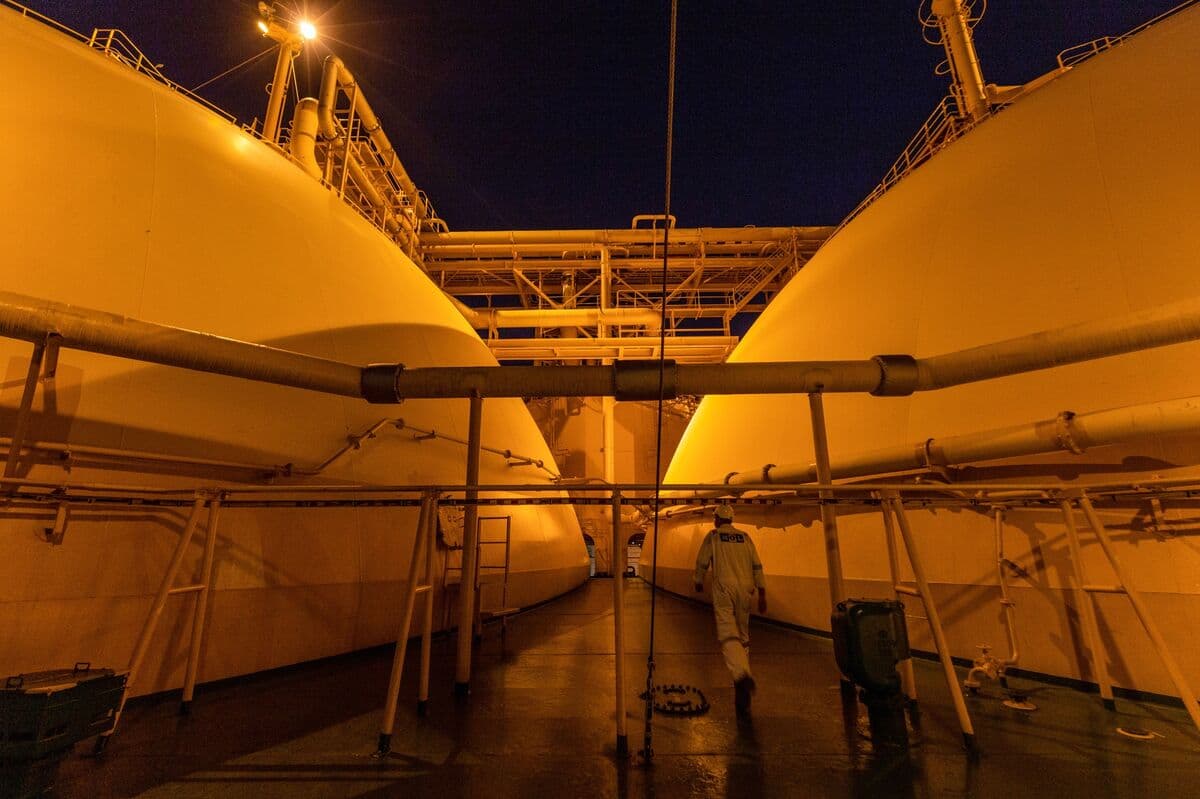
LNG Tanker Moves Toward Strait of Hormuz as US-Iran Deal Sparks Reopening Hopes
A liquefied natural gas (LNG) tanker that has been stranded in the Persian Gulf for more than three months has begun moving toward the Strait of Hormuz, signaling a potential breakthrough in one of the most strategically sensitive maritime corridors in the world. The development comes as the United States and Iran have announced they have reached an agreement aimed at reopening the strait, raising cautious optimism across global energy markets and among shipping industry stakeholders who have been watching the situation with growing concern.
A Tanker Trapped for Over Three Months
The LNG vessel had been stuck in the Persian Gulf since earlier this year, unable to transit the Strait of Hormuz amid escalating geopolitical tensions between Iran and the United States. The standstill served as a stark symbol of how fragile global energy supply chains remain when diplomatic relations between major powers deteriorate. For the crew aboard the tanker and for the companies dependent on its cargo, each week of delay represented not only financial losses but also deepening uncertainty about when — or whether — normal operations would resume.
LNG tankers operating in this region face unique logistical and geopolitical pressures. The Persian Gulf serves as a critical hub for some of the world's largest LNG exporters, including Qatar, which ships a substantial portion of its output through the Strait of Hormuz. Any prolonged disruption to that passage has immediate and cascading effects on energy prices and supply reliability across Europe, Asia, and beyond.
What Is the Strait of Hormuz and Why Does It Matter?
The Strait of Hormuz is a narrow waterway connecting the Persian Gulf to the Gulf of Oman and, from there, to the broader Indian Ocean. It is one of the most critical energy chokepoints on the planet. According to the U.S. Energy Information Administration, approximately 20 to 21 percent of global petroleum liquids and a significant share of the world's LNG pass through this strait annually.
Because of its geography, the strait gives Iran considerable strategic leverage. Tehran has repeatedly threatened to close the waterway during periods of heightened tension with Western nations, and any credible move in that direction sends immediate shockwaves through commodity markets. The current episode has been no exception, with energy traders closely monitoring every development for clues about future supply stability.
The US-Iran Deal: What We Know
Details of the agreement between Washington and Tehran remain limited, but both sides have confirmed that a deal has been reached that addresses the reopening of the strait to commercial shipping. Diplomatic channels that had been largely frozen during months of standoff appear to have been reactivated, suggesting that back-channel negotiations played a significant role in bringing both parties to the table.
For the United States, ensuring freedom of navigation through the Strait of Hormuz is a longstanding strategic and economic priority. For Iran, the deal likely involves concessions or assurances related to sanctions relief or other diplomatic considerations, though the full terms have not been publicly disclosed as of this reporting.
Energy analysts have urged caution in interpreting the announcement as a definitive resolution. Agreements between Washington and Tehran have historically been fragile, and implementation often proves more complicated than initial announcements suggest. Nevertheless, the movement of the LNG tanker toward the strait is being treated by many observers as a meaningful indicator that conditions on the ground are improving.
Impact on Global LNG Markets
The news has been welcomed by energy markets that have been grappling with supply unpredictability for much of the past several years. European nations, still recalibrating their energy mix in the wake of the reduction of Russian gas supplies, have a particular interest in ensuring that LNG flows from the Gulf remain uninterrupted. Any restoration of normal transit through the Strait of Hormuz is therefore viewed as a positive development for energy security across the continent.
Asian importers — including Japan, South Korea, China, and India — are equally attentive. These countries rely heavily on LNG imports from Gulf producers and are acutely sensitive to any disruption in supply. A stable Hormuz corridor directly supports their ability to meet domestic energy demand at manageable prices.
What Happens Next for Shipping in the Persian Gulf?
The shipping industry will be watching closely to see whether the movement of this LNG tanker marks the beginning of a broader normalization or whether it represents an isolated development in an otherwise still-unstable environment. Several other vessels operating in the region have also faced delays and restrictions, and their fate may hinge on whether the US-Iran agreement holds and is fully implemented.
- Maritime insurers are expected to reassess risk premiums for vessels transiting the Strait of Hormuz if conditions stabilize over the coming weeks.
- LNG spot prices, which had reflected a risk premium tied to the supply disruption, may moderate if the strait reopens fully to commercial traffic.
- Shipping companies are likely to review routing strategies and contingency plans that were developed during the disruption period.
- Diplomatic observers will be scrutinizing the fine print of the US-Iran deal for any clauses or conditions that could unravel the agreement under pressure.
A Cautious but Meaningful Step Forward
The sight of a long-stranded LNG tanker finally moving toward the Strait of Hormuz is, at minimum, a hopeful signal. It suggests that diplomacy, even between deeply adversarial states, can yield tangible results when the economic and strategic costs of inaction become high enough for all parties involved. Whether this moment becomes a lasting turning point or a brief respite in an ongoing cycle of tension remains to be seen. For now, energy markets, shipping companies, and governments around the world are cautiously watching — and hoping — that the waterway that carries so much of the world's energy will remain open for business.