
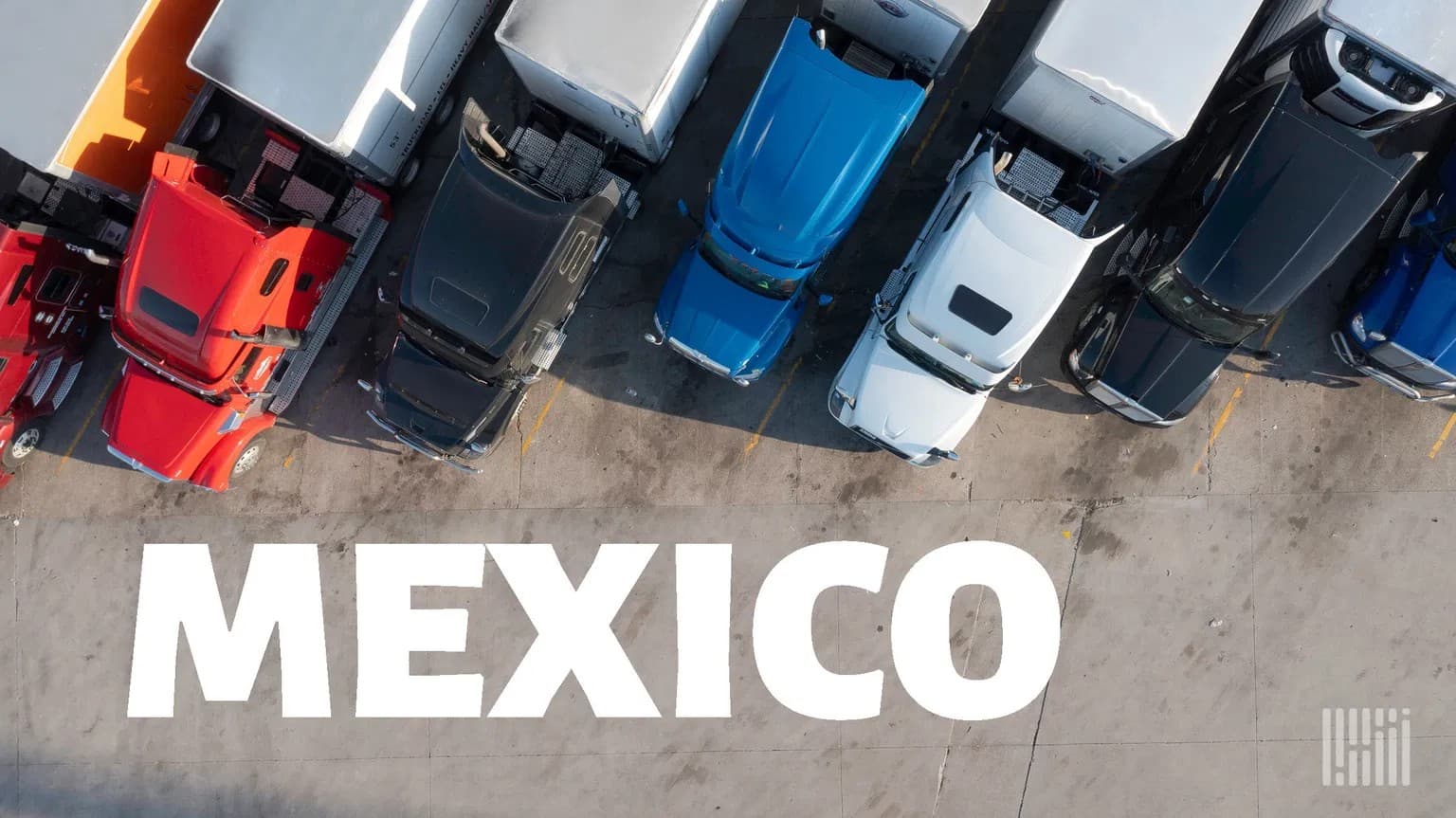
Mexico Remains the United States' Largest Trading Partner in April 2025
For the second consecutive year, Mexico has held its position as the United States' largest trading partner, extending a streak that began in 2023 and underscoring the enduring strength of North American supply chains. Two-way trade between the two countries reached $86.04 billion in April 2025, representing a remarkable 23.4% increase compared to the same month a year earlier, according to U.S. Census Bureau data analyzed by WorldCity. U.S. exports to Mexico totaled $35.34 billion during the month, while imports from Mexico climbed to $50.69 billion.
These figures paint a picture of a deeply integrated economic relationship — one that spans automotive manufacturing, agriculture, electronics, and energy. Yet this robust trade activity is unfolding against a backdrop of rising political uncertainty, as President Donald Trump has openly questioned whether the United States should renew the trade framework that governs much of that commerce.
Trump Raises Doubts About USMCA Renewal
On Wednesday, June 10, 2025, President Trump made headlines when he stated that the United States may not renew the United States-Mexico-Canada Agreement, commonly known as the USMCA. Speaking candidly, Trump argued that the U.S. holds far more leverage in its trade relationships with its North American neighbors and that the current terms do not adequately reflect that advantage.
"I'm not looking to renew it," Trump told reporters, as quoted by Reuters. "We don't need anything that Canada has. We don't need anything that Mexico has, but they need everything that we have. They have to treat us better."
The remarks sent ripples through financial markets and policy circles, raising fresh questions about the long-term viability of an agreement that has served as the backbone of North American economic integration since it replaced NAFTA in 2020. The USMCA requires all three member countries — the United States, Mexico, and Canada — to either approve a formal renewal or signal their intent to withdraw by July 1, 2026. Failure to reach agreement could trigger a prolonged renegotiation period, introducing months or potentially years of uncertainty into cross-border trade and investment planning.
What Is the USMCA and Why Does It Matter?
The United States-Mexico-Canada Agreement is a trilateral trade deal that governs the rules of commerce among the three largest economies in North America. It replaced the North American Free Trade Agreement (NAFTA) and was designed to modernize trade rules, particularly in areas such as digital trade, intellectual property, labor standards, and rules of origin for the automotive sector.
The USMCA has been widely credited with facilitating the growth of deeply integrated supply chains across the continent. Under the agreement, a significant portion of goods — especially vehicles and auto parts — must contain a defined percentage of North American content to qualify for preferential tariff treatment. This structure has encouraged manufacturers in all three countries to source components domestically rather than relying on overseas suppliers.
- The USMCA covers more than $1.5 trillion in annual trade among the three countries.
- It includes labor provisions designed to raise wages in Mexico's manufacturing sector and level the competitive playing field.
- A formal review mechanism, built into the agreement, requires countries to confirm their continued participation every six years.
- The current review deadline is July 1, 2026, making the coming months critical for all three economies.
Negotiations Continue Despite Political Turbulence
Despite Trump's pointed remarks, official USMCA negotiations are actively ongoing. The Office of the United States Trade Representative has scheduled a second round of talks with Mexico in Washington, focused specifically on agriculture and competitive trade practices. Those discussions are set to be followed by additional negotiations in Mexico City during the week of July 20, signaling that trade officials on both sides remain committed to working through the details of a potential renewal, even as the political rhetoric heats up.
This contrast between Trump's public statements and the continued engagement of trade negotiators reflects a pattern that has characterized U.S. trade policy in recent years — tough rhetoric deployed as a bargaining tool, while formal diplomatic and commercial channels remain open. Analysts note that a complete U.S. withdrawal from the USMCA would be extraordinarily disruptive to industries on all sides of the border, making a full rupture unlikely even if terms are significantly renegotiated.
Mexico Extends Its Lead Over Canada in U.S. Trade Rankings
Mexico's dominant position in U.S. trade is not simply a product of geography or legacy — it reflects decades of industrial investment and supply chain integration. By extending its lead over Canada in April 2025, Mexico has demonstrated that its role as a manufacturing hub and gateway for goods moving into and out of the U.S. market is both deeply entrenched and continuing to grow.
The growth in two-way trade also reflects a broader trend known as nearshoring, in which companies relocate or establish manufacturing operations closer to their primary markets. As geopolitical tensions with China have prompted many multinational corporations to diversify their supply chains away from Asia, Mexico has emerged as a top destination for new industrial investment. Sectors including electronics assembly, medical devices, and automotive components have all seen significant capacity additions in northern Mexico in recent years.
What Happens If the USMCA Is Not Renewed?
If the United States were to withdraw from or allow the USMCA to lapse without renewal, the consequences for North American trade would be far-reaching. Without a governing framework, trade between the three countries would revert to World Trade Organization (WTO) most-favored-nation tariff rates, which are generally higher and far less favorable than the preferential treatment currently in place under the USMCA.
Industries such as automotive, agriculture, and advanced manufacturing — which have structured their supply chains around USMCA rules of origin — would face the most significant disruption. Higher tariffs and regulatory uncertainty could force companies to reassess their North American investment strategies, potentially slowing job growth and increasing consumer prices on both sides of the border.
The Road Ahead for North American Trade Policy
As the July 1, 2026 deadline approaches, the coming months will be decisive for the future of the USMCA and the broader North American trade relationship. The ongoing negotiating rounds between U.S. and Mexican officials suggest that both governments recognize the high stakes involved and are working to find common ground on contentious issues such as agricultural market access and labor compliance.
For businesses operating across North American borders, the message is clear: now is the time to monitor USMCA developments closely, engage with trade compliance experts, and prepare contingency plans for multiple regulatory scenarios. The strength of the current trade relationship between Mexico and the United States is undeniable — but its future legal and commercial framework is, for the moment, very much in flux.