
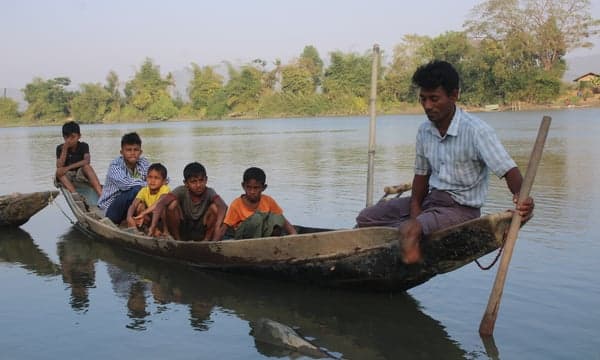
A Crisis Hidden Beneath the Soil: Myanmar's Landmine Epidemic
Beneath the fields, footpaths, and forest floors of Myanmar lies a silent, indiscriminate killer. Landmines — planted by multiple armed actors across decades of conflict — continue to detonate without warning, tearing through the lives of civilians who are simply trying to survive. For the men, women, and children who live through a landmine blast, the explosion marks not an ending, but the beginning of a new and grueling chapter defined by physical pain, lost limbs, and shattered economic futures.
Myanmar has long ranked among the most mine-affected countries in the world. As the civil conflict that intensified following the 2021 military coup continues to escalate, the use of landmines and improvised explosive devices has surged dramatically. The consequences are not abstract statistics — they are farmers who can no longer work their land, parents who can no longer carry their children, and young people whose aspirations have been buried beneath scar tissue and prosthetic fittings.
The Physical Toll: Injuries That Never Fully Heal
Landmine blasts produce catastrophic trauma. The explosive force, often directed upward through the foot or lower leg, causes injuries that go far beyond what a conventional wound might entail. Bone is shattered, soft tissue is destroyed, and contamination from soil and debris makes infection an immediate and life-threatening concern — particularly in areas far from functional medical facilities.
For the majority of survivors in Myanmar, the result is amputation. Losing a foot, a leg, or even multiple limbs is an outcome that many survivors must confront within hours of the blast. In conflict zones where hospitals are understaffed, undersupplied, or simply too distant, the decisions made in those first hours are often made under impossible conditions.
But surviving the surgery is only the beginning. Phantom limb pain — the persistent sensation of pain in a limb that no longer exists — affects a large proportion of amputees and can endure for years or even a lifetime. Nerve damage, recurring infections, and the physical demands of learning to use a prosthetic device add further layers of suffering. Many survivors describe the pain not as something that fades with time, but as a constant companion that colors every waking moment.
Prosthetics, Rehabilitation, and the Gaps in Care
Access to prosthetic limbs and rehabilitation services in Myanmar is deeply unequal. In urban centers, some support networks and humanitarian organizations operate fitting centers and physical therapy programs. But for survivors living in rural or conflict-affected areas — which describes the vast majority of landmine victims — these services are often completely out of reach.
Even when prosthetics are available, they require maintenance, replacement, and careful fitting by trained professionals. A poorly fitted prosthetic device can cause pressure sores, further injury, and renewed infections. Without consistent follow-up care, many survivors find that the prosthetic meant to restore their mobility becomes yet another source of pain.
Psychological rehabilitation receives even less attention. Post-traumatic stress disorder, depression, and anxiety are widespread among landmine survivors, yet mental health infrastructure in Myanmar's conflict zones is virtually nonexistent. Survivors are expected, by necessity, to process unimaginable trauma with little or no professional support.
Economic Devastation: When Survival Becomes a Daily Struggle
In a country where a significant portion of the population depends on manual labor — farming, construction, forest work — the loss of a limb is not only a medical crisis. It is an economic catastrophe. Survivors who were once primary breadwinners for their families suddenly find themselves unable to perform the physical tasks their livelihoods depended upon.
Women survivors face compounded challenges. In many communities, social stigma surrounding disability affects marriage prospects, community standing, and access to informal support networks. The intersection of disability and gender in Myanmar's conflict-affected communities creates particularly acute vulnerabilities that humanitarian responses have often failed to adequately address.
Children who survive landmine blasts face a disrupted education, as injuries and recovery periods pull them out of school. For many, that gap becomes permanent. Without education and with a physical disability, their pathways to economic independence narrow considerably.
- Many survivors are unable to return to farming or physical labor, their primary source of income.
- Families often deplete savings and sell assets to cover medical costs in the immediate aftermath of a blast.
- Long-term disability benefits and social protection mechanisms are largely absent in conflict-affected regions of Myanmar.
- Stigma surrounding disability can isolate survivors from community economic networks and cooperative farming arrangements.
- Humanitarian aid, when it reaches survivors at all, tends to address acute medical needs rather than long-term livelihood support.
The International Response and Its Limitations
Myanmar has not signed the Ottawa Treaty, the landmark international agreement that bans the use, stockpiling, production, and transfer of anti-personnel landmines. This absence of treaty obligations reflects the broader impunity with which armed actors in Myanmar have deployed mines against civilian populations. International humanitarian law, which prohibits the indiscriminate targeting of civilians, has been persistently violated throughout the conflict with minimal accountability.
Organizations such as the International Committee of the Red Cross (ICRC) and various mine action NGOs continue to operate in accessible parts of Myanmar, providing medical care, prosthetics, and mine risk education. However, access constraints imposed by ongoing fighting and the military government's restrictions on humanitarian operations mean that many survivors never receive meaningful assistance.
Giving Voice to the Survivors
Behind every casualty figure is a person whose story deserves to be heard. The farmers who stepped onto a path they had walked a hundred times before. The children who wandered into the wrong field. The aid workers caught in the crossfire of a conflict that has no regard for civilian life. These are the human faces of Myanmar's landmine crisis — faces defined not only by loss, but by resilience, adaptation, and the stubborn will to rebuild a life from whatever remains.
Addressing this crisis requires more than emergency medical response. It demands sustained investment in rehabilitation, livelihood support, mental health services, and above all, accountability for those who continue to plant these weapons in civilian territory. Until the mines stop being laid, the survivors will keep coming — each one carrying a story of pain that refuses to simply go away.