
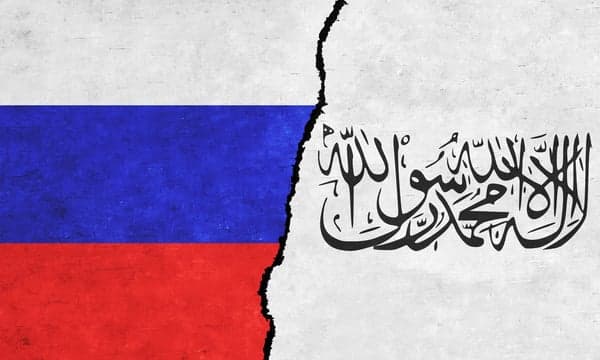
The Russia-Taliban Security Alliance: A New Geopolitical Reality
The emergence of a formal security partnership between Russia and the Taliban-led government of Afghanistan is one of the more striking geopolitical developments of recent years. For decades, Russia and the Taliban existed in a relationship defined by suspicion, proxy conflict, and ideological hostility. Today, that dynamic appears to be shifting in ways that could fundamentally alter the balance of power across Central Asia and beyond. Understanding this alliance — its origins, its motivations, and its potential consequences — requires looking carefully at what both sides stand to gain and what the rest of the world stands to lose.
Historical Context: From Enemies to Partners
Russia's history with Afghanistan is long and painful. The Soviet invasion of Afghanistan in 1979 and the decade-long war that followed left deep scars on both nations. The Taliban, as an ideological successor to the Mujahideen resistance, was for many years viewed through the lens of that conflict. Even after the Soviet withdrawal and the eventual collapse of the USSR, Russia maintained a cautious and often adversarial posture toward Taliban rule in the 1990s.
Following the United States-led intervention in 2001, Russia found itself in an awkward geopolitical position — neither fully aligned with Western efforts in Afghanistan nor willing to support the Taliban openly. That ambiguity persisted for years. However, as U.S. influence in the region waned and the Taliban completed its dramatic return to power in August 2021, Moscow began recalibrating its approach. Secret diplomatic contacts reportedly deepened, and Russia became one of the few major powers to maintain an open embassy in Kabul. By the mid-2020s, what once seemed unthinkable — a formal security arrangement between Moscow and the Taliban — had begun to take shape.
What the Alliance Offers Russia
From Moscow's perspective, the security partnership with the Taliban serves several overlapping strategic interests.
- Buffer against regional instability: Russia is deeply concerned about the spillover of militant activity from Afghanistan into Central Asian states — many of which are former Soviet republics with which Moscow maintains close security ties. A cooperative Taliban government is seen as more useful than a chaotic or hostile one when it comes to containing threats from groups like ISIS-Khorasan (ISIS-K).
- Countering Western influence: With Russia increasingly isolated from Western institutions following its invasion of Ukraine, Moscow has been aggressively seeking alternative partnerships. Aligning with the Taliban — a group widely condemned by Western governments — fits neatly into Russia's broader strategy of positioning itself as a leader of an alternative, non-Western geopolitical order.
- Economic and resource access: Afghanistan sits atop vast untapped mineral reserves and occupies a strategically important geographic position at the crossroads of Central and South Asia. Russian energy and infrastructure firms have shown growing interest in accessing Afghan markets as Western competitors remain sidelined by sanctions and diplomatic constraints.
What the Taliban Gains from the Partnership
For the Taliban, the benefits of aligning with Russia are equally tangible. The group has governed Afghanistan since 2021 under a cloud of international isolation, with no major Western government formally recognizing its administration. A security partnership with a permanent member of the UN Security Council offers a form of legitimacy — or at least relevance — on the world stage.
Russia can also provide the Taliban with military hardware, intelligence-sharing capabilities, and diplomatic cover in multilateral forums. At a time when the Taliban is battling a persistent insurgency from ISIS-K in the country's east and north, Russian security assistance carries real practical value. Beyond security, Moscow represents a potential gateway to broader economic engagement with Eurasian powers, including China and Iran, both of which have their own evolving relationships with Kabul.
Regional Implications: A Reshaping of Central Asian Geopolitics
The emergence of this alliance does not exist in a vacuum. Its implications radiate outward across a region already in flux.
- Central Asian states caught in the middle: Countries like Tajikistan, Uzbekistan, and Turkmenistan share borders with Afghanistan and have their own complicated relationships with the Taliban. Some, particularly Tajikistan, have been openly hostile to Taliban rule. A Russia-Taliban security axis could pressure these states to reconsider their postures — or risk being left out of the new regional security architecture Moscow is trying to build.
- China's watchful pragmatism: Beijing has pursued its own quiet diplomatic engagement with the Taliban, primarily through the lens of economic investment and counterterrorism. A deeper Russia-Taliban alignment may push China to accelerate its own strategic commitments in Afghanistan to avoid being outpaced by Moscow in a region where China has enormous Belt and Road interests.
- Pakistan's strategic dilemma: Pakistan has historically wielded significant influence over the Taliban, providing sanctuary, intelligence, and political support over the decades. A Taliban increasingly oriented toward Russia may gradually reduce Islamabad's leverage — a development with profound consequences for Pakistan's own turbulent security environment.
What the West Should Be Watching
Western governments have largely responded to Taliban rule with a combination of sanctions, conditional engagement, and humanitarian aid. The emergence of a Russia-Taliban security alliance complicates that calculus significantly. A Taliban that feels geopolitically secured by Russian backing may become less responsive to Western pressure on human rights, counter-narcotics, or counter-terrorism cooperation.
Moreover, the alliance signals a broader trend: the consolidation of an anti-Western axis of convenience that now stretches from Eastern Europe through the Middle East and into Central Asia. Policymakers in Washington, Brussels, and London will need to decide whether continued isolation of the Taliban simply accelerates its integration into an adversarial geopolitical bloc — or whether a more nuanced form of engagement can preserve Western influence and protect humanitarian interests on the ground.
Conclusion: A Fragile but Consequential Partnership
The Russia-Taliban security alliance is still nascent, and its durability should not be taken for granted. The two parties are separated by deep ideological differences, cultural distance, and a history of mistrust. Russia's own military and economic resources are severely strained by the ongoing war in Ukraine. The Taliban, for its part, has shown a consistent willingness to play competing powers against one another rather than commit exclusively to any single partner.
Nevertheless, the agreement represents a meaningful development in the geopolitics of Central Asia — one that could redraw security alignments, test the cohesion of regional organizations, and challenge the assumptions that have underpinned Western strategy in the broader region for more than two decades. Whether it ultimately proves to be a durable alliance or a marriage of convenience, the Russia-Taliban security partnership deserves close and sustained attention from anyone seeking to understand the evolving shape of 21st-century geopolitics.