
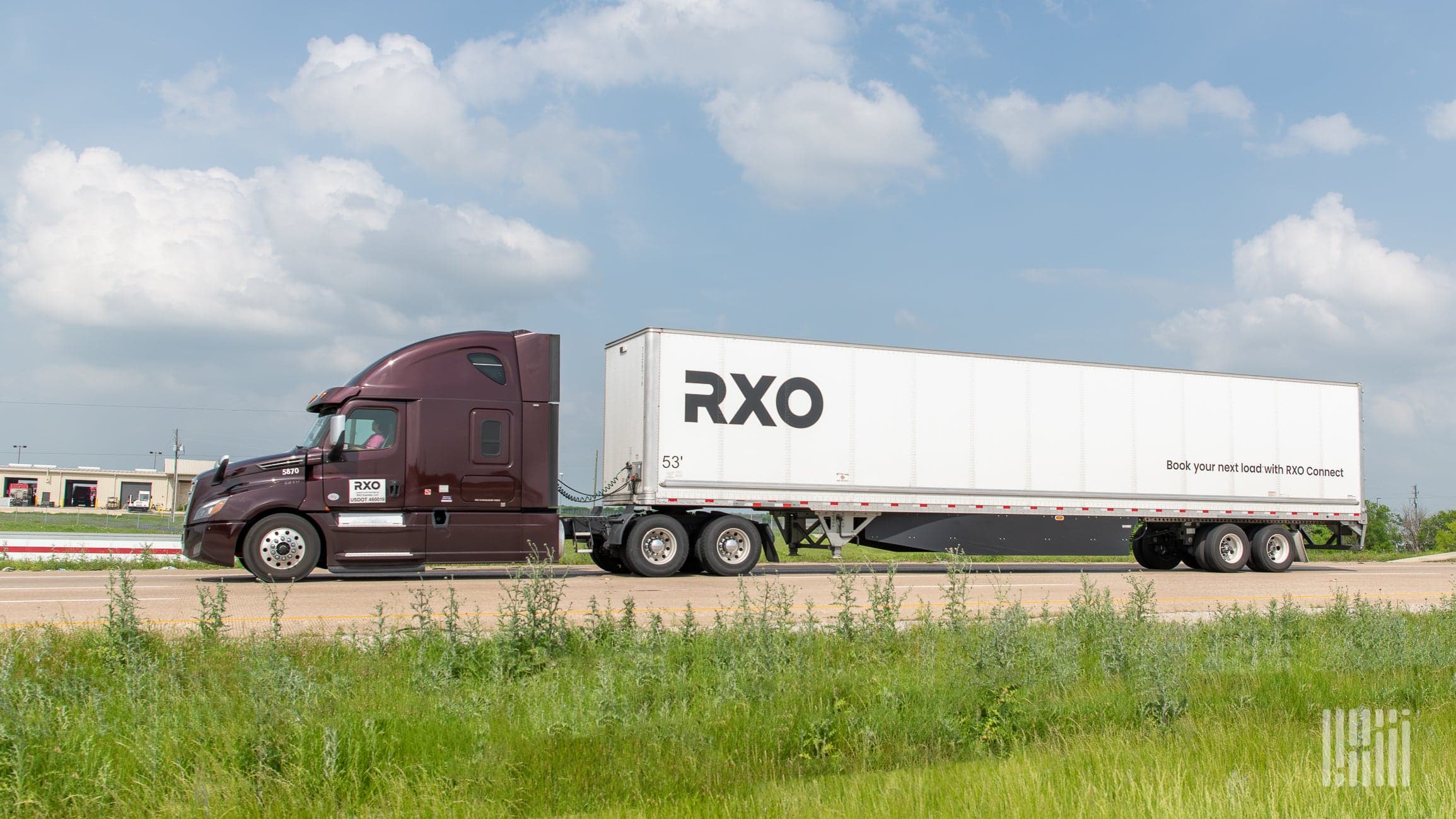
RXO's S&P Debt Rating Affirmed, But Negative Outlook Persists
S&P Global Ratings has officially affirmed RXO's debt rating, offering a measure of short-term stability for the third-party logistics giant. However, the credit agency is maintaining a negative outlook on the company, signaling that the road ahead remains uncertain. For investors, industry analysts, and freight market watchers, this dual decision tells a nuanced story about where RXO stands financially and how rating agencies are interpreting the current state of the trucking industry.
What Does S&P's Affirmation Actually Mean?
When a major credit rating agency like S&P Global Ratings affirms a company's debt rating, it means the agency has reviewed the issuer's financial health and concluded that the existing rating remains appropriate. In RXO's case, S&P has affirmed a BB rating, which falls into what the financial world classifies as non-investment-grade territory, also commonly referred to as "speculative grade" or, more colloquially, "junk" status.
This is not inherently catastrophic. Many companies operate comfortably with BB ratings and maintain healthy access to capital markets. What makes RXO's situation more notable is the combination of this rating with a persisting negative outlook, a signal that a downgrade remains a live possibility depending on how financial and market conditions evolve.
The BB rating has also been affirmed specifically for RXO's unsecured notes, adding another layer of detail to the agency's assessment of the company's overall debt profile.
Why the Negative Outlook Has Not Been Lifted
Despite recent signs of improvement in the freight market, S&P Global has not budged on its negative outlook for RXO. In the agency's own words, the outlook "reflects the risk that the company will be unable to increase its relative profitability or improve its credit measures to the levels we believe are necessary to stabilize the rating."
In practical terms, this means S&P is watching closely to see whether RXO can translate any market tailwinds into tangible improvements in its balance sheet and profitability metrics. A negative outlook does not automatically lead to a downgrade; there is no fixed timeline for how long a company can sit under such a designation. But it does indicate that the agency views the balance of risks as tilted to the downside rather than the upside.
For RXO, climbing out from under this negative designation will require demonstrable progress on credit metrics and a clear improvement in profitability relative to its peers in the 3PL space.
S&P's Cautious Take on the Freight Market Recovery
One of the most telling aspects of S&P's decision is the conservative lens through which the agency is viewing the broader freight and trucking market. While there has been some encouraging movement in trucking pricing recently, S&P stopped well short of calling the recovery a done deal.
"It is unclear if the recent rebound in trucking pricing is sustainable," the agency noted in its commentary, and this skepticism played a meaningful role in holding RXO's rating steady rather than adjusting it in either direction.
This caution reflects a broader debate within the freight industry. The trucking sector has been through a prolonged downcycle, with excess capacity, muted shipper demand, and compressed spot rates creating a difficult operating environment for carriers and brokers alike. While some indicators have pointed toward a gradual firming of conditions, the durability of that trend remains an open question for many market observers, apparently including the analysts at S&P Global.
RXO vs. Moody's: A Tale of Two Ratings
S&P's affirmation also highlights an interesting divergence between the two leading credit rating agencies when it comes to their views on RXO. Moody's currently holds RXO at a Ba1 rating, which is considered one notch above the BB grade that S&P has now reaffirmed.
- Moody's Ba1 rating places RXO one notch below the investment-grade threshold.
- S&P's BB rating puts RXO two notches below that same dividing line.
- This split-rating scenario means investors and creditors must weigh two different institutional assessments when evaluating RXO's creditworthiness.
Such divergence is not unheard of in corporate credit markets, but it does add complexity to how RXO is perceived by lenders, bond investors, and potential business partners. A company sitting at Ba1/BB occupies a meaningful gray zone, and the difference between one and two notches below investment grade can have real consequences for borrowing costs and market access.
What Comes Next for RXO?
S&P did acknowledge that RXO's credit metrics are expected to improve in the near term, suggesting the agency is not entirely dismissive of the company's prospects. However, the pace and magnitude of that improvement will be critical. For the negative outlook to be revised to stable, RXO will likely need to demonstrate sustained profitability gains, better leverage ratios, and evidence that pricing conditions in the trucking market are holding up rather than rolling back.
RXO, which trades on the NYSE under the ticker RXO, operates as a tech-enabled freight brokerage and third-party logistics provider. As a business model, it is inherently sensitive to freight volume cycles and pricing dynamics, making the current market environment a central factor in its financial trajectory.
Key Takeaways for Freight and Finance Watchers
- S&P Global has affirmed RXO's BB debt rating, including for its unsecured notes.
- A negative outlook remains in place, reflecting concerns about profitability and credit metric improvement.
- S&P is skeptical about whether the recent trucking pricing rebound can be sustained over time.
- Moody's rates RXO one notch higher at Ba1, creating a notable split between the two agencies.
- Improving credit metrics are expected, but how quickly and consistently they improve will determine whether RXO's outlook changes.
For now, RXO remains in a holding pattern with S&P, neither advancing nor retreating in terms of its formal credit rating. Whether the freight market's tentative recovery proves durable enough to lift both the company's financials and its ratings outlook is a question that the coming quarters will answer.