
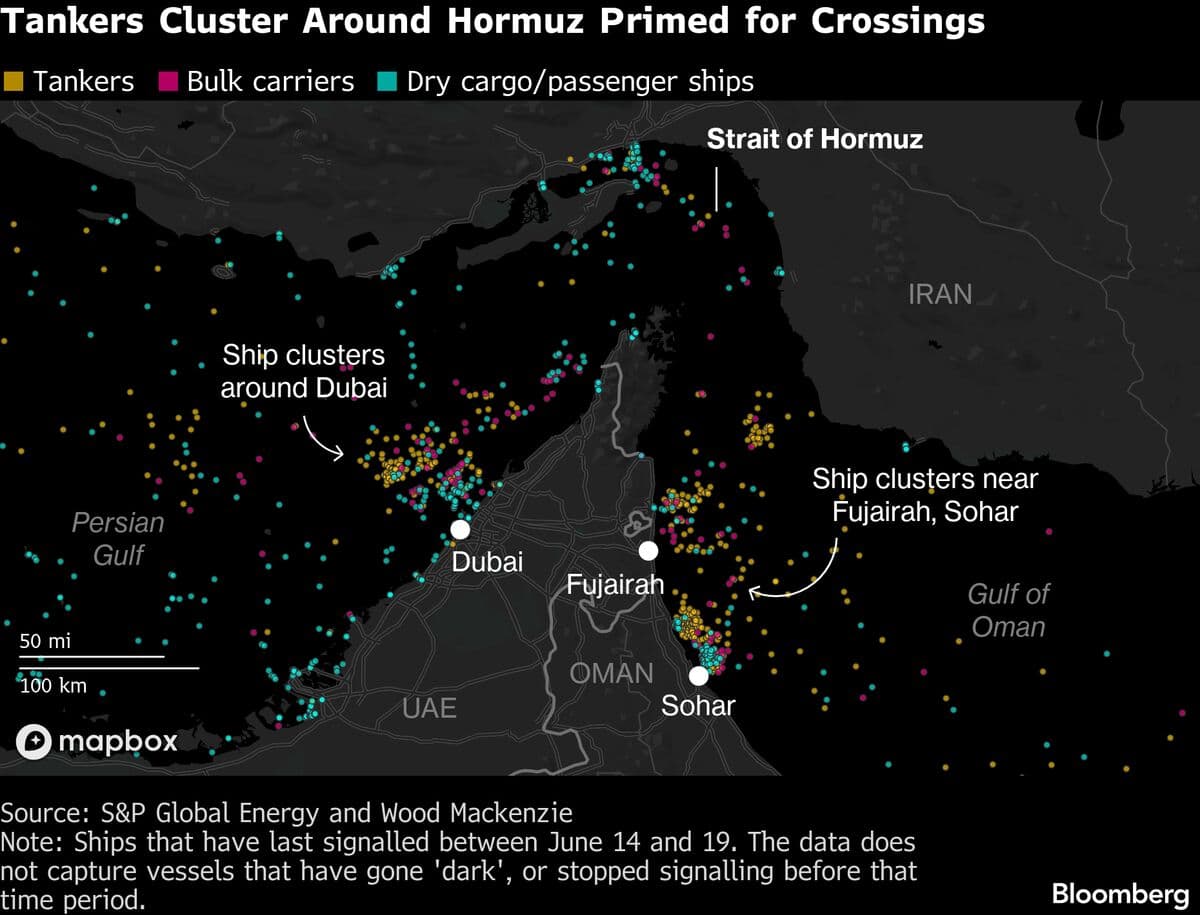
Ships Cleared to Use South Hormuz Route Around the Clock With Signals On
A pivotal development in global maritime security emerged this week as a key naval information group confirmed that vessels can transit the Strait of Hormuz along the southern route at any time of day or night — provided their navigational signals remain active. The guidance comes at a critical moment, as energy traders, shipowners, and logistics operators around the world look for reliable indicators of when and how safely traffic through one of the world's most strategically vital chokepoints can return to full normality.
The Strait of Hormuz, connecting the Persian Gulf to the Gulf of Oman, is the passage through which a significant portion of the world's seaborne oil and liquefied natural gas flows every single day. Any disruption to navigation in this corridor sends immediate ripples through global energy markets, freight rates, and insurance premiums. The latest advisory, while measured in tone, carries enormous weight for an industry that has been navigating a complex web of geopolitical tension and operational risk in the region.
What the Naval Advisory Actually Says
According to the naval information group's guidance, ships are now considered free to transit the Strait of Hormuz via its southern corridor at any hour, as long as their Automatic Identification System (AIS) transponders and other onboard signals remain switched on and broadcasting. This is a meaningful detail. AIS signals allow vessels to be tracked in real time by maritime authorities, coast guards, naval forces, and commercial monitoring services. Keeping signals active is not merely a procedural formality — in a high-tension waterway like Hormuz, it is a fundamental layer of protection that distinguishes a compliant merchant vessel from one that might be perceived as operating covertly.
The emphasis on active signaling reflects the current security environment in and around the strait, where naval forces from multiple nations maintain a close watch on vessel movements. Ships that disable or obscure their AIS signals risk being misidentified, intercepted, or treated as potential security threats. The advisory essentially underscores that transparency is the safest operational posture a commercial vessel can adopt.
Why the Southern Route Matters
The Strait of Hormuz is roughly 21 nautical miles wide at its narrowest point, and international shipping uses a designated Traffic Separation Scheme (TSS) to manage the flow of inbound and outbound vessels. The southern lane, which runs closer to Omani territorial waters, has historically been considered the more secure of the two corridors during periods of heightened tension. Oman has maintained a degree of diplomatic neutrality in regional conflicts, which has made proximity to its waters a preferred option for risk-averse operators.
During periods of acute tension — whether involving threats of vessel seizures, mine-laying activity, or drone and missile activity near shipping lanes — the southern route has offered a marginally lower-risk passage. The new advisory reinforces this by explicitly naming the southern route as viable for around-the-clock transits, giving shipowners and charterers a clearer operational framework to work within.
The Broader Context: Energy Markets and Shipping Risk
The timing of this guidance matters enormously. Energy traders have been closely monitoring the situation in the Persian Gulf, watching for any signal that the flow of crude oil, refined products, and LNG through Hormuz can be counted on with greater reliability. The strait is the gateway through which roughly 20 percent of the world's total oil consumption passes, including enormous volumes destined for Asia, Europe, and beyond. Saudi Arabian, Iraqi, Kuwaiti, Emirati, and Qatari exports all depend on unimpeded access through this corridor.
When Hormuz traffic is disrupted or perceived to be at elevated risk, the consequences are felt immediately. War risk insurance premiums spike, tanker spot rates rise, and energy prices can become volatile. Shipowners are also forced to make difficult decisions about whether to wait, reroute, or proceed — often under significant commercial pressure from charterers who need their cargoes delivered on schedule.
The naval advisory offers a degree of reassurance to all parties in the supply chain. It does not eliminate risk entirely, but it provides an authoritative operational baseline: the southern route, with signals on, is considered passable at all times. That is a meaningful statement in the current environment.
What Shipowners and Operators Should Do Now
For vessel operators considering transits through the Strait of Hormuz, several best practices emerge from both the advisory and the broader maritime security landscape in the region.
- Maintain active AIS and all required signals at all times during the approach, transit, and departure from the strait. Do not switch off transponders for any reason unless directed by an authorized naval or coastal authority.
- Use the southern corridor of the Traffic Separation Scheme as indicated in the advisory, particularly if transiting during periods of elevated regional tension.
- Register with maritime coordination mechanisms such as the United Kingdom Maritime Trade Operations (UKMTO) and the Combined Maritime Forces, which provide real-time security advisories and can coordinate support if vessels encounter difficulties.
- Ensure war risk insurance is current and adequate for the specific transit, and review any exclusion zones or conditions attached to existing policies before departure.
- Maintain bridge watch vigilance and ensure all crew are briefed on current threat assessments and emergency procedures relevant to the region.
A Cautiously Positive Signal for Global Trade
The naval information group's advisory is, in measured terms, a cautiously positive development for global energy trade and commercial shipping. It does not declare the strait fully normalized or free of risk. Rather, it affirms that a defined, supervised route through this critical waterway is available and that ships adhering to proper signaling protocols can use it around the clock.
For energy traders hoping to lock in supply certainty, for tanker owners calculating whether to accept voyage orders, and for insurers pricing risk in the Gulf, this kind of clarity — however modest — matters. The Strait of Hormuz will always carry a degree of geopolitical risk by virtue of its geography and the regional dynamics that surround it. But guidance like this helps the maritime industry calibrate that risk and make informed, commercially sound decisions.
As the situation continues to evolve, operators are advised to monitor updates from established naval coordination bodies and maritime security services. The southern route is open, the signals must stay on, and the world's energy supply chains are watching closely.