
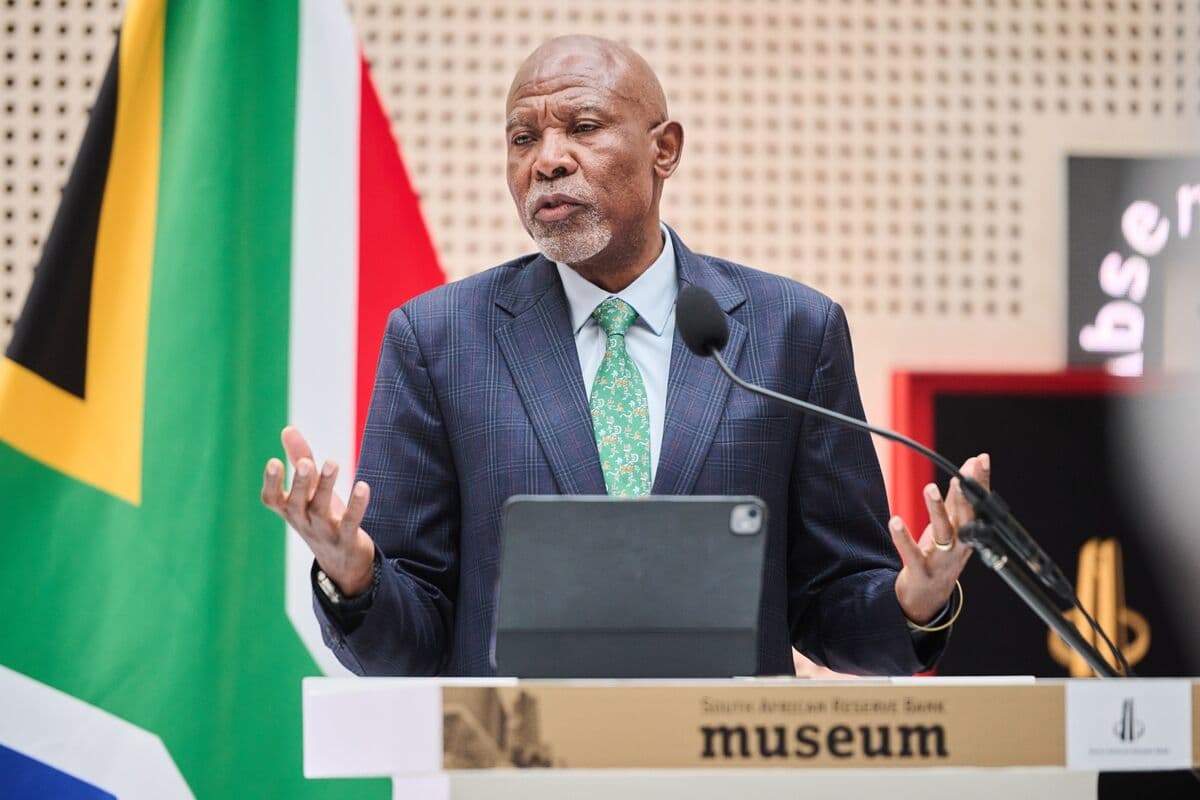
South Africa's Kganyago Warns Inflation Expectations Are Rising
South Africa's Reserve Bank (SARB) Governor Lesetja Kganyago has issued a stark warning that inflation expectations in the country are rising, with early signs of second-round inflation effects beginning to take hold. Speaking with a clear sense of urgency, Kganyago emphasized that policymakers cannot afford to sit on their hands as underlying price pressures continue to build momentum. His remarks have sent a signal to markets, businesses, and households alike: the fight against inflation in South Africa is far from over, and the central bank is prepared to act decisively to anchor expectations and protect long-term price stability.
Understanding Second-Round Inflation Effects
To fully appreciate the gravity of Kganyago's warning, it is important to understand what second-round inflation effects actually mean. In economics, first-round inflation effects refer to the direct impact of a price shock — for example, a sudden rise in global oil prices pushing up fuel costs domestically. Second-round effects, however, are far more insidious. They occur when these initial price increases begin feeding into wage demands, business pricing decisions, and broader consumer expectations, creating a self-reinforcing cycle that becomes increasingly difficult to break.
When workers expect prices to keep rising, they demand higher wages to protect their purchasing power. Businesses, facing higher labour costs, then raise the prices of their goods and services. This dynamic can entrench inflation well above a central bank's target range, even long after the original shock that triggered it has faded. It is precisely this kind of spiral that Kganyago is warning South Africa must guard against — and guard against now.
The Current State of Inflation in South Africa
South Africa has been navigating a challenging inflationary environment shaped by a combination of domestic and global forces. Energy price volatility, persistent load shedding adding to business costs, a weakening rand, and elevated food prices have all contributed to sustained pressure on the consumer price index (CPI). While headline inflation has shown some moderation at various points, the Governor's latest remarks suggest that the underlying, or core, inflation picture remains worrying.
Core inflation — which strips out volatile food and energy prices — is often the measure that central banks pay the closest attention to, as it reflects more durable inflationary trends. When a central bank governor highlights that underlying price pressures are building, it is a clear indicator that the battle against inflation is being fought on multiple fronts simultaneously, not just at the headline level.
Why Inflation Expectations Matter So Much
One of the central bank's most powerful tools is not interest rates themselves, but the credibility that backs them. When businesses and consumers trust that the SARB will keep inflation within its target band of 3% to 6%, they factor that trust into their decisions. Wage negotiations stay moderate. Businesses do not rush to pre-emptively raise prices. Long-term contracts are signed with confidence.
However, when inflation expectations become unanchored — when people start genuinely believing that inflation will remain persistently high — that belief itself becomes a driver of inflation. This is why Kganyago's warning is so significant. The moment a central bank loses control of expectations, restoring credibility requires far more aggressive and economically painful action than if it had intervened earlier. The Governor is essentially making clear that the SARB sees the risk of expectations drifting and is signalling its intent to prevent that from happening.
What This Means for Interest Rates
Kganyago's remarks naturally raise questions about the trajectory of interest rates in South Africa. The SARB has already implemented a significant tightening cycle in recent years in response to elevated inflation, raising its benchmark repo rate substantially from the historic lows seen during the Covid-19 pandemic era. The critical question now is whether additional rate increases are on the table, or whether the central bank will maintain its current stance while keeping a vigilant eye on inflation dynamics.
The Governor's emphasis on the need to act suggests that the SARB will not hesitate to tighten monetary policy further if the data warrants it. Markets and analysts will be closely watching upcoming CPI releases, wage settlement data, and global commodity price movements for clues about the Monetary Policy Committee's next steps. Any indication that second-round effects are accelerating could prompt a hawkish response from the SARB, even in an environment where economic growth remains fragile and unemployment stubbornly high.
Balancing Growth and Price Stability
South Africa faces an exceptionally difficult balancing act. On one side sits the imperative to control inflation and keep expectations anchored. On the other lies a struggling economy grappling with structural challenges, including unreliable electricity supply, high unemployment, weak private investment, and sluggish GDP growth. Raising interest rates too aggressively risks deepening the economic slowdown and squeezing households that are already under severe financial pressure.
Yet allowing inflation to become entrenched carries its own severe costs — eroding the purchasing power of ordinary South Africans, widening inequality, and ultimately undermining the very economic stability that is necessary for sustainable growth. Kganyago's message, read between the lines, is that price stability is the foundation upon which growth must be built, not a luxury to be sacrificed in pursuit of short-term economic relief.
The Broader Global Context
South Africa's inflationary challenges do not exist in a vacuum. Globally, central banks from the United States Federal Reserve to the European Central Bank have spent recent years navigating the difficult terrain of post-pandemic inflation, supply chain disruptions, and geopolitical shocks. Many of these institutions have also been forced to act aggressively to prevent second-round effects from taking hold in their own economies.
For South Africa, global dynamics add an additional layer of complexity. A stronger US dollar tends to weaken the rand, making imports more expensive and adding to domestic inflationary pressure. Global energy markets remain volatile. Food commodity prices, influenced by geopolitical events, continue to fluctuate. These external factors lie beyond the SARB's direct control, making it all the more critical that the central bank manages domestic expectations with care and credibility.
What Businesses and Consumers Should Watch
For South African businesses, Kganyago's warning is a prompt to stress-test financial plans against a scenario in which borrowing costs remain elevated for longer than previously anticipated. Pricing strategies, labour cost projections, and capital investment decisions should all factor in the possibility of a sustained high-rate environment.
For consumers, the message is equally sobering. Households carrying variable-rate debt — particularly home loans — should prepare for the possibility that relief through rate cuts may be slower to arrive than hoped. Building financial buffers and managing debt carefully remains critically important advice in this environment.
Conclusion: Vigilance Is the Watchword
Governor Lesetja Kganyago's warning about rising inflation expectations and building second-round effects is not merely a technical economic observation. It is a clear-eyed assessment of the risks facing South Africa's price stability framework and a firm signal that the SARB stands ready to act. As underlying price pressures build and the danger of unanchored expectations grows, the central bank's next moves will be watched closely by investors, households, and policymakers across the continent. In the battle against inflation, vigilance — and credibility — remain the most powerful weapons in the SARB's arsenal.