
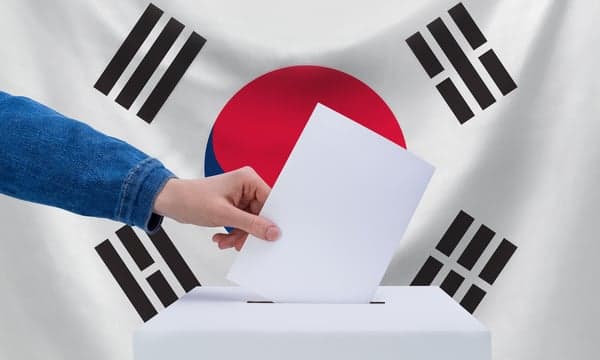
South Korea's Students Raise Their Voices Over the Local Election Ballot Shortage
When voters showed up to cast their ballots in South Korea's local elections, many encountered something deeply troubling: not enough ballots to go around. What followed was not just administrative chaos, but a crisis of democratic confidence that prompted university students across the country to speak up — not as partisan actors, but as citizens demanding accountability from the institutions entrusted with protecting their votes.
The ballot shortage that plagued South Korea's local elections has since sparked a wider public conversation about electoral integrity, government responsibility, and the role of young people in shaping the future of their democracy. And at the center of that conversation are university students who have been careful to keep their message focused on principle rather than politics.
What Happened During South Korea's Local Elections?
During the most recent local election cycle in South Korea, polling stations in multiple regions reported significant shortfalls in the number of physical ballots available for voters. In some locations, voters were turned away or asked to wait for extended periods while election officials scrambled to address the shortage. In others, the logistical breakdown caused confusion, frustration, and ultimately suppressed turnout in ways that are difficult to fully quantify.
For many South Koreans, the episode raised uncomfortable questions. Was the shortage the result of poor planning? Systemic negligence? Or something more deliberate? Election officials offered explanations that critics found unsatisfying, and the incident quickly became a flashpoint in a nation already navigating a charged political climate.
While political parties were quick to assign blame along partisan lines, one group chose a different approach: students.
Why University Students Chose to Speak Out
South Korean university students have a long and storied history of civic activism. From the democracy movements of the 1980s to more recent protests against government policy, students have consistently seen themselves as guardians of the public interest. The ballot shortage gave them a new — and urgent — reason to engage.
What made their response notable this time was its deliberate non-partisan tone. Rather than align themselves with opposition parties eager to weaponize the issue or defend the ruling party's record, student groups framed their concerns around democratic accountability as a universal principle. Their message was clear: it does not matter which party benefits or suffers from a ballot shortage. What matters is that every eligible voter has the unobstructed right to cast a vote.
This framing resonated with a public that had grown weary of partisan point-scoring. Student statements and campus demonstrations focused on questions like transparency in election administration, independent audits of polling logistics, and meaningful consequences for officials whose negligence compromises the voting process.
The Broader Democratic Stakes
South Korea is widely regarded as one of Asia's most vibrant democracies, and its electoral institutions have long been praised for their efficiency and relative integrity. That makes a ballot shortage not just an administrative embarrassment, but a symbolic wound.
When citizens cannot vote because ballots are unavailable, the social contract between a government and its people is strained. Democratic legitimacy depends not only on the accuracy of vote counting, but on equal and unimpeded access to the act of voting itself. A shortage — whatever its cause — undermines that access and, by extension, the credibility of the outcome.
Students articulated this point with particular clarity. For a generation that has grown up navigating an era of political polarization and institutional distrust, the ballot shortage felt like yet another example of systems failing ordinary people. Their response was not to retreat into cynicism, but to push back with demands for transparency and reform.
Navigating the Partisan Divide
One of the most striking aspects of the student response was how carefully it avoided the partisan trap. In South Korea, as in many democracies, electoral controversies are quickly absorbed into existing political battles. Allegations of mismanagement become weapons in the hands of whoever stands to gain most from eroding public confidence in the current administration.
Student activists were acutely aware of this dynamic. By consistently emphasizing democratic principles over party politics, they managed to speak to a broader audience — including voters of all political stripes who simply wanted assurance that their voices would be heard and their ballots counted.
This approach also gave the student movement a kind of moral authority that purely partisan actors could not claim. When demands for accountability come from citizens who are not seeking electoral advantage, they are harder to dismiss.
What Students Are Calling For
Across campuses and public statements, several consistent demands have emerged from South Korea's student community in response to the ballot shortage:
A full, transparent, and independent investigation into how and why the ballot shortage occurred, with findings made publicly available to all citizens.
Clear accountability measures for election officials and agencies whose planning failures contributed to the problem, including administrative and, where warranted, legal consequences.
Systemic reforms to ballot preparation and distribution processes to ensure that no voter is turned away due to logistical failures in future elections.
Meaningful consultation with civil society — including students and young voters — in the design and review of electoral administration procedures.
The Significance of Youth Engagement in Korean Democracy
The student response to the ballot shortage is significant beyond the immediate issue. It reflects a broader truth about the health of democratic societies: when young people engage with civic institutions not out of partisan loyalty but out of genuine commitment to democratic values, it strengthens the entire system.
South Korea's students are not simply complaining. They are modeling what democratic citizenship looks like — holding power accountable, demanding transparency, and refusing to let administrative failures become normalized. In doing so, they are sending a message to election authorities and elected officials alike: the public is watching, and the next generation of voters will not settle for anything less than a democracy that actually works.
As South Korea continues to process the fallout from its local election ballot shortage, the students who spoke out may well have set the terms of the debate — not as partisans, but as citizens. And that, in the end, may be their most important contribution of all.