
Why Climate Risk Is Now a Top Concern for Stock Investors
For much of the past year, geopolitical tensions — particularly surrounding the conflict involving Iran — dominated the headlines and rattled equity markets. But as those fears begin to ease, investors are pivoting their attention toward a threat that operates on a longer, more disruptive timeline: climate risk. Specifically, the emergence of a rare "Super El Niño" weather pattern is forcing a significant reassessment of positions across multiple sectors, from agriculture and commodities to insurance and energy. For traders who understand how to read these signals, the shifting climate landscape presents both serious downside risks and genuine opportunities.
What Is a Super El Niño — and Why Should Traders Care?
El Niño is a naturally occurring climate pattern characterized by the warming of surface waters in the central and eastern Pacific Ocean. It disrupts normal weather patterns across the globe, triggering droughts in some regions and flooding in others. A "Super El Niño" refers to an especially intense version of this phenomenon — one with amplified and far-reaching consequences for global supply chains, crop yields, commodity prices, and the profitability of entire industries.
Historically, strong El Niño events have correlated with significant volatility in agricultural commodities, spikes in property insurance claims, disruptions to hydroelectric power generation, and shifts in energy demand. For stock traders, this translates into a need to rethink sector weightings, hedge climate-exposed positions, and actively seek out companies that may benefit from the disruption.
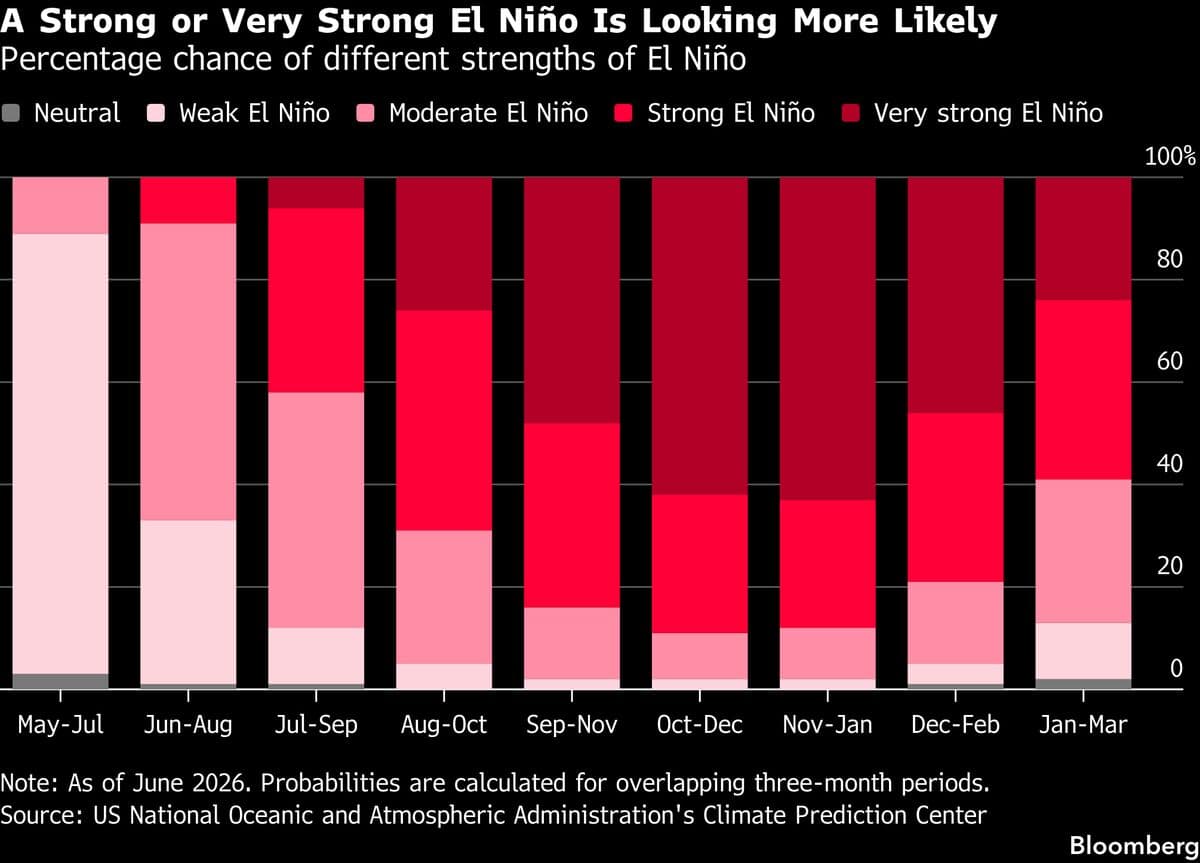
The current episode is drawing particular attention because of its intensity. Climate scientists have flagged this as one of the most powerful El Niño patterns in decades, putting it in rare company alongside the major events of 1997–1998 and 2015–2016 — both of which had measurable and lasting effects on global financial markets.
How El Niño Affects Key Investment Sectors
Agriculture and Soft Commodities
Agriculture is perhaps the sector most directly exposed to El Niño-driven disruption. The weather pattern tends to suppress rainfall in key growing regions across South Asia, Southeast Asia, and parts of South America, while simultaneously causing excessive rainfall in other zones. This imbalance affects the production of a wide range of crops including wheat, corn, soybeans, sugar, and palm oil.
Traders watching agricultural stocks and exchange-traded funds (ETFs) should pay close attention to crop outlook reports from major producing nations. Companies with heavy exposure to affected regions — whether through direct farming operations, commodity trading, or food processing — may face margin pressure as input costs rise and supply tightens. Conversely, commodity traders and agricultural exporters in regions that benefit from increased rainfall could see revenues surge.
Insurance and Reinsurance
The insurance sector is another area where Super El Niño events leave a measurable financial footprint. More frequent and severe weather events — including hurricanes, wildfires, and floods — drive up claims costs for property and casualty insurers. Reinsurance companies, which absorb outsized losses on behalf of primary insurers, are particularly vulnerable during periods of elevated climate activity.
Investors holding positions in insurance stocks should scrutinize companies' geographic exposure, reinsurance programs, and reserve adequacy. Firms with strong catastrophe modeling capabilities and diversified risk books are generally better positioned to weather the storm, so to speak. Meanwhile, rising claims environments often lead to higher premium pricing in subsequent underwriting cycles — which can eventually become a tailwind for well-capitalized insurers.
Energy and Utilities
El Niño's effects on energy markets are complex and multidirectional. Warmer-than-average temperatures in parts of the Northern Hemisphere can reduce demand for heating fuels in winter months, putting downward pressure on natural gas prices. At the same time, prolonged droughts in regions that rely heavily on hydroelectric power — such as parts of South America and Southeast Asia — can force utilities to increase their use of fossil fuels, driving up generation costs and energy prices locally.
Traders should also monitor the impact on renewable energy generation more broadly. Solar output can be affected by increased cloud cover in some regions, while wind patterns shift in ways that alter the productivity of wind farms. Utilities with highly diversified generation portfolios are generally more resilient, while those heavily dependent on a single energy source face heightened exposure.
Strategic Moves for Climate-Aware Traders
Navigating a Super El Niño as a stock investor requires both defensive repositioning and opportunistic thinking. Here are some approaches experienced traders are considering:
- Rotate toward climate-resilient sectors: Industries such as water infrastructure, precision agriculture technology, and climate data analytics tend to attract increased investment during prolonged climate disruption cycles. Companies developing drought-resistant crop technologies or advanced irrigation systems may see accelerated demand.
- Use commodities as a hedge: Adding exposure to commodity-linked instruments — such as agricultural futures ETFs or commodity-focused equity funds — can help offset losses in consumer staples or food-processing stocks facing input cost pressures.
- Monitor earnings guidance closely: During El Niño events, forward-looking guidance from companies in exposed sectors becomes an especially important signal. Watch for downward revisions in agricultural companies, utilities, and insurers operating in affected geographies.
- Consider geographic diversification: Some regions actually benefit from El Niño conditions, including parts of the southern United States and East Africa, which often see increased rainfall. Companies with operations in these areas may outperform regional peers.
The Bigger Picture: Climate Risk as a Permanent Market Variable
Perhaps the most significant takeaway from the current Super El Niño episode is that climate risk can no longer be treated as an occasional, headline-driven disruption. It is increasingly a structural variable embedded in corporate earnings, supply chains, and long-term asset valuations. Institutional investors and major asset managers have been incorporating climate scenario analysis into their risk frameworks for years, and the current environment is reinforcing the urgency of that approach for retail traders as well.
As geopolitical risk momentarily fades from the foreground, the market's focus on climate is a reminder that the investment landscape is always evolving. Traders who take the time to understand how a Super El Niño reshapes sector dynamics will be far better positioned to protect their portfolios — and potentially profit — as the effects of this rare weather event continue to unfold across global markets.