
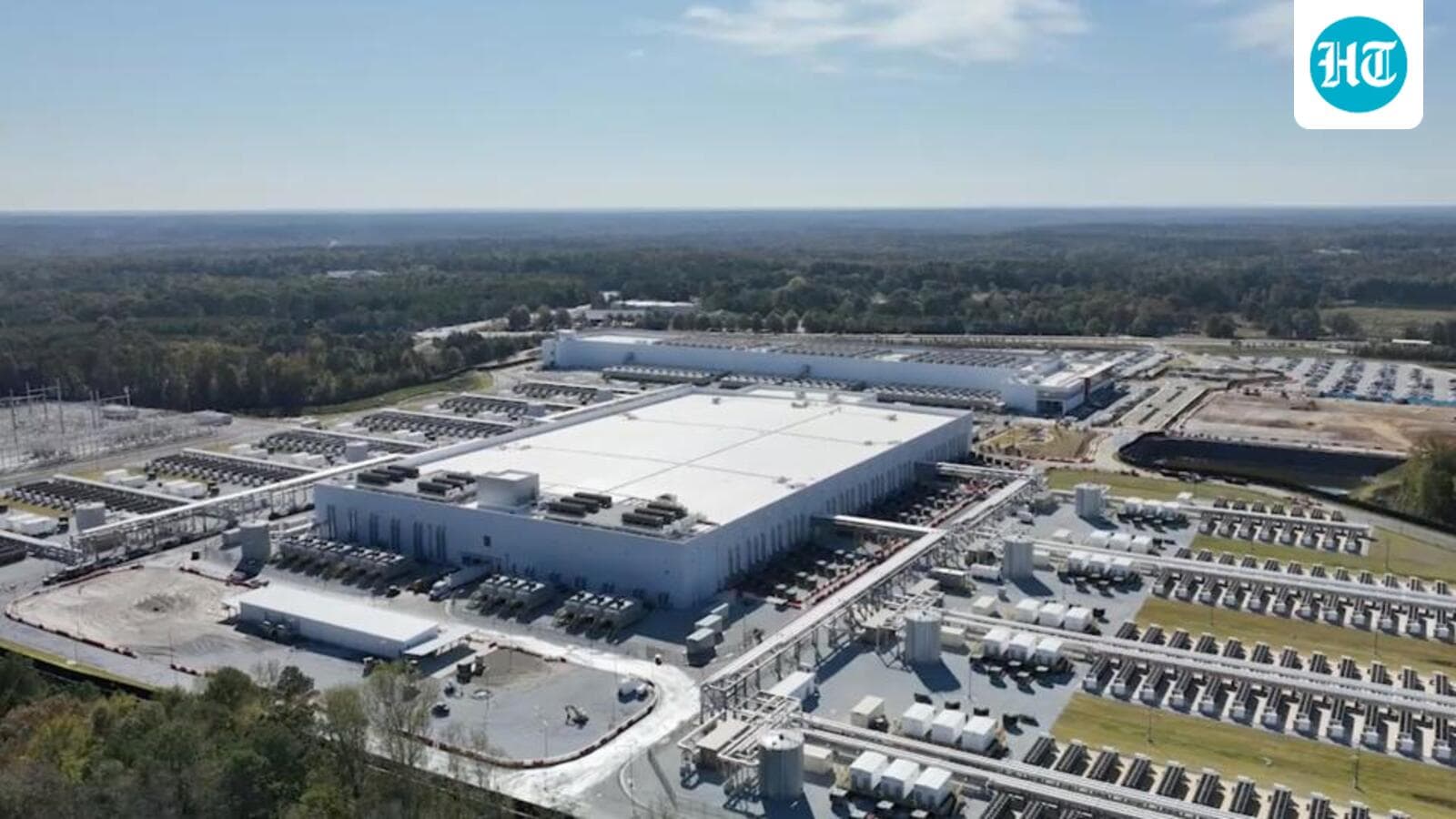
India's AI Data Centre Boom: A Promise Built on Finite Foundations
There is something quietly extraordinary happening across India's industrial corridors and coastal economic zones. As governments in Europe impose moratoria on new data centre construction and parts of the United States grapple with grid overload warnings, India is rolling out the welcome mat. Hyperscaler investments, sovereign AI ambitions, and a booming digital economy are converging to make India one of the world's most attractive destinations for AI data centre infrastructure. But beneath the enthusiasm lies a paradox that will define the country's technological future: can India's natural resources — its water, its land, its electricity grid — actually keep pace with the appetite of an AI-hungry world?
The question is not whether India will face a reckoning. It is a matter of when, and how prepared the country will be when it arrives.
Why India Is Welcoming Data Centres When Others Are Pulling Back
India's openness to data centre investment is not accidental. The country is executing a deliberate strategy to position itself as a global hub for digital infrastructure, capitalising on its large domestic market, a growing pool of technology talent, and significant government incentives. States like Maharashtra, Tamil Nadu, Telangana, and Uttar Pradesh are offering land concessions, tax holidays, and single-window clearances to attract hyperscale operators.
Meanwhile, the global context makes India's posture all the more striking. The Netherlands temporarily halted new data centre approvals near Amsterdam due to land and electricity scarcity. Ireland restricted further development in Dublin over grid capacity concerns. Singapore imposed a moratorium that lasted nearly four years. These restrictions reflect a growing consensus in developed markets: unchecked data centre growth is incompatible with existing resource limits.
India has watched this unfold and made a different calculation. With AI workloads migrating globally and companies desperate for new geographies that offer regulatory openness and scale, India sees an opportunity too large to ignore. The economic case is compelling. But the environmental and infrastructural case is considerably more complicated.
The Hidden Resource Cost of Every AI Query
Most conversations about data centres focus on gigawatts and gigabytes. The less visible dimension — and in many ways the more urgent one — is water. Modern data centres rely heavily on water-cooled systems to manage the immense heat generated by GPU clusters running large language models and other AI workloads. A single large hyperscale facility can consume millions of litres of water per day, even with efficiency improvements.
India is a country where water stress is not a future projection — it is a present reality. Roughly 600 million people face high-to-extreme water stress, according to assessments from organisations tracking global water security. Chennai, one of the preferred data centre corridors, has experienced severe water crises within living memory. Bengaluru, another major hub, has been flagged repeatedly for its declining water table. Placing water-intensive infrastructure in regions already managing scarcity is not merely an environmental concern; it is a social and political one.
Energy: India's Grid Cannot Be Taken for Granted
Electricity is the other foundational resource that AI infrastructure demands in staggering quantities. A single large AI training cluster can consume as much power as a small town. As India scales its data centre capacity from its current base — estimated at around 1,000 MW of installed capacity — toward the multi-gigawatt ambitions articulated in various state and national policy documents, the pressure on the national grid will intensify significantly.
India has made remarkable strides in renewable energy, with solar and wind capacity growing rapidly. Yet the grid remains uneven. Transmission infrastructure in several high-demand states lags behind generation capacity. Frequency instability and outages, while improving, are still part of the operational reality for industrial consumers. Data centres demand near-perfect uptime — typically 99.999 percent availability — which means they either lean on diesel backup systems at enormous carbon cost, or they push cloud providers to fund dedicated renewable energy infrastructure of their own.
The latter pathway, where hyperscalers invest directly in captive solar or wind parks, is increasingly common and potentially transformative. But it adds complexity, timeline, and capital requirements that not every operator is prepared to absorb.
Land, Local Communities, and the Politics of Infrastructure
Data centres are not invisible. They occupy large footprints, alter local microclimates, strain municipal water systems, and displace agricultural or ecologically sensitive land when poorly sited. India's data centre growth, if concentrated without spatial planning discipline, risks creating infrastructure corridors that generate national economic value while imposing disproportionate local costs.
The communities closest to these facilities — farmers, urban-peripheral residents, local governments — often have the least voice in the decisions that shape where data centres are built and how they operate. Getting the social licence right is not a soft concern. Infrastructure that faces community opposition or regulatory backlash midway through development is infrastructure that fails to deliver on its promise.
The Path Forward: Ambition Matched With Accountability
None of this argues that India should slow its data centre ambitions. The economic and strategic stakes are too high, and the window of competitive advantage will not stay open indefinitely. What it argues, forcefully, is that India must pair its investment openness with rigorous resource planning. Mandatory water-use benchmarks, grid-tied renewable energy requirements, environmental impact disclosures, and spatial zoning policies are not obstacles to growth — they are the architecture that makes growth durable.
Countries that resolved this tension early — that embedded sustainability requirements into their data centre regulatory frameworks before demand outpaced planning — are now reaping the benefits of stable, trusted infrastructure. India has the advantage of watching those experiments play out before writing its own rules. The AI data centre paradox is real. But it is also, with sufficient foresight, entirely navigable.
Conclusion: When, Not If
India stands at an inflection point. The investments being announced today will shape the country's digital and environmental landscape for decades. The question of whether India's natural resources can keep up with its AI data centre ambitions is not rhetorical — it demands answers in policy rooms, boardrooms, and planning commissions right now. The rest of the world is already learning, often the hard way, that building the infrastructure of the future on the assumption of unlimited resources is a bet that eventually loses. India has both the opportunity and the obligation to do better.