
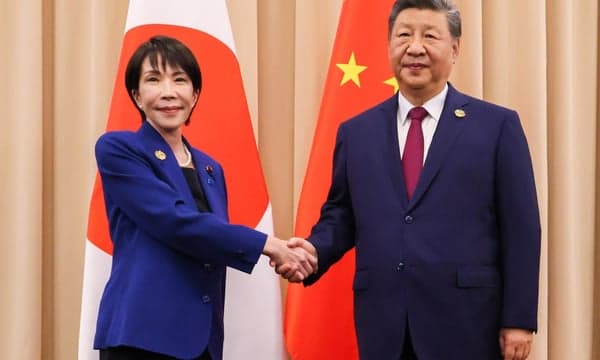
Beijing's Unprecedented Campaign Against Tokyo
Since Sanae Takaichi assumed the role of Japan's prime minister, something unusual has been unfolding in the diplomatic corridors of East Asia. China's response to the new administration in Tokyo has not followed the familiar rhythms of regional rivalry. It has been sharper, more coordinated, and more personal than almost any diplomatic pressure campaign Beijing has previously directed at a Japanese government. Understanding why — and what makes this particular moment so distinct — requires a careful look at three defining characteristics that set China's current posture apart from historical precedent.
Japan-China relations have always contained friction. Territorial disputes over the Senkaku Islands, competing historical narratives surrounding World War II, and differing visions of regional order have ensured that the relationship is never entirely smooth. But what Beijing is doing now goes beyond the usual pattern of protest, warning, and calibrated pressure. It represents something qualitatively different, and analysts watching the region closely have begun to take notice.
Characteristic One: The Campaign Is Deeply Personalized
The first and perhaps most striking feature of China's criticism is how aggressively it has targeted Takaichi herself as an individual, rather than simply objecting to Japanese policy in the abstract. This is a meaningful departure from the way Beijing typically conducts its diplomatic criticism. Ordinarily, Chinese state media and official spokespersons focus their language on "certain Japanese politicians" or "right-wing forces in Japan," using language that is pointed but still somewhat diffuse. With the Takaichi administration, the gloves have come off in a more direct way.
Takaichi has long been associated with a hawkish stance on national security, close ties to the Nippon Kaigi conservative network, and a record of visiting the Yasukuni Shrine — a site that China views as a symbol of Japanese militarism and an affront to the memory of the war. Beijing has leveraged these biographical details as the foundation of a personalized narrative, framing the administration not merely as a policy disagreement but as the arrival of a fundamentally hostile actor at the helm of a major neighboring power.
This personalization carries strategic consequences. It makes diplomatic de-escalation significantly harder, because any softening of China's stance risks appearing as a legitimization of a leader Beijing has publicly condemned. It also raises the domestic political temperature on both sides, making pragmatic engagement more difficult for moderate voices to advocate.
Characteristic Two: The Coordination Across State Platforms Is Unusually Tight
The second defining characteristic is the remarkable degree of coordination visible across China's various state messaging platforms. When Beijing has criticized Japanese leaders in the past, the response has often been somewhat uneven — strong statements from the Foreign Ministry, perhaps op-eds in the Global Times, but with a certain amount of variation in tone and emphasis across different official channels. The campaign against the Takaichi administration has been notably more synchronized.
State television, official social media accounts, government spokespersons, and party-affiliated newspapers have all been advancing broadly the same narrative, using overlapping language and reinforcing the same core accusations at approximately the same tempo. This kind of tight message discipline suggests a coordinated effort at the central level rather than the organic output of individual bureaucratic actors responding to events as they arise.
- Chinese Foreign Ministry briefings have repeatedly returned to the same themes regarding Takaichi's political history and stated positions.
- State media coverage has amplified those briefings with editorial content that goes further in its rhetoric, testing the boundaries of what official spokespeople can say directly.
- Chinese diplomats stationed in third countries have echoed the messaging, suggesting the campaign is intended to shape international perceptions of the administration, not only to signal displeasure to Tokyo itself.
This multi-channel coordination points to a campaign that has been deliberately designed, which itself tells us something important about Beijing's strategic calculations at this moment in the bilateral relationship.
Characteristic Three: The Campaign Has a Regional Audience in Mind
The third characteristic — and arguably the most geopolitically significant — is that China's criticism of the Takaichi administration appears designed as much for regional consumption as for the ears of the Japanese government itself. Beijing seems to be sending a signal not just to Tokyo but to Seoul, Washington, Taipei, and Southeast Asian capitals about the kind of Japan it believes they are now dealing with.
By framing Takaichi as a revisionist nationalist whose elevation represents a dangerous shift in Japanese politics, China is attempting to pre-emptively complicate Japan's diplomatic relationships. If other governments in the region accept even a portion of Beijing's framing, it becomes harder for Japan to build the security partnerships and economic coalitions it has been actively cultivating under successive administrations.
This triangulation strategy — using bilateral criticism to shape third-party perceptions — is not unique to China's foreign policy toolkit, but it is being deployed with particular sophistication in this instance. The timing is also notable, arriving at a moment when Japan has been deepening its security ties with the United States, strengthening its defense cooperation with South Korea, and taking on a more assertive posture in discussions about Taiwan Strait stability.
What This Means for the Future of Japan-China Relations
Taken together, these three characteristics — the personalization of the attack, the coordination of state messaging, and the regional targeting of the campaign — paint a picture of a Beijing that views the Takaichi administration as a genuine strategic threat, not merely an inconvenient political development to be managed through standard diplomatic channels.
Whether this assessment is accurate, or whether Beijing is overreacting to a leader whose rhetoric has historically exceeded her policy actions, remains an open and important question. What is clear is that the diplomatic environment surrounding Japan has shifted materially, and the coming months will test whether either side possesses the pragmatism to prevent a managed rivalry from hardening into something more dangerous. The three characteristics outlined here will likely remain the defining features of that dynamic for as long as Takaichi remains in office — and possibly well beyond.