
Trans-Pacific Air Cargo Surges as US Demand for Data Center Components Skyrockets
The global air cargo industry is experiencing a dramatic reshaping of its trade lanes, and nowhere is that shift more visible than across the Pacific Ocean. According to aviation consultancy Aevean, the volume of high-tech goods transported by air from Asia to North America increased by a staggering 70% year over year. The primary driver behind this extraordinary growth? Insatiable US demand for data center components — the hardware backbone powering the artificial intelligence boom, cloud computing expansion, and next-generation enterprise infrastructure.
At the same time, the data reveals a notable countertrend: US imports of e-commerce goods via air freight have declined. This divergence tells a compelling story about how the priorities of American businesses and consumers are evolving, and what it means for the future of global air freight logistics.
What Is Fueling the Surge in High-Tech Air Cargo?
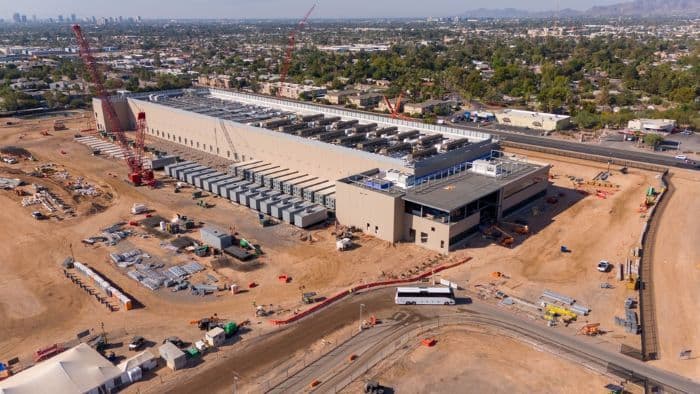
The explosion in data center construction across the United States has created an unprecedented appetite for specialized hardware. Servers, graphics processing units (GPUs), networking switches, power distribution units, cooling systems, and other mission-critical components are being sourced at scale — primarily from manufacturing hubs in Taiwan, South Korea, Japan, and China — and flown directly to American shores to meet urgent deployment timelines.
The urgency is not accidental. The AI arms race among tech giants like Microsoft, Google, Amazon, and Meta has compressed infrastructure timelines dramatically. Companies building or expanding hyperscale data centers cannot afford the weeks-long lead times that ocean freight typically demands. Air cargo, despite its premium cost, provides the speed-to-deployment advantage that operators require when competitive pressure is measured in months, not years.
The AI Infrastructure Investment Wave
Investment in AI infrastructure has reached a fever pitch. Analysts estimate that hyperscale cloud providers collectively committed hundreds of billions of dollars to data center buildouts in 2024 alone. Each new data center campus requires tens of thousands of servers, miles of fiber optic cabling, and highly specialized semiconductor-based components — nearly all of which are manufactured in Asia.
Semiconductor fabrication remains concentrated in East Asia, with Taiwan Semiconductor Manufacturing Company (TSMC) producing the majority of the world's most advanced chips. When those chips are packaged into server modules and GPU clusters, they begin their journey across the Pacific — increasingly by air rather than sea — to satisfy the schedules of American hyperscalers and colocation providers.
Why Air Freight Over Ocean Shipping?
For standard consumer goods, ocean freight remains the preferred logistics mode due to its significantly lower cost per unit. However, data center components present a different calculus for several reasons.
- High value-to-weight ratio: A single server rack or GPU cluster can represent hundreds of thousands of dollars in value, making the relative cost of air freight marginal compared to the asset's worth.
- Time sensitivity: Data center operators are often under contractual obligations to bring new capacity online by specific dates. Delays translate directly into lost revenue and strained customer relationships.
- Supply chain volatility: The lingering effects of global supply chain disruptions have made procurement teams more willing to pay the air freight premium to ensure reliable, predictable delivery schedules.
- Inventory minimization: Just-in-time delivery strategies are increasingly preferred for expensive hardware that depreciates rapidly and should not sit idle in warehouses.
The Decline of E-Commerce Air Imports: A Parallel Story
While high-tech cargo volumes have surged, Aevean's data highlights a concurrent decline in US air imports of e-commerce goods. This may seem counterintuitive at a time when online shopping remains robust, but several forces are at work beneath the surface.
Regulatory changes have played a significant role. The de minimis exemption — which previously allowed low-value packages (under $800) to enter the United States without duties or tariffs — has faced increasing scrutiny and proposed reforms. Heightened enforcement and the threat of policy changes prompted many Asian e-commerce platforms and logistics providers to reassess their reliance on air freight for small parcel shipments.
Additionally, major e-commerce players have invested heavily in building domestic US inventory buffers and regional fulfillment networks. This reduces the need for on-demand air replenishment from Asia, shifting those flows to slower, cheaper ocean freight or pre-positioning stock domestically in advance of peak demand periods.
Implications for the Air Cargo Industry
The structural shift from consumer goods to high-tech industrial cargo has wide-ranging implications for airlines, freight forwarders, and airport operators across the trans-Pacific corridor.
Airlines operating freighter fleets on trans-Pacific routes stand to benefit significantly from the surge in high-value technology shipments, which command higher yields than standard consumer parcels. Carriers including Cathay Pacific Cargo, Korean Air Cargo, and various all-cargo operators have reported strong demand on routes linking Asian tech manufacturing hubs with US gateway airports such as Los Angeles (LAX), San Francisco (SFO), Anchorage (ANC), and Chicago O'Hare (ORD).
Freight forwarders and third-party logistics providers specializing in technology goods are scaling their operations to accommodate the growing volume, investing in specialized handling facilities capable of managing sensitive electronic equipment with the care and chain-of-custody documentation that high-value shippers demand.
Looking Ahead: Will the Trend Continue?
There is little indication that demand for data center components will slow in the near term. The buildout of AI infrastructure is still in its early chapters, with sovereign governments, enterprise businesses, and regional cloud providers all accelerating their own capacity investments. As long as semiconductor and server manufacturing remains predominantly concentrated in Asia, the trans-Pacific air cargo lane will remain a critical artery for the digital economy.
The 70% year-over-year volume increase reported by Aevean is not a temporary anomaly — it is a reflection of a structural transformation in the global economy. Data is the new oil, and the pipelines moving that data are being built at unprecedented speed, freighted across the Pacific, and assembled in server farms stretching from Virginia to Texas to Oregon. Air cargo is the logistics backbone making it all possible.