
Trump's New Air Force One: Inside the Qatar-Donated Boeing 747 Raising Serious Questions
The United States Air Force officially took delivery of a new presidential aircraft on Friday — a modified Boeing 747 donated by the government of Qatar and intended to serve as Air Force One for President Donald Trump. While the handover was framed as a straightforward upgrade to the presidential fleet, the move has ignited a firestorm of debate in Washington over national security vulnerabilities, constitutional boundaries, and the broader implications of accepting such a lavish gift from a foreign government.
What We Know About the New Air Force One
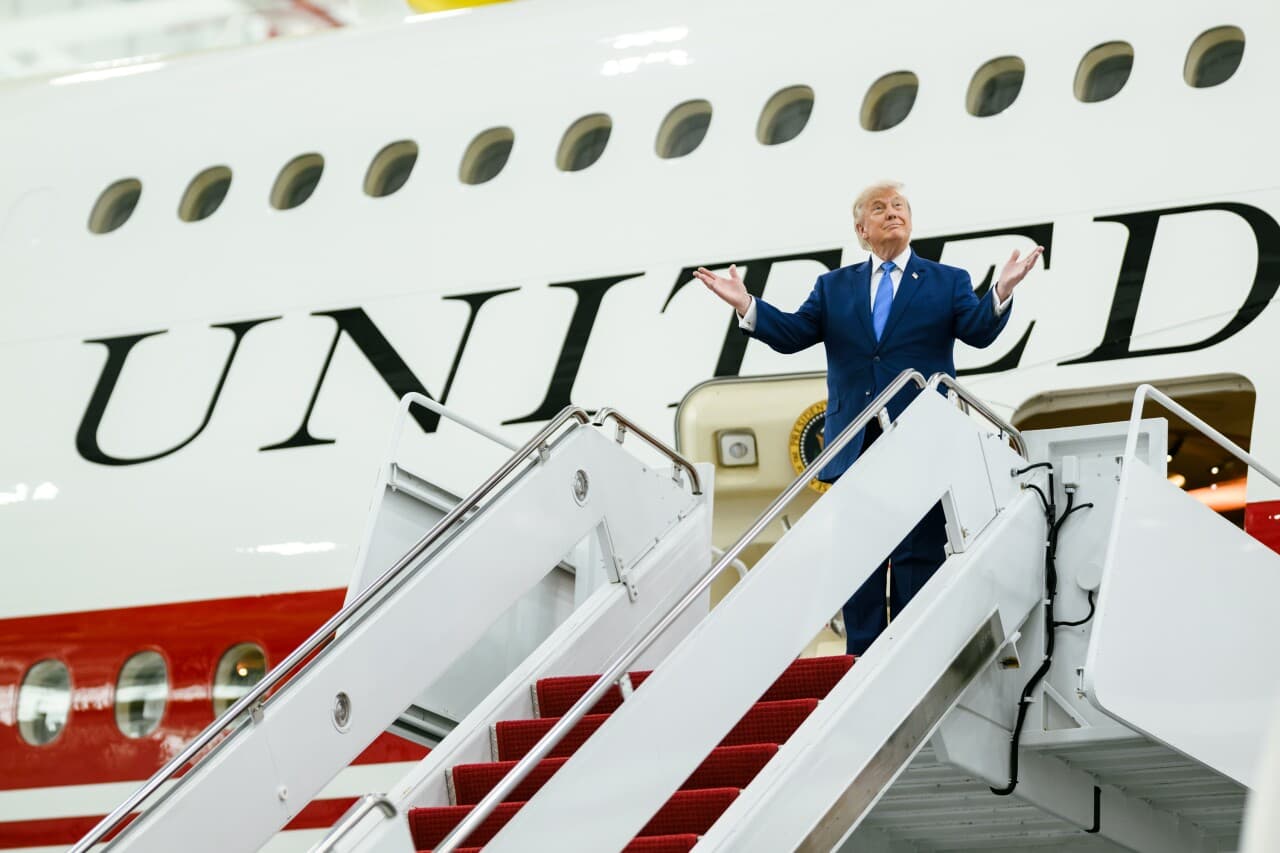
According to an official statement from the United States Air Force, the aircraft has already undergone modifications requested by the American government and has formally entered service. The plane sports a bold new exterior featuring the classic red, white, and blue color scheme, along with the inscription "United States of America" emblazoned along its fuselage — a visual nod to American identity that mirrors the patriotic branding Trump has long championed.
Before the aircraft is fully integrated into the presidential fleet, the Air Force confirmed it will undergo a dedicated phase of test flights and operational commissioning. These procedures are designed to verify that the plane meets every technical and safety standard required to transport the Commander-in-Chief. Only after clearing these rigorous evaluations will the Boeing 747 begin to take on its official duties as part of the presidential transport operation.
The current Air Force One fleet consists of two VC-25A aircraft — military variants of the Boeing 747-200 — that have been in service since the early 1990s. The Qatar-donated jet represents a potentially significant addition to that aging lineup, though it comes with complications that go far beyond maintenance schedules and cargo capacity.
Why the Qatar Donation Is So Controversial
The value of the aircraft has been estimated at several hundred million dollars, making it one of the most expensive gifts ever offered to a sitting American president by a foreign government. That staggering price tag alone has been enough to raise eyebrows among lawmakers, legal experts, and ethics watchdogs on both sides of the aisle.
At the heart of the controversy is the United States Constitution's Emoluments Clause, which prohibits federal officials — including the president — from accepting gifts, payments, or other benefits from foreign governments without the explicit consent of Congress. Critics argue that accepting a Boeing 747 worth hundreds of millions of dollars from Qatar, a wealthy Gulf nation with its own geopolitical interests, could run directly afoul of this constitutional provision.
Qatar is not a neutral actor on the world stage. The small but enormously wealthy nation hosts Al Udeid Air Base, the largest American military installation in the Middle East, and has historically maintained complex diplomatic relationships with both U.S. allies and adversaries. Accepting a gift of this magnitude from Doha inevitably raises questions about what, if anything, Qatar expects in return — and whether American foreign policy decisions could be subtly influenced as a result.
Security Experts Sound the Alarm
Beyond the constitutional and ethical dimensions, national security professionals have expressed deep concern about the integrity of an aircraft that originated under foreign ownership before being transferred to U.S. presidential service. The worry is straightforward but serious: a plane that spent time in Qatari government hands could, in theory, have been fitted with surveillance equipment, listening devices, or other covert technologies that would be extraordinarily difficult to detect even after extensive inspection.
Air Force One is not merely a mode of transportation — it is a flying command center equipped with highly classified communications systems, secure lines to military leadership, and the infrastructure needed to manage a national security crisis from the air. Any compromise of that aircraft's integrity could have catastrophic consequences. Security analysts have noted that even the most thorough sweep of a sophisticated aircraft cannot guarantee with absolute certainty that all foreign hardware or software vulnerabilities have been eliminated.
The Air Force has stated that the aircraft has been adapted with U.S.-specified modifications, but critics argue that vetting a wide-body jet of this complexity for hidden threats is a monumental undertaking — and that the very fact the plane came from a foreign government makes that task inherently more difficult than sourcing a new aircraft domestically or through established American defense contractors.
Political Reactions and Congressional Scrutiny
The donation has drawn criticism from members of Congress who are demanding greater transparency about how the decision was made, what legal review was conducted, and whether lawmakers were properly consulted before the aircraft was accepted. Some have called for an independent security audit, while others have questioned whether the transaction required congressional approval under the Emoluments Clause.
Supporters of the arrangement counter that the modification and testing process adequately addresses any security concerns, and that accepting a generous offer from an allied nation is a pragmatic decision that saves American taxpayers money at a time when the long-delayed replacement Air Force One program has faced significant cost overruns and delays.
The Bigger Picture: Foreign Gifts and Presidential Aircraft
The debate surrounding Trump's Qatar-donated Air Force One touches on a much larger and enduring tension in American governance: how should the world's most powerful office navigate the receipt of gifts, favors, and financial relationships from foreign powers? The Emoluments Clause was written precisely because the Founding Fathers feared that foreign influence over American leadership could corrupt the republic from within.
Whether this particular aircraft ultimately proves to be a practical upgrade or a constitutional and security liability remains to be seen. What is certain is that the conversation it has sparked — about transparency, national security, and the limits of executive gift acceptance — is one that Washington will be wrestling with for months, if not years, to come.
What Comes Next
The Air Force has indicated that the Boeing 747 will proceed through its commissioning phase before being gradually introduced into active presidential transport duties. During that period, additional scrutiny from Congress, independent security reviewers, and legal experts is all but inevitable. For now, the most expensive aircraft gift in American presidential history sits at the center of one of the most unusual and consequential debates of the Trump administration's second term.
- The aircraft is a modified Boeing 747 donated by the Qatari government.
- It features a red, white, and blue livery with "United States of America" on the fuselage.
- It will undergo test flights before full integration into the presidential fleet.
- Constitutional experts are questioning whether the donation violates the Emoluments Clause.
- Security professionals have raised concerns about potential surveillance technology aboard the aircraft.
- Congressional members are calling for greater transparency and possible independent audits.