
UN Security Council Sounds the Alarm Over Sudan's El Obeid
The United Nations Security Council has issued an urgent warning over rapidly deteriorating conditions in Sudan, expressing deep alarm at reports of significant military reinforcements by the Rapid Support Forces (RSF) encircling the city of El Obeid. Council members cautioned that this buildup raises the very real prospect of a ground offensive against the city — one that could trigger mass atrocities on a devastating scale. As the war in Sudan enters yet another catastrophic chapter, the international community is watching El Obeid with growing dread.
El Obeid, the capital of North Kordofan state and one of Sudan's most historically and strategically significant cities, is home to hundreds of thousands of civilians. A full-scale assault on the city would represent one of the most alarming escalations in a conflict that has already claimed tens of thousands of lives and displaced millions since fighting broke out between the Sudanese Armed Forces (SAF) and the RSF in April 2023.
Who Are the Rapid Support Forces?
Understanding the gravity of this warning requires context about the RSF itself. The Rapid Support Forces are a powerful paramilitary group that grew out of the Janjaweed militias, which were themselves responsible for widespread atrocities during the Darfur conflict in the early 2000s. Led by General Mohamed Hamdan Dagalo, widely known as "Hemedti," the RSF has been at the center of some of the most brutal episodes of violence since the current war began.
Human rights organizations have documented repeated allegations of war crimes against the RSF, including mass killings, sexual violence used as a weapon of war, and the deliberate targeting of civilian infrastructure. These documented patterns of behavior are precisely why the Security Council's warning about El Obeid carries such weight — and such urgency.
Why El Obeid Matters
El Obeid is no ordinary city. It serves as a critical logistical and commercial hub for central Sudan and has historically been a gateway between Khartoum and Darfur. Its fall — or the violent siege of it — would have consequences that stretch far beyond North Kordofan. The city holds significant symbolic importance as well, and its capture would hand the RSF a major strategic and psychological victory.
Beyond the military calculus, El Obeid is also densely populated. Any ground offensive on an urban center of this size and density would inevitably put enormous numbers of civilians in harm's way. The United Nations and humanitarian organizations already operating in stretched-thin conditions across Sudan would face an almost impossible task responding to the fallout.
What the Security Council Said
In its statement, the Security Council called on all parties to the conflict to immediately halt hostilities, protect civilians, and allow unhindered humanitarian access. Members expressed particular concern about the concentration of RSF forces in the area around El Obeid, describing reports of their military reinforcements as deeply troubling and warning that a potential ground offensive could lead to mass civilian casualties.
The Council's statement reflects growing frustration within the international community at the pace of the conflict and the failure of multiple ceasefire efforts to hold. Previous negotiations — whether mediated by the African Union, the Intergovernmental Authority on Development (IGAD), or other regional and international bodies — have repeatedly broken down, leaving civilians to bear the brunt of continued fighting.
A Humanitarian Catastrophe Already Unfolding
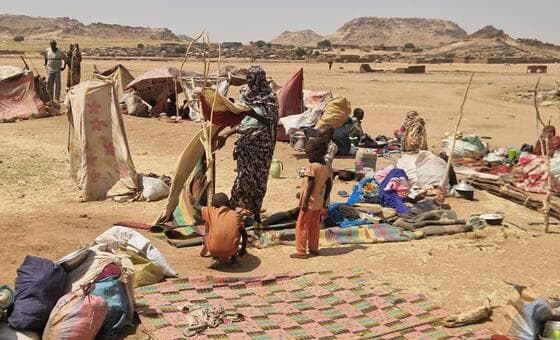
It is important to understand this latest warning in the context of what is already one of the world's worst humanitarian crises. Since the conflict began in April 2023, Sudan has seen mass displacement on a staggering scale. Millions of people have been forced from their homes, with many fleeing to neighboring countries including Chad, Egypt, South Sudan, and Ethiopia. Internal displacement has also reached record levels, with entire communities uprooted by the violence.
Famine conditions have taken hold in parts of the country, and access for humanitarian aid workers remains severely constrained due to active fighting, bureaucratic obstruction, and direct attacks on aid operations. Hospitals, schools, and civilian infrastructure have been repeatedly struck or looted. Against this backdrop, the prospect of a major offensive on El Obeid is not merely a military concern — it is a humanitarian emergency waiting to happen.
International Response and Calls for Accountability
The Security Council's warning is part of a broader international push to draw attention to Sudan's crisis and pressure both the RSF and the SAF to respect international humanitarian law. Human rights bodies, UN agencies, and advocacy groups have been calling for targeted sanctions, arms embargoes, and referrals to the International Criminal Court to ensure accountability for atrocities already committed.
However, geopolitical divisions within the Security Council itself have complicated efforts to take stronger collective action. Several member states have competing interests in Sudan's conflict, and achieving consensus on binding resolutions has proven difficult. Critics argue that without meaningful consequences, warnings alone carry limited weight.
What Happens Next?
The situation around El Obeid remains fluid and deeply dangerous. Humanitarian organizations on the ground are urging the international community to move beyond statements and toward concrete action — including securing safe corridors for civilians, guaranteeing access for aid workers, and pressing all armed actors to observe their obligations under international law.
For the people of El Obeid and the wider region, the stakes could not be higher. The Security Council's warning is a critical signal that the world is watching. Whether that attention translates into meaningful protection for Sudan's civilians remains to be seen — but time, as always in conflict zones, is running out.
Stay Informed
The crisis in Sudan is ongoing and rapidly evolving. Follow credible international news sources and UN updates to stay informed about the situation in El Obeid and across the country. Humanitarian organizations including the UNHCR, UNICEF, and the International Committee of the Red Cross are also providing regular updates and accepting donations to support relief efforts on the ground.