
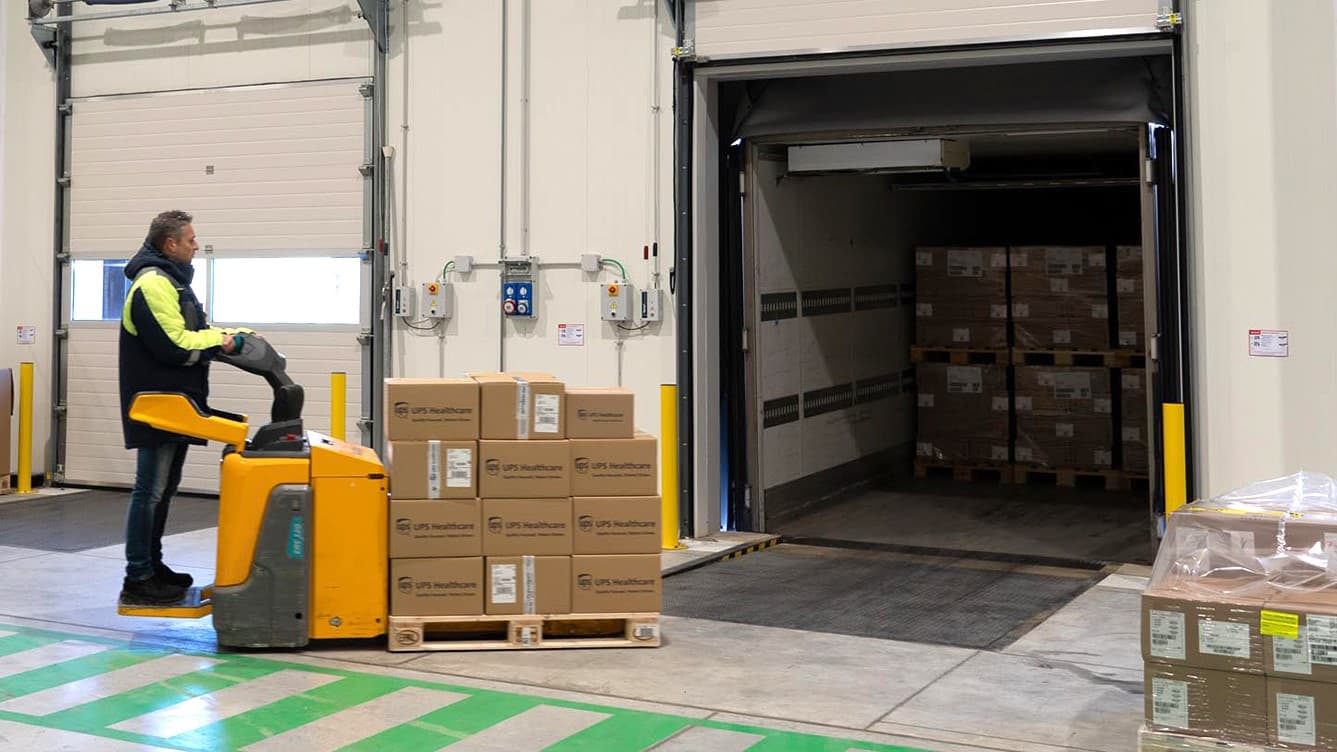
UPS Invests $48 Million in 27 New Cold Transfer Facilities to Meet Surging Pharmaceutical Demand
United Parcel Service (UPS) has made a bold and strategic move to solidify its position in the global healthcare logistics market, committing $48 million to open 27 new temperature-controlled truck cross-dock facilities across the world. The expansion is a direct response to rapidly growing demand from pharmaceutical manufacturers, medical laboratories, and biotechnology companies that require precise, uncompromised cold-chain logistics for their most sensitive products.
As the pharmaceutical industry continues to evolve at an extraordinary pace — driven by the rise of advanced biologics, personalized therapies, and breakthrough weight-loss medications — the need for reliable, end-to-end cold-chain infrastructure has never been more critical. UPS's latest investment signals not just a financial commitment, but a fundamental recognition that the future of healthcare supply chains depends on fewer errors, tighter controls, and deeper integration.
What Are Cold Transfer Cross-Dock Facilities and Why Do They Matter?
Unlike traditional warehouses where goods are stored for extended periods, cross-dock facilities are purpose-built for rapid product transfer. In the context of pharmaceutical logistics, this means moving temperature-sensitive shipments swiftly from air freight to ground transportation — or from one ground vehicle to another — with minimal handling time and zero compromise to product integrity.
The 27 new facilities are strategically positioned near key air and multimodal hubs across Europe, Asia, and the Americas. This geographic diversity ensures that pharmaceutical products can move seamlessly across borders and continents without encountering dangerous temperature deviations at critical transfer points.
All 27 facilities are fully compliant with pharmaceutical handling standards established by the International Air Transport Association (IATA), giving drug manufacturers and biotech firms the assurance that their products will be handled according to the highest global benchmarks throughout the entire journey.
Europe Leads the Way: Milan and Frankfurt Set the Standard
UPS's international cold-chain push is not entirely new. In late 2024, the company already established two healthcare-focused cross-dock facilities in Milan, Italy, and Frankfurt, Germany — two of Europe's most critical pharmaceutical and logistics hubs. These early installations provided UPS with a proven model that is now being scaled across 25 additional locations worldwide.
Frankfurt, home to one of Europe's busiest international airports, and Milan, a hub for Italy's thriving pharmaceutical manufacturing sector, were natural starting points. Their success has evidently validated UPS's broader cold-chain strategy and paved the way for this $48 million global rollout.
The Driving Forces: Advanced Therapies and Next-Generation Medicines
The urgency behind UPS's investment becomes even clearer when examining the evolving landscape of modern medicine. A new generation of life-changing therapies is reshaping what pharmaceutical logistics must deliver, including:
- Cell and gene therapies — highly personalized treatments manufactured in small batches that are extraordinarily sensitive to temperature and time constraints.
- mRNA vaccines — as demonstrated by the COVID-19 pandemic, mRNA-based medicines require ultra-cold storage and meticulous handling throughout the supply chain.
- GLP-1 weight-loss drugs — medications such as semaglutide have seen explosive global demand, and their biological nature makes cold-chain integrity non-negotiable.
UPS officials have noted that next-generation medicines carry significantly higher per-unit value than traditional pharmaceuticals, while simultaneously having far less tolerance for shipping errors. A single temperature excursion can render an entire shipment unusable — and in the case of patient-specific cell therapies, there may be no replacement available at all. The stakes, in both financial and human terms, are extraordinarily high.
Cold-Chain Failures: A Multi-Billion Dollar Problem the Industry Can No Longer Ignore
The scale of the problem that UPS is working to solve is staggering. According to estimates from the World Health Organization (WHO), cold-chain failures cost the global healthcare industry up to $35 billion per year. Even more alarming, these failures contribute to as much as 50% of global vaccine waste — a statistic that has profound public health implications, particularly in developing regions where vaccine access is already limited.
Temperature deviations — even brief, seemingly minor excursions outside a product's defined parameters — are the leading cause of pharmaceutical spoilage during transit. The challenge is not simply maintaining the right temperature inside a single vehicle or storage unit; it is preserving that thermal environment across every single handoff point in a complex, multi-modal global supply chain.
This is precisely why the cross-dock model is so valuable. By minimizing the time products spend in transit between transport modes and reducing the number of unnecessary handoffs, UPS is directly attacking the most vulnerable moments in the cold chain.
A Market Poised for Explosive Growth
The market opportunity underpinning UPS's investment is substantial and growing fast. According to data from Growth Market Reports, demand for temperature-sensitive biologics is projected to expand at a compound annual growth rate (CAGR) of 8.3% through 2033, reaching an estimated market value of $39.1 billion. This trajectory reflects both the ongoing pipeline of new biologics entering the market and the increasing complexity of global pharmaceutical supply chains.
For logistics providers, capturing a share of this market requires more than just refrigerated trucks. It demands integrated, compliant, technology-enabled networks that can offer pharmaceutical clients true end-to-end visibility and accountability — from the manufacturing facility to the patient's door.
UPS's Strategic Vision: Fewer Handoffs, Greater Accountability
The philosophy guiding UPS's healthcare logistics expansion is clear: the best practice in modern pharmaceutical supply chains is moving toward fewer handoffs, more integrated networks, and greater door-to-door accountability. Each additional transfer point in a shipment's journey introduces risk. By building a proprietary global network of IATA-compliant cold transfer facilities positioned at the most critical nodes of the air and ground transportation network, UPS is reducing that risk at scale.
For pharmaceutical companies, this means a logistics partner that does not simply move boxes, but actively protects product integrity, regulatory compliance, and ultimately patient safety at every step of the journey.
What This Means for Pharmaceutical and Biotech Companies
For drug manufacturers and biotech firms evaluating their logistics partnerships, UPS's $48 million investment in cold-chain infrastructure sends a powerful signal. It represents a long-term commitment to the healthcare sector, backed by tangible assets in key global markets. Companies shipping high-value biologics, clinical trial materials, or temperature-sensitive finished goods now have access to a more robust, compliant, and globally connected cold-chain network.
As regulatory scrutiny around pharmaceutical shipping continues to intensify worldwide, having a logistics provider with IATA-compliant facilities and a proven cold-chain methodology is not merely a competitive advantage — it is increasingly a regulatory necessity.
UPS's expansion of its cold transfer facility network marks a defining chapter in the evolution of global healthcare logistics, and it is one that the pharmaceutical and biotech industries will be watching closely for years to come.