
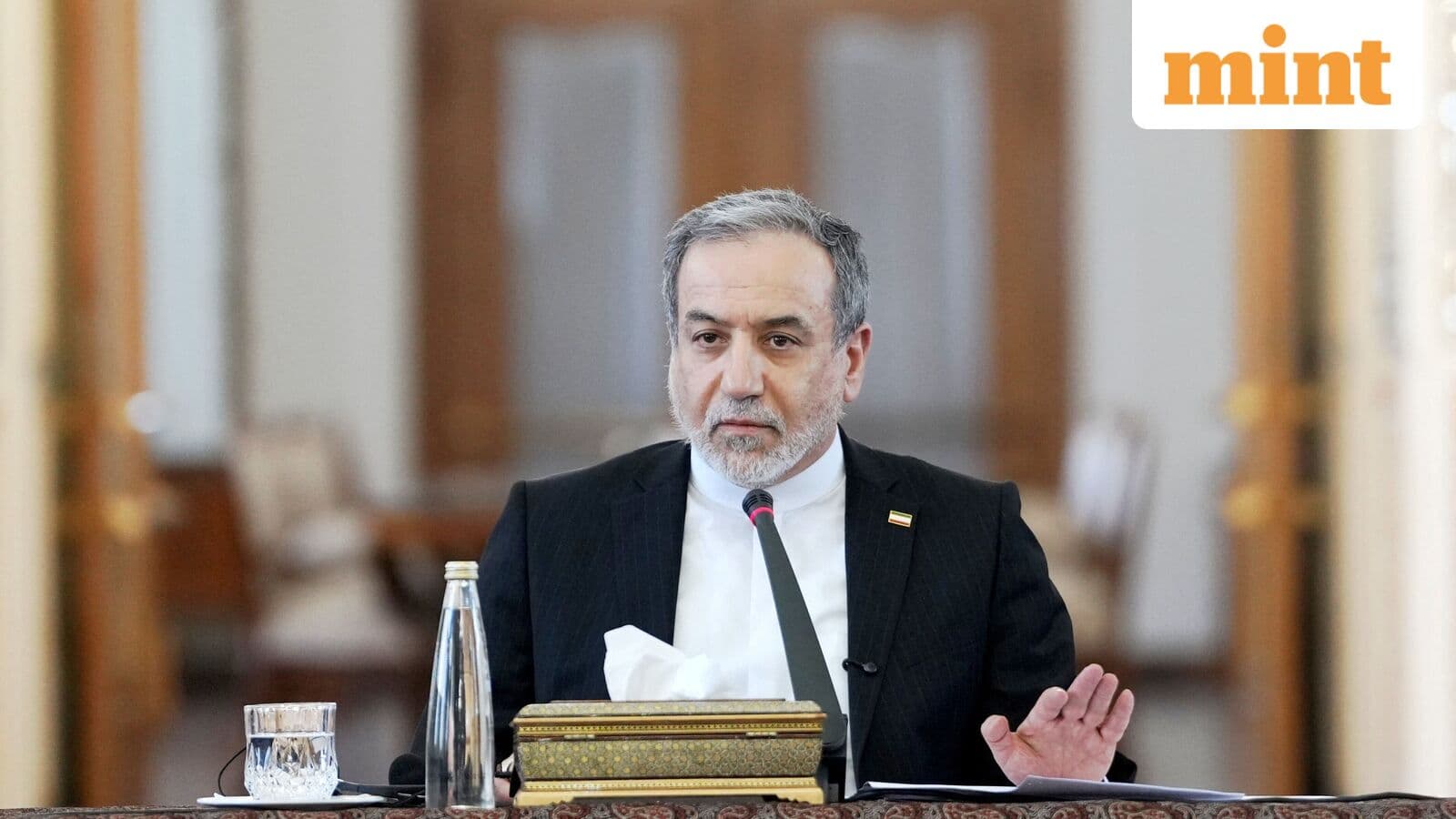
US-Iran Peace Deal Talks Heat Up: Araghchi Expected in Switzerland as Witkoff Arrives
Diplomatic momentum around the long-anticipated US-Iran peace deal is accelerating rapidly, with Iranian Foreign Minister Abbas Araghchi expected to travel to Switzerland to join ongoing negotiations. According to a report from Axios, Trump envoy Steve Witkoff is already on his way to the talks, signaling that both sides are preparing for a potentially pivotal round of face-to-face diplomacy. The developments have drawn intense international attention, raising cautious optimism that a new framework agreement between Washington and Tehran could be within reach.
These talks represent one of the most significant diplomatic engagements between the United States and Iran in years. With tensions over Iran's nuclear program having dominated global headlines for decades, even the prospect of structured negotiations on neutral Swiss soil is being viewed as a meaningful breakthrough in itself. Here is a comprehensive look at what is happening, who is involved, and what the world should expect next.
Who Is at the Table? Key Figures in the Switzerland Negotiations
Understanding the principals involved in these negotiations is essential to grasping both the weight and the complexity of what is unfolding in Switzerland.
Abbas Araghchi: Iran's Lead Negotiator
Abbas Araghchi has long been one of Iran's most experienced and trusted voices on nuclear diplomacy. Having played a central role in the original 2015 Joint Comprehensive Plan of Action (JCPOA) negotiations, he brings institutional knowledge and diplomatic credibility that few others in Tehran can match. His expected arrival in Switzerland is widely interpreted as a sign that Iran is treating these talks with the seriousness they demand. Araghchi's presence elevates the discussions beyond preliminary back-channel exchanges and into the realm of substantive, high-level dialogue.
Steve Witkoff: Trump's Diplomatic Envoy
On the American side, Steve Witkoff has emerged as one of the Trump administration's key figures in high-stakes diplomatic engagements. A real estate developer and longtime associate of President Donald Trump, Witkoff has been deployed in multiple sensitive foreign policy contexts. His arrival in Switzerland underscores that the White House is treating this moment as a genuine opportunity to reshape the US relationship with Iran, rather than as a performative exercise in optics. The decision to send Witkoff directly to join Araghchi reflects a level of seriousness from Washington that has not always been visible in past rounds of Iran-related diplomacy.
Why Switzerland? The Significance of Neutral Ground
Switzerland has long served as a trusted neutral venue for sensitive international negotiations, and its selection for these US-Iran talks is no accident. Bern has represented US interests in Tehran since Washington and Tehran severed diplomatic relations following the 1979 Islamic Revolution. The Swiss capital has therefore acted as a quiet but crucial conduit between the two governments for over four decades.
Holding negotiations on Swiss soil provides both parties with a degree of political insulation. Neither side can be accused of traveling to the other's territory, which carries symbolic weight in the domestic politics of both countries. For Iran, agreeing to talks in Switzerland is more palatable than any venue that might be perceived as bowing to American pressure. For the US, it demonstrates a willingness to engage on equal footing without demanding preconditions that Tehran would reflexively reject.
What Is at Stake: The Nuclear Question and Beyond
At the core of any US-Iran negotiation is the question of Iran's nuclear program. Tehran has significantly advanced its uranium enrichment capabilities in the years since the United States withdrew from the JCPOA under President Trump's first administration in 2018. Iran is now believed to possess enriched uranium at levels that bring it closer to weapons-grade material than at any previous point in its history, according to assessments from the International Atomic Energy Agency (IAEA).
A new agreement, if one can be reached, would likely need to address several intertwined issues:
- Uranium enrichment levels: Any deal would almost certainly require Iran to cap or roll back its enrichment activities to levels consistent with civilian nuclear energy use rather than weapons development.
- Sanctions relief: Iran's government faces crushing economic pressure from a sweeping regime of US and international sanctions. Any credible deal from Tehran's perspective would need to include meaningful, verifiable sanctions relief that translates into tangible economic benefits for ordinary Iranians.
- Verification mechanisms: The United States and its partners will insist on robust inspection and monitoring protocols to ensure that any commitments Iran makes are genuine and enforceable.
- Regional security concerns: Beyond the nuclear file, Washington has longstanding concerns about Iranian support for armed proxy groups across the Middle East. Whether these broader issues enter the Swiss talks formally or remain in a separate diplomatic lane will be a critical structural question.
International Reaction and Regional Implications
The international community is watching the Switzerland negotiations with a mixture of hope and wariness. European allies who remained committed to the JCPOA after Washington's 2018 withdrawal have consistently called for a diplomatic resolution to the nuclear standoff. A successful new framework would relieve pressure on European governments that have struggled to balance their commitment to the original accord with the economic and security realities imposed by US sanctions.
In the broader Middle East, the stakes are equally high. Israel, which views a nuclear-armed Iran as an existential threat, has historically been deeply skeptical of diplomatic agreements with Tehran and has lobbied strongly against frameworks it considers insufficiently rigorous. Gulf Arab states, meanwhile, have mixed interests: while they share concerns about Iranian regional influence, many have also pursued their own normalization tracks with Tehran in recent years and have a stake in reduced tensions.
What Comes Next: Cautious Optimism or Familiar Deadlock?
The history of US-Iran diplomacy is littered with moments of apparent progress that ultimately dissolved into renewed confrontation. Both governments carry enormous domestic political constraints that limit how far their negotiators can go without triggering backlash at home. In Iran, hardline factions remain deeply suspicious of any accommodation with Washington. In the United States, bipartisan skepticism of Iranian intentions runs deep in Congress.
Nevertheless, the presence of Araghchi and Witkoff in Switzerland at the same time represents a genuinely consequential moment. Both sides appear to have concluded, at least for now, that the costs of continued confrontation outweigh the political risks of engagement. Whether that shared calculation holds as the difficult details of any potential deal come into focus remains the defining question of these negotiations.
Conclusion: A Diplomatic Opening That the World Will Be Watching
The expected meeting between Iranian Foreign Minister Abbas Araghchi and US envoy Steve Witkoff in Switzerland marks a significant chapter in one of the most consequential diplomatic storylines of our time. With nuclear stakes, regional security, and global energy markets all connected to the outcome, these talks carry implications far beyond the two countries directly involved. The world will be watching closely as Switzerland once again provides the setting for history — or another missed opportunity — in the long and complicated relationship between Washington and Tehran.
Stay tuned for further updates as this developing story continues to evolve. Bookmark this page for the latest news on the US-Iran peace deal negotiations and the Switzerland talks.