
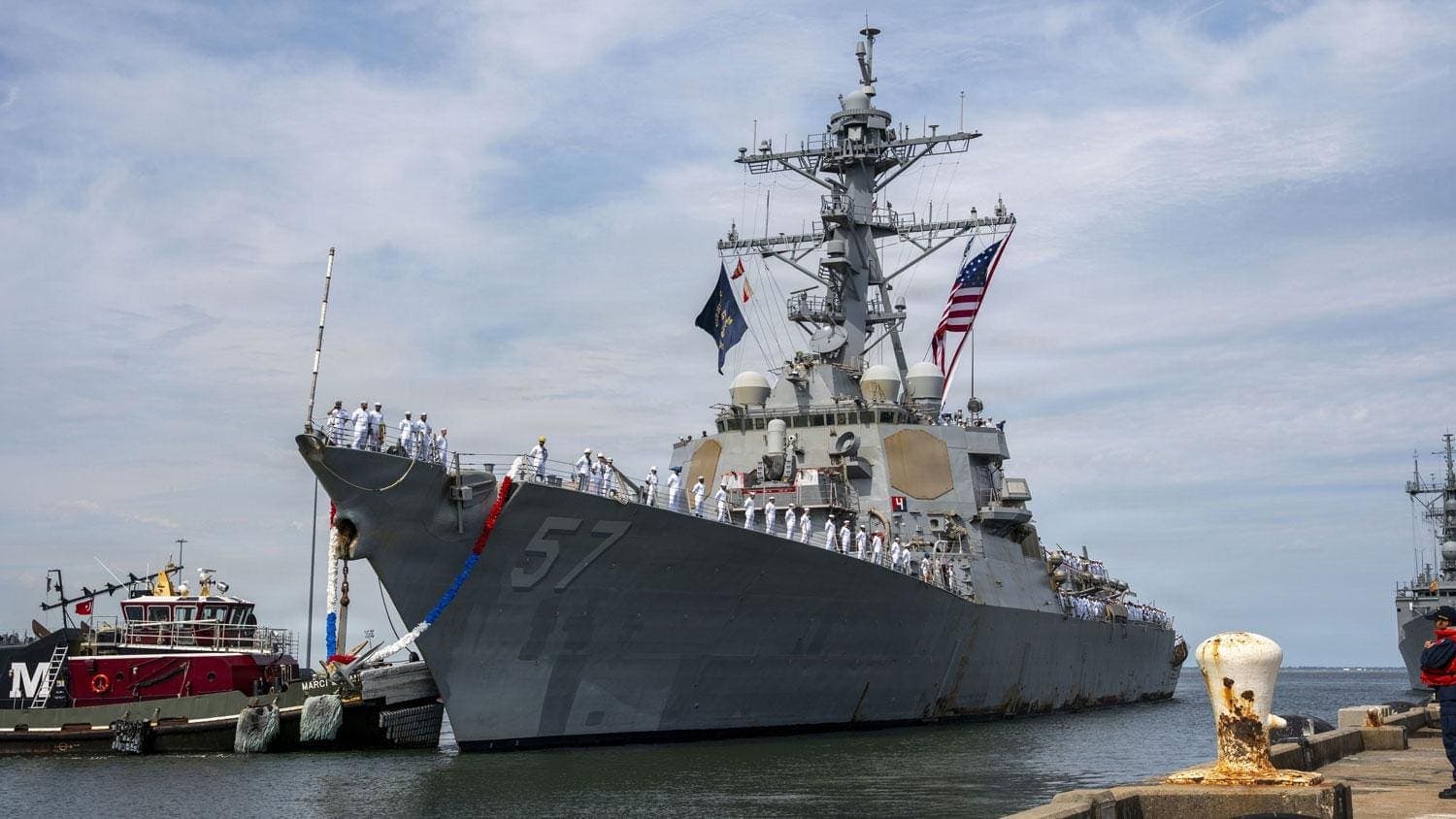
A U.S. Navy Destroyer Just Completed an Epic 11-Month Deployment
In a remarkable demonstration of endurance, dedication, and naval operational capability, an Arleigh Burke-class guided-missile destroyer recently returned to Naval Station Norfolk, Virginia, after an extraordinary 327-day deployment — roughly 11 months at sea. The milestone drew widespread attention not only because of the sheer length of the mission, but because it surpassed the deployment duration of even the USS Gerald R. Ford, one of the most advanced aircraft carriers in the world. For the sailors aboard, it was a test of personal resolve, professional discipline, and the kind of commitment that defines life in the United States Navy.
What Is an Arleigh Burke-Class Destroyer?
To understand the significance of this deployment, it helps to know what kind of vessel was involved. The Arleigh Burke-class guided-missile destroyer is the backbone of the U.S. Navy's surface fleet. First commissioned in 1991, these destroyers are among the most capable warships ever built, designed to operate in multi-threat environments involving air, surface, and subsurface warfare simultaneously.
Named after Fleet Admiral Arleigh Burke, a legendary World War II naval commander, the class has grown to include over 70 active vessels — making it the largest class of destroyers in U.S. Navy history. Each ship is equipped with the Aegis Combat System, Tomahawk cruise missiles, advanced sonar systems, and a range of defensive weapons systems that make it a formidable presence anywhere in the world's oceans.
These destroyers typically displace around 9,000 tons, stretch over 500 feet in length, and are crewed by approximately 280 to 330 sailors. They are built for sustained operations far from home, but even by their demanding standards, 327 days at sea is an exceptional commitment.
The Numbers Behind the 327-Day Deployment
A standard U.S. Navy deployment typically runs between six and nine months. Extended deployments — those pushing past the nine-month mark — are relatively uncommon and often tied to evolving operational demands, geopolitical developments, or wartime-like conditions. The destroyer's 327-day mission places it well beyond even the most stretched standard deployment timelines.
For comparison, the USS Gerald R. Ford, the Navy's newest and most technologically advanced aircraft carrier, conducted a highly publicized deployment in 2022 and 2023 that was itself considered lengthy. The fact that a single destroyer — a smaller, less visible vessel with a much smaller crew — surpassed that record is all the more remarkable.
- 327 days deployed — nearly 11 full months at sea
- Returned to Naval Station Norfolk, the world's largest naval station
- Surpassed the deployment duration of the USS Gerald R. Ford carrier strike group
- Part of the Arleigh Burke class, the Navy's most numerous destroyer platform
What Drives Extended Navy Deployments?
Extended deployments like this one rarely happen by accident. They are typically the result of a confluence of strategic necessity, evolving mission requirements, and global security demands. In recent years, U.S. naval forces have faced an increasingly complex threat environment, with rising tensions in the Indo-Pacific, ongoing instability in the Middle East, and the continued need to support NATO allies in the North Atlantic and Mediterranean.
Destroyers like those in the Arleigh Burke class are versatile enough to plug into virtually any operational scenario — from ballistic missile defense and anti-submarine warfare to surface strikes and escort duties for carrier strike groups. That flexibility makes them invaluable to fleet commanders who often need to keep assets on station longer than originally planned.
Additionally, force structure realities within the Navy can contribute to extended deployments. With a fleet that has faced persistent pressure to do more with fewer assets, individual ships are sometimes asked to remain deployed rather than rotating home on schedule. These decisions are never taken lightly, as the human cost to sailors and their families is significant.
The Human Cost: Life at Sea for 11 Months
Behind every deployment statistic are real people — sailors who spend months away from their families, friends, and the routines of everyday life. A 327-day deployment means missing birthdays, anniversaries, holidays, and the small moments that make up a life. For many crew members, it represents one of the most demanding personal experiences they will ever face.
The U.S. Navy provides a range of support programs aimed at sustaining sailor morale during extended deployments, including satellite communications for video calls home, mental health resources, and recreation programs aboard ship. Still, the psychological and emotional weight of nearly a year at sea cannot be understated.
The return to Naval Station Norfolk on Tuesday marked not just an operational milestone, but a deeply personal homecoming for the hundreds of sailors aboard. For their families waiting on the pier, it was the end of a long and anxious wait.
A Homecoming to Remember
Homecomings at Naval Station Norfolk are always emotional affairs. When a ship pulls into port after a deployment of any length, the pier fills with families holding signs, children in their best clothes, and tears that have been held back for months. After 327 days, the emotion is immeasurable.
The return of this Arleigh Burke-class destroyer serves as a powerful reminder of the sacrifices made by the men and women of the United States Navy every single day — often far from the headlines, far from home, and far from shore.
What This Deployment Means for the Future of Naval Operations
The completion of this record-setting deployment raises important questions about the long-term sustainability of extended operations for surface combatants. Naval analysts and military planners will likely study this deployment closely, examining its effects on crew readiness, maintenance schedules, and equipment reliability. Ships, like the sailors who crew them, have limits — and understanding where those limits lie is essential for maintaining a ready and capable fleet.
At the same time, the successful completion of a 327-day deployment demonstrates that the Arleigh Burke class remains one of the most capable and resilient platforms in the world, able to sustain high-tempo operations across multiple theaters for an extraordinary length of time. That is a testament to the engineering behind the ships, the logistics networks that keep them supplied, and above all, the people who serve aboard them.
As global security demands continue to evolve, deployments like this one may become less the exception and more a reflection of the new normal for U.S. naval forces. One thing, however, will never change: the remarkable dedication of the sailors who answer the call, no matter how long that call lasts.