
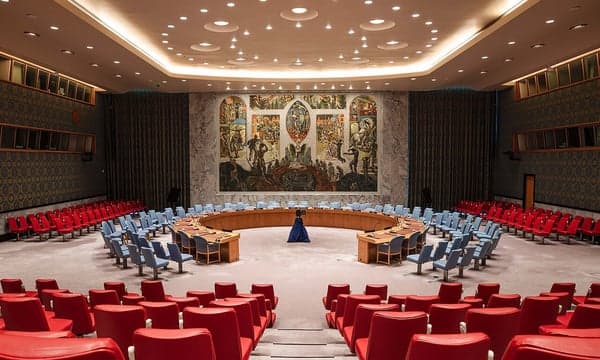
The Stakes Are High: US-Pakistan Counterterrorism Cooperation Under Scrutiny
In the complex and ever-shifting landscape of South Asian geopolitics, few decisions carry as much strategic weight as how the United States chooses to act — or not act — at the United Nations Security Council. Pakistan has been pressing for the formal blacklisting of the Balochistan Liberation Army (BLA), a militant separatist group responsible for a growing wave of violent attacks inside Pakistan. The question before Washington is straightforward but consequential: should the United States lend its support to Pakistan's push to have the BLA designated as a terrorist organization under the UNSC framework?
The answer, when examined through the lens of counterterrorism strategy, regional stability, and long-term alliance management, is a clear and emphatic yes. The United States has every reason to support this move, and several compelling reasons to act without further delay.
Understanding the BLA: Who They Are and What They Do
The Balochistan Liberation Army is an armed separatist group operating primarily in Pakistan's southwestern Balochistan province. While the group frames its cause in the language of ethnic and political self-determination, its methods are unambiguously those of a terrorist organization. The BLA has claimed responsibility for dozens of deadly attacks targeting Pakistani security forces, civilians, and critical infrastructure. These include suicide bombings, targeted assassinations, and coordinated assaults on military convoys.
In recent years, the group has escalated significantly in both ambition and lethality. Attacks carried out under the BLA banner have killed hundreds of people and have sought to destabilize not just Pakistan's security apparatus, but the broader regional environment. The BLA has also been linked to external state and non-state actors who have an interest in keeping Pakistan weak and distracted.
The United States itself designated the BLA as a Specially Designated Global Terrorist organization back in 2019 — a recognition that the group poses a genuine threat. Supporting a parallel UNSC designation would simply multilateralize what Washington already accepts as fact domestically.
The US-Pakistan Intelligence Partnership Is Too Valuable to Risk
One of the most compelling arguments for US support of the BLA blacklisting is the nature of the bilateral relationship itself. The United States and Pakistan engage in substantial intelligence-sharing and counterterrorism cooperation that extends across multiple theaters of operation. This partnership, while often complicated and occasionally strained, has produced tangible results in disrupting terrorist networks across South Asia and beyond.
Pakistan's intelligence services — particularly the Inter-Services Intelligence (ISI) — have access to networks, informants, and regional knowledge that American agencies simply cannot replicate from the outside. Cooperation between the two countries has historically contributed to major counterterrorism successes, including actionable intelligence on al-Qaeda affiliates and Taliban factions that directly threaten US interests.
If Washington refuses to back Pakistan on an issue as clearly aligned with shared counterterrorism goals as the BLA designation, it sends a damaging signal. It suggests that the US-Pakistan partnership is transactional to the point of dysfunction — that the United States will use Pakistani intelligence when it suits Washington, but will not offer meaningful diplomatic support when Islamabad needs it. That perception, if allowed to take root, could erode the trust that makes the intelligence partnership function at all.
Regional Stability and the Broader Security Architecture
Pakistan's internal stability is not a peripheral concern for the United States — it is a core one. Pakistan is a nuclear-armed state of over 230 million people, sharing borders with Afghanistan, Iran, India, and China. Political or security collapse in Pakistan would have cascading consequences that no amount of reactive American policy could easily contain.
The BLA's campaign of violence directly threatens that stability. By targeting economic corridors, energy infrastructure, and security personnel, the group undermines the Pakistani state's ability to govern effectively. A weakened Pakistani state is a gift to extremists of all varieties — including those whose ambitions extend well beyond Balochistan and who directly threaten American lives and interests.
Supporting the UNSC blacklisting of the BLA is therefore not just about solidarity with an ally. It is about protecting the stability of a region where instability tends to travel. A Pakistan that is actively fighting a designated international terrorist organization — rather than one struggling to have its security threats taken seriously on the world stage — is a more stable and effective partner.
Diplomatic Signaling and the Broader Message to Allies
How the United States behaves at the UNSC is watched carefully not just by Pakistan but by allies and adversaries across the globe. When Washington declines to support legitimate counterterrorism designations sought by partner nations, it creates openings for rivals — particularly China and Russia — to position themselves as more reliable partners.
China, which has deep economic and strategic interests in Pakistan through the China-Pakistan Economic Corridor (CPEC), has already shown a willingness to use its UNSC position to serve geopolitical interests at the expense of counterterrorism norms. If the United States fails to act, Beijing may fill the void — not to genuinely support Pakistan, but to use the issue as leverage.
The Path Forward: A Strategic Opportunity Washington Should Not Miss
Supporting Pakistan's push to blacklist the BLA at the United Nations Security Council is one of those rare diplomatic moments where strategic interest, alliance management, and moral clarity all point in the same direction. The BLA is already designated a terrorist group by the United States. Extending that designation to the multilateral UNSC framework costs Washington little and gains it much — in goodwill, in partnership, and in regional security.
The US-Pakistan relationship has weathered enormous strains over the decades. The intelligence-sharing and counterterrorism cooperation that sits at its core is too important to be placed at unnecessary risk over a failure to act. Washington should move swiftly and decisively to back Pakistan's case. The costs of inaction are far greater than those of support.