
Vanguard's Chief APAC Economist Weighs In on Iran-US Deal and What It Means for the Global Economy
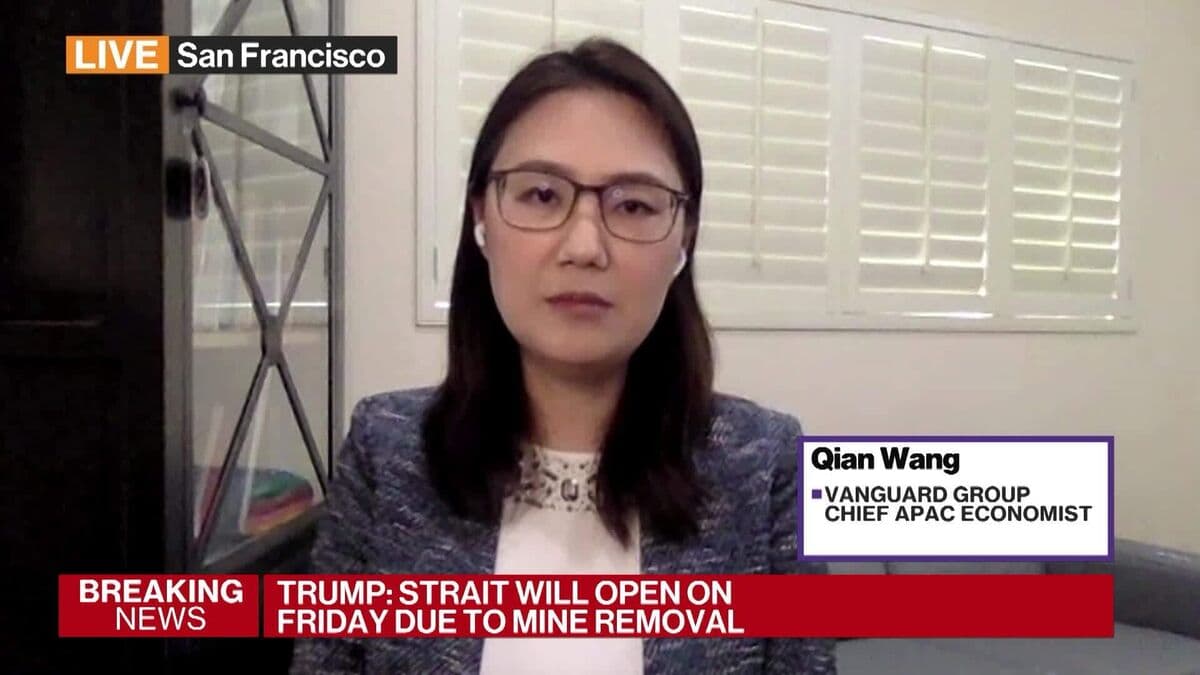
The world has been watching closely as the United States and Iran reached a landmark agreement aimed at halting conflict between the two nations. For global markets and economists alike, the deal represents a potentially pivotal moment — one that could reshape geopolitical risk assessments, energy markets, and broader economic forecasts. Qian Wang, Chief Asia-Pacific Economist at Vanguard Group, offered her expert perspective on the development in a recent appearance on Bloomberg: The Asia Trade, speaking with anchors Shery Ahn and Haidi Stroud Watts.
Wang's assessment struck a careful balance: cautiously optimistic about the potential economic upside, yet clear-eyed about the considerable uncertainty that still surrounds the deal's durability. Her analysis sheds important light on what investors, policymakers, and businesses around the world should be watching in the weeks and months ahead.
What the Iran-US Agreement Actually Means
At its core, the Iran-US agreement represents a cessation of hostilities and a diplomatic framework designed to prevent further military escalation. For a region that has long been a focal point of geopolitical tension, any movement toward de-escalation is a meaningful development. The Middle East is home to some of the world's most critical energy infrastructure, and conflict in the region has historically sent shockwaves through global oil markets, supply chains, and investor sentiment.
The deal, if it holds, would reduce the so-called "geopolitical risk premium" that has been embedded in oil prices and broader financial markets. This premium reflects the additional cost that markets assign to assets when there is an elevated threat of conflict or disruption. A credible and lasting peace agreement between Washington and Tehran could, over time, ease that premium and contribute to lower energy prices, reduced market volatility, and improved confidence among global businesses and consumers.
Qian Wang's Economic Outlook: Cautious Optimism
Speaking on Bloomberg, Qian Wang acknowledged that the deal carries genuine positive implications for the global economic outlook. A reduction in Middle East tensions tends to have ripple effects far beyond the region itself. Lower oil prices benefit energy-importing nations — including many major Asian economies — by reducing their import bills and easing inflationary pressure. For central banks still grappling with the aftermath of elevated inflation cycles, any relief on the energy front is a welcome development.
Wang's commentary reflects Vanguard's broader view that geopolitical stability is a meaningful driver of economic performance. When conflict risk subsides, capital tends to flow more freely, investment decisions become less constrained by uncertainty premiums, and trade corridors that were previously perceived as risky become more attractive once again.
However, Wang was equally emphatic about the risks. The central question she raised is whether the current deal is sustainable. Diplomatic agreements between the US and Iran have a complicated history — previous frameworks have unraveled due to changes in political leadership, shifts in domestic politics on both sides, and disagreements over implementation and verification. Wang noted that significant uncertainty remains around how durable this latest arrangement will prove to be.
Why Sustainability Is the Critical Variable
In economic terms, the difference between a durable peace agreement and a fragile or temporary ceasefire is enormous. Markets and businesses do not simply react to headlines — they price in probabilities and time horizons. If investors believe that the Iran-US deal is likely to collapse within months, the economic benefits will be muted, because long-term investment decisions and structural adjustments require confidence that the new status quo will persist.
This is particularly relevant for global energy markets. Iran holds some of the largest proven oil and natural gas reserves in the world. A sustained diplomatic thaw could eventually lead to the lifting or easing of sanctions, which would allow greater Iranian oil production to reach global markets. Increased supply would put further downward pressure on energy prices — a boon for consumers globally, though a more complex development for oil-producing nations and energy companies.
For the Asia-Pacific region specifically — the focus of Wang's role at Vanguard — the implications are especially significant. Many of the region's largest economies, including China, Japan, South Korea, and India, are heavily reliant on Middle Eastern energy imports. Stable and affordable energy supply is a foundational requirement for their continued growth trajectories.
Broader Implications for Global Markets and Investors
Beyond energy, Wang's insights point to a broader theme that has gained increasing relevance in recent years: the intersection of geopolitics and macroeconomics. The era of assuming a stable, rules-based international order as a background condition for economic forecasting has given way to a world in which geopolitical developments must be actively factored into investment and policy decisions.
For investors, the Iran-US deal serves as a reminder of how rapidly the landscape can shift. Portfolios positioned around elevated geopolitical risk in the Middle East may need to be reassessed if the agreement proves durable. Conversely, those who move too quickly to unwind risk positions could be caught off-guard if the deal falters.
What to Watch Going Forward
As Qian Wang's analysis underscores, the coming months will be critical in determining the deal's economic significance. Key indicators to monitor include the pace of diplomatic follow-through, any developments in sanctions policy, reactions from regional actors, and of course, oil market movements. Central bank communications in major economies may also begin to reflect reduced geopolitical risk premiums in their outlooks — a signal worth watching closely.
Ultimately, the Iran-US agreement offers a genuine, if uncertain, opportunity to improve the global economic backdrop. Vanguard's Wang has framed it well: the potential upside is real, but the path to realizing it runs directly through the question of sustainability. That is the variable that markets, policymakers, and economists around the world will be tracking most intently in the period ahead.