
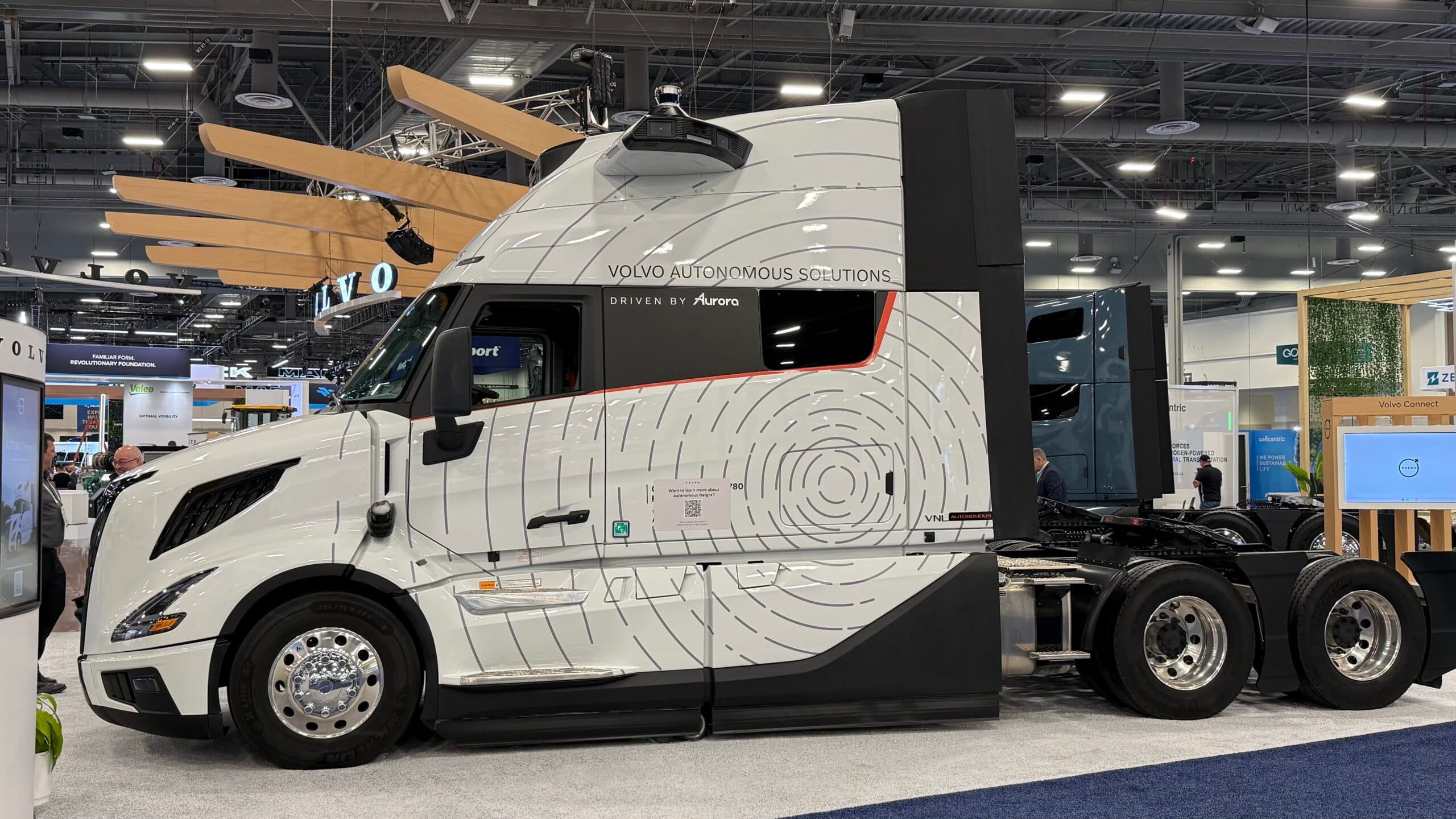
Volvo Autonomous Solutions Is About to Change Trucking Forever
The autonomous trucking industry has been inching toward a defining moment for years, and that moment now has a firm date on the calendar. Volvo Autonomous Solutions has announced plans to remove safety drivers from its autonomous trucks and launch fully driverless commercial operations on U.S. highways in the first quarter of 2027. The milestone marks a pivotal shift from supervised autonomy to true, unassisted self-driving freight movement at commercial scale — and it is set to unfold on the open roads of Texas.
This announcement is not a distant promise or a research ambition. It is a concrete operational timeline backed by partnership commitments, expanding route networks, and a financial roadmap that projects nearly $3 billion in revenue within five years. For the freight and logistics industry, the implications are enormous.
What Volvo Autonomous Solutions Is Planning
Volvo Autonomous Solutions laid out its vision in detail at Volvo Group's recent Capital Markets Day, giving investors and industry observers a clear picture of where the company is headed. The key milestones are straightforward but striking in their ambition.
- Fully driverless operations to begin in Q1 2027, with safety drivers removed from all commercial autonomous trucks.
- More than 300 autonomous trucks are expected to be operating by the end of 2027.
- Industrial scaling of the autonomous fleet is planned to begin in 2028.
- Projected revenue from the autonomous trucking business is expected to approach approximately $3 billion within five years.
These are not speculative targets. They are built on a foundation of active commercial operations that Volvo Autonomous Solutions is already running today, with paying customers moving real freight across real routes in Texas.
Aurora Innovation Confirms the Driverless Milestone
Volvo's technology partner Aurora Innovation has added its own confirmation to the Q1 2027 timeline. Aurora, one of the leading autonomous vehicle technology developers in the United States, shared the news on LinkedIn, stating clearly: "In Q1 2027, we'll deploy those trucks with nobody behind the wheel in Texas."
Aurora's involvement lends significant credibility to the timeline. The company has been developing its Aurora Driver autonomous system for years and has been working closely with Volvo Autonomous Solutions to bring driverless freight operations to commercial viability. The confirmation from Aurora signals that both the vehicle hardware and the underlying autonomous driving software are on track to meet the Q1 2027 target.
From Safety Drivers to Full Autonomy: The Road So Far
Volvo Autonomous Solutions did not arrive at this milestone overnight. The company has been building toward driverless operations through a careful, staged approach that began with safety-driver-supervised commercial routes in Texas. Today, the company moves freight daily on several key corridors, including Dallas to Houston, Fort Worth to El Paso, and most recently Dallas to Oklahoma City.
Sasko Cuklev, head of On-Road Solutions at Volvo Autonomous Solutions, described the current state of operations in an interview with FreightWaves at ACT Expo: "We are moving freight there daily together with our customers in a real commercial setup autonomously, still with a safety driver. We are now expanding that to also cover a third lane, which is Dallas to Oklahoma City."
Each of these routes represents more than a line on a map. They are proof points that demonstrate the system's readiness, the operational logistics around autonomous freight, and the confidence of commercial customers willing to integrate self-driving trucks into their supply chains right now.
The Oklahoma City Expansion Is a Significant Leap Forward
Among the recent operational developments, the Dallas to Oklahoma City route stands out for a specific reason. Unlike earlier routes that relied on hub-to-hub transfers — where autonomous trucks would hand off freight near highway on-ramps and off-ramps, with human drivers handling first- and last-mile delivery — the Oklahoma City expansion takes a fundamentally different approach.
On this route, the autonomous trucks drive the entire way directly into customer facilities. This point-to-point delivery model eliminates the drayage segment that previously required a separate human-operated vehicle to complete the final leg of the journey. It is a meaningful operational evolution that simplifies the logistics chain, reduces costs, and brings autonomous trucking much closer to the seamless, end-to-end freight solution the industry has long envisioned.
This kind of facility-to-facility autonomy is precisely the model that will define commercial driverless trucking at scale, and Volvo Autonomous Solutions is already doing it today — just with a safety driver along for the ride. Removing that driver in Q1 2027 is the next logical step.
Why This Matters for the Freight Industry
The autonomous trucking sector has faced skepticism, delays, and high-profile setbacks over the past decade. Companies have come and gone, timelines have slipped, and promises have gone unfulfilled. Against that backdrop, the specificity and operational grounding of Volvo Autonomous Solutions' 2027 announcement carries real weight.
The freight industry faces structural challenges that autonomous trucking is uniquely positioned to address. Driver shortages, rising labor costs, hours-of-service limitations, and growing freight demand are all pressures that traditional trucking models struggle to absorb. A fleet of 300-plus autonomous trucks operating driverlessly across Texas highway corridors by the end of 2027 begins to offer a tangible, scalable answer to those challenges.
For shippers, the promise of consistent, cost-efficient, around-the-clock freight movement without dependency on driver availability is compelling. For carriers, the ability to scale capacity without proportionally scaling headcount reshapes the economics of the business entirely.
Looking Ahead to 2028 and Beyond
The Q1 2027 driverless milestone is significant, but Volvo Autonomous Solutions is already thinking beyond it. Industrial scaling is targeted to begin in 2028, suggesting that what starts as a fleet of a few hundred trucks in Texas is intended to grow into something far larger and more geographically expansive. The $3 billion revenue projection within five years reflects confidence that demand for autonomous freight capacity will accelerate once the driverless proof of concept is firmly established.
As the industry watches Q1 2027 approach, Volvo Autonomous Solutions and Aurora Innovation appear to be on course to deliver one of the most consequential moments in modern transportation history: the day a commercial freight truck rolls down a U.S. highway with no one sitting behind the wheel.