
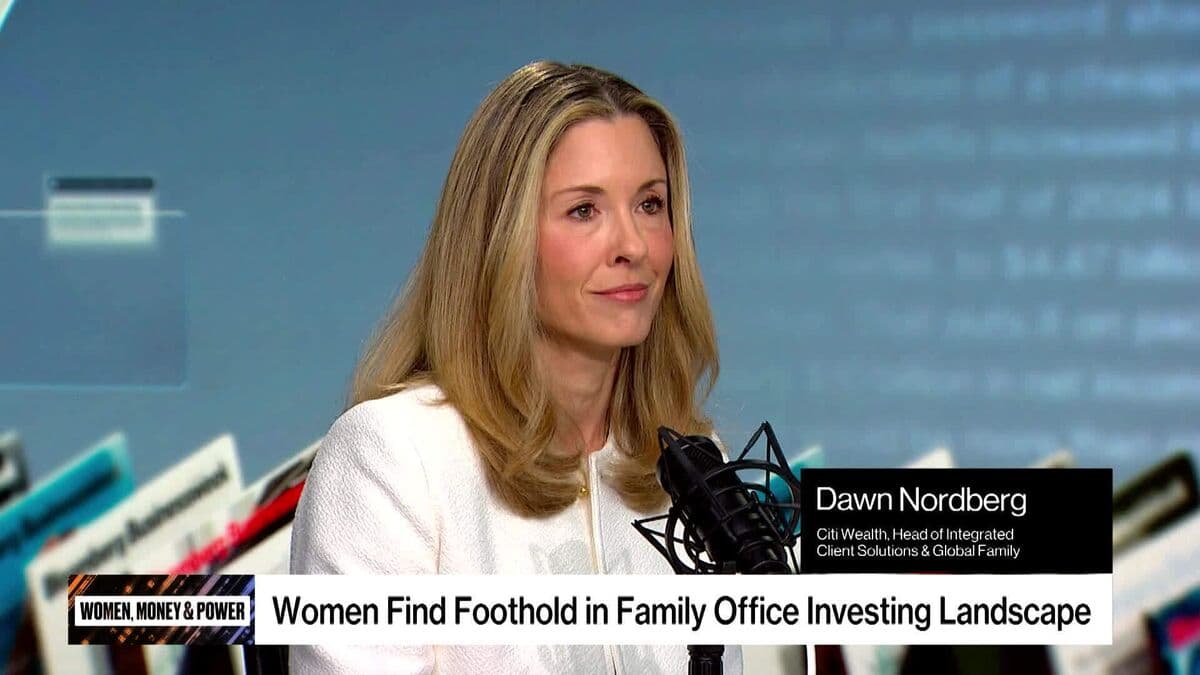
Women Are Rewriting the Rules of Family Office Investing
For decades, the family office world was a landscape largely shaped by men — built by men, run by men, and designed with male principals in mind. But a significant transformation is quietly and powerfully underway. Women are no longer sitting on the sidelines of generational wealth management. They are stepping into the center of it, and the numbers tell a compelling story about just how dramatic this shift is going to be.
According to Dawn Nordberg, Head of Integrated Client Solutions and Global Family Office at Citi Wealth, projections indicate that women will command 55% of global wealth by 2030. That milestone, driven largely by the ongoing "great wealth transfer," is already beginning to reshape who holds power in the family office investing landscape — and how that power is exercised.
Understanding the Great Wealth Transfer
The great wealth transfer refers to the largest intergenerational movement of assets in modern history. As Baby Boomers age and pass on their accumulated fortunes, trillions of dollars are shifting hands — and a significant and growing portion of that wealth is landing with women. This is happening through inheritance, the rising earning power of women in professional and entrepreneurial roles, and longer average female lifespans that mean women often outlive their partners and inherit shared estates.
The scale of this transfer is almost difficult to comprehend. Estimates suggest that somewhere between $68 trillion and $84 trillion in assets will move between generations in the United States alone over the coming decades. Globally, the figures are even more staggering. And with women positioned to receive a majority of that wealth, the implications for financial institutions, investment managers, and the family office sector are profound.
What makes this moment particularly interesting is not just the volume of wealth moving toward women — it is the way women are choosing to engage with that wealth once they receive it.
From Beneficiaries to Principals: A Cultural Shift in Family Offices
Historically, women in wealthy families were often treated as beneficiaries — recipients of wealth who would be guided by advisors, trustees, or male family members when it came to major financial decisions. That dynamic is changing rapidly, and nowhere is this more visible than inside the family office structure.
Dawn Nordberg noted that she is now seeing a clear shift from women being the beneficiaries of a family to being the principal in a family office. This is more than a symbolic change. A principal in a family office is a decision-maker. They set the investment philosophy, define the family's values-based priorities, determine how capital is allocated, and often oversee philanthropic and impact investing strategies alongside more traditional asset management.
This transition carries with it a distinct set of priorities and approaches. Research consistently shows that women tend to take a more holistic view of wealth management, placing greater emphasis on long-term sustainability, impact investing, and aligning portfolios with personal values such as environmental stewardship and social equity. As women take the principal seat in family offices, these priorities are beginning to reshape the investment mandates of some of the world's most influential private pools of capital.
What This Means for the Family Office Industry
The family office industry is not simply observing this shift from a distance. Forward-thinking institutions and advisors are actively recalibrating their service models to better serve female principals and the next generation of female wealth holders. For too long, traditional wealth management has been built around assumptions about who the client is — and those assumptions have not always served women well.
Women have often reported feeling talked down to, underestimated, or excluded from conversations about their own financial futures. A growing number of family offices and wealth management practices are working to correct this, building teams that reflect diversity, training advisors to engage more effectively with female clients, and creating advisory frameworks that center the priorities women actually bring to the table.
This is not simply a matter of optics or inclusivity for its own sake. It is a business imperative. With women poised to control the majority of global wealth within just a few years, any institution that fails to understand and serve female wealth holders effectively is leaving enormous value — and long-term relationships — on the table.
Investment Priorities That Women Are Bringing to the Forefront
As women move into principal roles within family offices, several investment themes are gaining greater prominence in family portfolios. These include a stronger emphasis on ESG (environmental, social, and governance) criteria, greater interest in mission-aligned investing, and a sharper focus on multigenerational financial planning that considers not just wealth preservation but wealth purpose.
Women-led family offices are also demonstrating a growing appetite for alternative investments, including private equity, venture capital in underrepresented founder communities, and real assets with tangible social or environmental impact. These preferences are influencing the types of managers, funds, and platforms that family offices are choosing to partner with.
Looking Ahead to 2030 and Beyond
The next five years represent a pivotal window for the family office industry. As the great wealth transfer accelerates and women increasingly assume principal roles, the institutions and advisors that adapt proactively will be best positioned to build lasting, multi-generational relationships with the world's fastest-growing group of wealth holders.
The message from leaders like Dawn Nordberg at Citi Wealth is clear: the era of women as passive beneficiaries in wealth management is ending. The era of women as active, informed, values-driven principals is already here. The family office landscape will never look quite the same — and that is very likely a change for the better.