
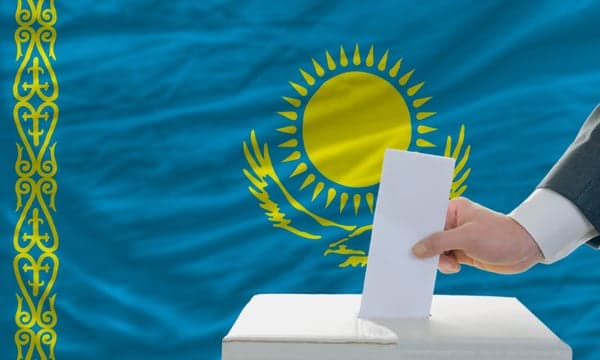
Kazakhstan's Political Landscape Is Shifting — Again
For outside observers, Kazakhstan's political party system can seem like a revolving door of names, logos, and slogans that ultimately lead to the same destination: a single dominant force orbiting the presidency. The latest development in this well-worn pattern is the announced merger between the Amanat party — long the country's flagship pro-government political vehicle — and the smaller Adilet party. Far from being a routine administrative housekeeping exercise, this merger carries significant implications for how political power is organized, legitimized, and projected in one of Central Asia's most strategically important nations.
What is emerging from this consolidation is a picture of Adilet being carefully positioned to become Kazakhstan's next ruling party — the primary institutional mechanism through which President Kassym-Jomart Tokayev intends to govern and maintain political continuity. The names change. The system, as always, stays the same.
Understanding the Amanat-Adilet Merger
Amanat, which means "trust" or "legacy" in Kazakh, was itself the product of a rebranding. The party was formerly known as Nur Otan — the party of longtime president Nursultan Nazarbayev. When Tokayev assumed the presidency and eventually sought to distance himself from his predecessor's legacy following the violent January 2022 unrest, the party was renamed Amanat and repositioned as Tokayev's own political instrument. It was a strategic signal: a new era had begun, and the ruling party would reflect that.
Now, with the absorption of Adilet — a center-right party that has operated as a nominally independent but reliably loyalist force — the political machinery is being consolidated once more. Adilet, whose name translates to "justice," brings with it a separate membership base, a distinct organizational infrastructure, and, critically, a different public image. By merging under the Adilet banner or folding Adilet's identity into a restructured entity, Tokayev's political architects appear to be constructing a new political home that can present itself as fresh, reform-oriented, and untethered from the Nazarbayev-era associations that still cling to Amanat despite its rebranding efforts.
Why Rebranding Matters in Authoritarian-Adjacent Systems
To understand why this merger matters, it helps to understand the function of ruling parties in systems like Kazakhstan's. In consolidated authoritarian or competitive authoritarian regimes, the dominant party is rarely a genuine platform for ideological debate or grassroots political mobilization. Instead, it serves several interconnected purposes.
- Elite coordination: The ruling party provides a structured environment through which business elites, regional officials, and bureaucrats signal loyalty and negotiate access to resources and patronage.
- Legitimacy management: Periodic elections and party activity create a veneer of democratic participation that is useful both domestically and in relations with international partners.
- Succession signaling: Control of the ruling party is one of the clearest indicators of who holds real political power, making party restructuring a high-stakes activity whenever leadership dynamics shift.
- Narrative control: Renaming and restructuring parties allows leaders to symbolically break with unpopular predecessors or past failures without altering the underlying architecture of power.
Each of these functions is visible in Kazakhstan's current political moment. The January 2022 protests — the most serious unrest the country had seen since independence — revealed the depth of public frustration with inequality, elite capture, and the Nazarbayev family's outsize influence over national life. Tokayev responded with a rhetorical pivot toward what he called a "New Kazakhstan," promising reforms, anti-corruption measures, and a redistribution of wealth. The rebranding of Nur Otan into Amanat was part of that narrative. The current Adilet merger appears to be the next chapter.
Adilet's Rise: From Junior Partner to Central Actor
Adilet has historically occupied a secondary role in Kazakhstan's political ecosystem, functioning as one of several managed opposition or loyalist parties that give the system its multiparty facade. That positioning is now apparently changing. Reports and political signals suggest that Adilet is being groomed for a more central institutional role — one that would allow the Tokayev administration to govern through a party brand less historically burdened than Amanat.
This kind of managed transition is not without precedent in the region. Political leaders in post-Soviet states have repeatedly used party mergers, renamings, and structural reorganizations to achieve a fresh political start without actually dismantling the networks of influence that sustain their rule. The outward form changes; the inner logic of power remains intact.
What This Means for Kazakhstan's Political Future
For Kazakhstani citizens, the merger raises more questions than it answers. Will a restructured ruling party under the Adilet name lead to genuine policy shifts, more competitive elections, or meaningful space for political pluralism? Based on Kazakhstan's recent political history, skepticism is warranted. The country continues to score poorly on independent democracy and press freedom indices, and the structural conditions that limit genuine political competition — including the absence of truly independent courts, restrictions on civil society, and a media landscape dominated by loyalist voices — remain firmly in place.
For international observers and analysts, the Amanat-Adilet merger is a useful reminder that political change in Kazakhstan must be read carefully. Surface-level restructuring — new party names, new slogans, new faces at podiums — can create an impression of dynamism and reform that masks deeper continuities. President Tokayev has shown himself to be a skilled manager of political optics, and the consolidation now underway reflects that skill.
The Broader Pattern: Consolidation Dressed as Reform
Perhaps the most important takeaway from the Amanat-Adilet merger is what it reveals about the nature of political change in Kazakhstan under Tokayev. Rather than liberalization, what is occurring is rationalization — a streamlining of the political apparatus to make it more effective, more modern in appearance, and more durably tied to the current president's personal authority. The "New Kazakhstan" narrative requires new institutional clothing, and Adilet is being tailored to fit.
Whether this repositioning ultimately serves the interests of ordinary Kazakhstanis — or merely the interests of those already at the top of a tightly managed political hierarchy — remains the central question. For now, the merger confirms one enduring truth about Kazakhstani politics: in Astana, when the music changes, the dancers remain the same.