
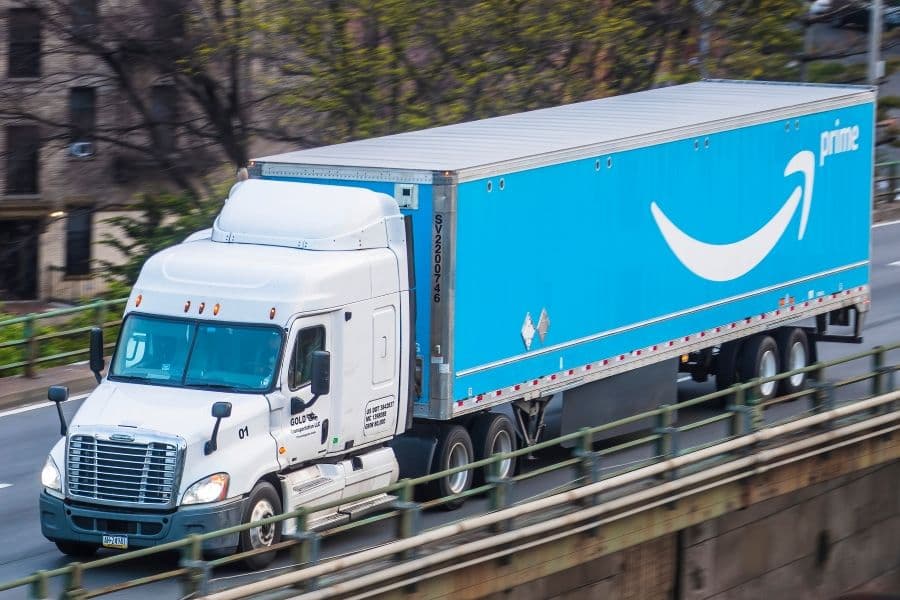
Amazon Freight Enters the LTL Market — And It's Making a Bold Distinction
When Amazon moves into an industry, the ripple effects are felt almost immediately. The company's latest expansion into less-than-truckload (LTL) freight shipping is no exception. But Amazon Freight's director is drawing a clear, firm line in the sand: this is not a brokerage. The new LTL service, the company says, is built on company-owned equipment and proprietary technology — an "asset-backed" model that positions Amazon as a direct carrier rather than a middleman connecting shippers to third-party trucking capacity.
For supply chain professionals, logistics managers, and small-to-midsize businesses that rely on affordable freight options, this distinction matters enormously. Understanding what Amazon Freight is actually offering — and how it differs from traditional freight brokers — could shape how companies approach their shipping strategies in the years ahead.
What Is LTL Freight and Why Does It Matter?
Before diving into what Amazon is building, it helps to understand the landscape it's entering. Less-than-truckload shipping refers to the transportation of freight that does not require a full truckload. Instead of reserving an entire trailer, multiple shippers share space on a single truck, each paying only for the portion they use. This makes LTL an attractive, cost-effective option for businesses that regularly ship mid-sized loads — too large for parcel carriers like UPS or FedEx, but too small to justify a full dedicated truck.
The LTL market is dominated by established carriers such as Old Dominion Freight Line, XPO Logistics, Saia, and Estes Express. These companies have spent decades building out hub-and-spoke terminal networks, specialized equipment fleets, and operational expertise. Entering this space isn't a casual decision — it requires significant infrastructure and capital investment, which is precisely why Amazon's "asset-backed" framing carries weight.
Asset-Backed vs. Brokerage: A Critical Difference
The freight brokerage model works by acting as an intermediary. Brokers connect shippers who have cargo to move with carriers who have available capacity, earning a margin in the middle. While brokerage platforms have grown enormously — companies like C.H. Robinson and Echo Global Logistics have built massive businesses on this model — they don't own the trucks, the drivers, or the terminals. Their value lies in their network access and their ability to match supply with demand efficiently.
An asset-based carrier, by contrast, owns or leases the physical equipment used to move freight. This distinction has real implications for shippers. Asset-backed carriers typically offer greater consistency in pricing, more predictable service levels, and tighter accountability when things go wrong. Because the carrier controls its own fleet, there are fewer variables introduced by relying on a patchwork of independent truckers or regional operators.
Amazon Freight's director is emphatic that the company's new LTL offering falls squarely into the asset-backed category. The service is grounded in Amazon's own equipment and powered by the same proprietary technology the company has developed through years of managing one of the world's most complex logistics networks. This is not a platform reselling capacity it doesn't own — it is, Amazon insists, a carrier.
The Technology Advantage Amazon Brings to LTL
One of the most compelling aspects of Amazon's entry into LTL isn't just the physical assets — it's the technology stack behind them. Amazon has spent billions of dollars and more than a decade building logistics software, routing algorithms, real-time tracking systems, and data analytics capabilities. These tools were originally developed to power Amazon's own e-commerce fulfillment, but they represent a formidable competitive advantage when applied to the broader freight market.
Traditional LTL carriers have modernized significantly over the years, but many still operate on legacy systems that weren't built for the data-intensive, on-demand expectations of today's shippers. Amazon's technology-first approach could mean:
- More dynamic and transparent pricing for LTL shipments
- Improved real-time tracking and visibility throughout the shipping journey
- Smarter load optimization that reduces costs and transit times
- Faster, more seamless booking and documentation processes
- Better integration with existing e-commerce and ERP platforms
For shippers who have long dealt with opaque freight pricing and clunky carrier portals, this kind of technology-driven experience could be a genuine differentiator.
What This Means for Shippers and the Broader Freight Industry
Amazon's move into LTL is not happening in a vacuum. The freight industry has been navigating significant headwinds, including overcapacity following the post-pandemic freight boom, rising operating costs, and the sudden collapse of major carriers like Yellow Corporation in 2023. That market upheaval opened up terminal infrastructure and created new competitive dynamics that players like Amazon may be positioned to exploit.
For shippers, the arrival of a well-capitalized, technology-forward LTL carrier with Amazon's brand recognition could translate to more competitive pricing and service options. Established carriers, meanwhile, will likely be watching closely to see how aggressively Amazon pursues market share and whether its asset base is large enough to compete at scale across diverse regional lanes.
It's also worth noting that Amazon Freight already operates in the full truckload (FTL) space, offering shippers access to Amazon's vast network of truck capacity. Adding LTL to that portfolio makes the platform a more complete freight solution — one capable of serving shippers across a wider range of load sizes and shipping needs. This positions Amazon as a genuine end-to-end logistics competitor, not merely a niche player carving out a corner of the market.
Should Your Business Consider Amazon Freight for LTL?
If you're evaluating freight carriers for your LTL shipping needs, Amazon Freight's new offering is worth watching closely. The combination of asset-backed reliability, proprietary technology, and competitive pricing potential makes it a credible entrant in a market that has long been dominated by entrenched incumbents.
That said, LTL shipping decisions should always be based on lane coverage, transit times, claims performance, and total cost — not brand recognition alone. As Amazon's LTL network matures and data on service performance becomes available, shippers will be better positioned to make informed comparisons against established carriers.
What's clear is that Amazon is not building just another freight brokerage. It is staking a claim as a legitimate, asset-backed carrier in one of freight's most operationally complex segments. Whether that claim holds up at scale remains to be seen — but the industry would be wise to take it seriously.
The Bottom Line
Amazon Freight's entry into LTL shipping represents one of the most significant developments in the freight industry in recent years. By grounding its service in company-owned equipment and purpose-built technology, Amazon is drawing a sharp distinction from freight brokers and positioning itself as a direct competitor to the major national LTL carriers. For shippers, this means more options, potentially more competitive pricing, and the kind of digital-first experience that modern logistics demands. For the broader industry, it's a reminder that disruption doesn't always announce itself loudly — sometimes it arrives in the form of a carefully worded press statement and a fleet of trucks already rolling down the highway.