
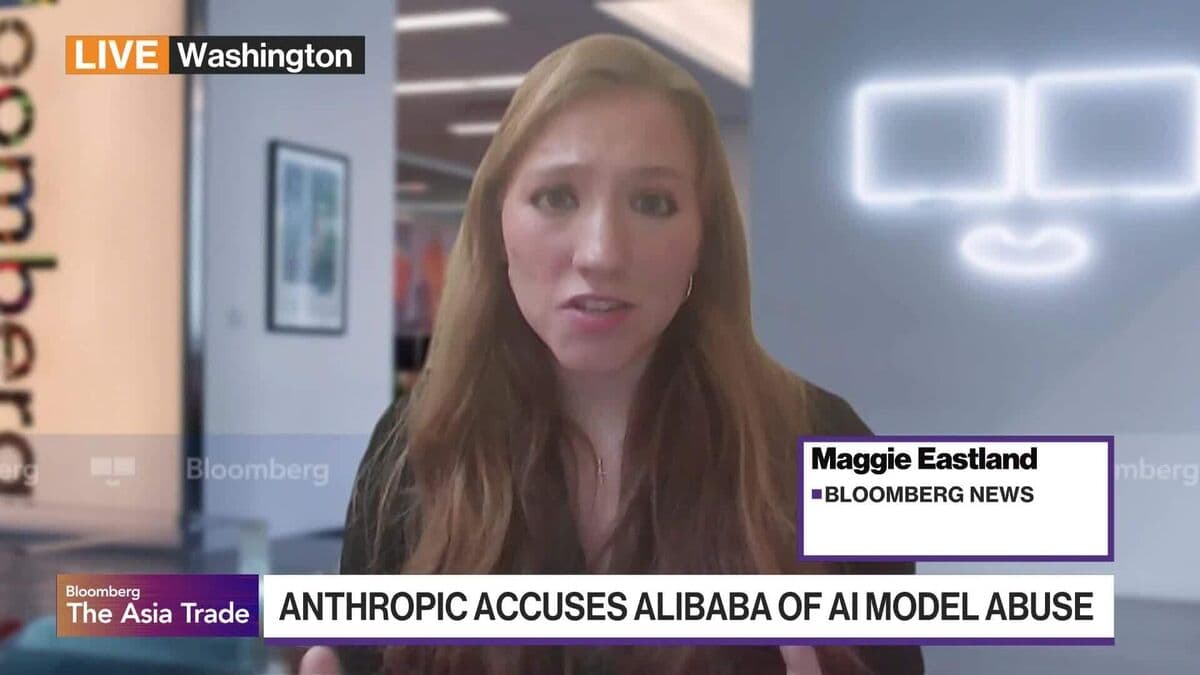
Anthropic Accuses Alibaba of Illicitly Accessing Its Claude AI Model
In a dramatic escalation of tensions within the global artificial intelligence industry, Anthropic PBC has formally accused Chinese tech giant Alibaba Group Holding Ltd. of orchestrating a large-scale, coordinated effort to gain unauthorized access to its Claude AI model. According to reports from Bloomberg, Anthropic alleges that Alibaba used thousands of fraudulent accounts to "illicitly" extract data and capabilities from one of the most advanced AI systems currently available on the market. The accusation marks a significant flashpoint in the ongoing rivalry between U.S. and Chinese technology firms and raises serious questions about the security of proprietary AI systems.
What Anthropic Is Alleging
Anthropic's accusations are serious and far-reaching. The San Francisco-based AI safety company claims that Alibaba did not engage in a small or opportunistic breach — rather, it allegedly mounted a systematic, large-scale campaign designed to exploit access to Claude. The use of thousands of fraudulent accounts suggests a well-resourced and deliberate operation, one that Anthropic characterizes as anything but accidental.
The word "illicitly" is notable here. It signals that Anthropic believes Alibaba's alleged actions violated not only its terms of service but potentially applicable laws governing unauthorized computer access and intellectual property. While the full legal implications remain to be seen, the language used by Anthropic strongly suggests that the company may be laying the groundwork for formal legal action or regulatory complaints.
Bloomberg's reporting, led by journalist Maggie Eastland, brought the allegations to public attention, though Anthropic has not yet published a full, detailed account of how it detected the alleged intrusion or precisely what information it believes was accessed through the fraudulent accounts.
Who Is Anthropic and Why Does Claude Matter?
Anthropic was founded in 2021 by former OpenAI executives, including Dario Amodei and Daniela Amodei, with a mission centered on AI safety and responsible development. The company has since become one of the most influential players in the generative AI space, competing directly with OpenAI, Google DeepMind, and Meta AI.
Claude is Anthropic's flagship AI model — a large language model (LLM) widely regarded as one of the most capable and safety-focused systems in the industry. Businesses, developers, and researchers access Claude through Anthropic's API and consumer-facing products, and the model is increasingly being integrated into enterprise workflows across sectors including healthcare, finance, legal services, and software development.
Given Claude's commercial value and the proprietary training techniques behind it, unauthorized access to the model — especially at scale — could represent a significant breach of intellectual property and competitive intelligence. If a competitor were able to use thousands of accounts to probe the model's responses, capabilities, and safety guardrails, it could potentially reverse-engineer key aspects of the technology or gain an unfair advantage in developing rival systems.
Alibaba's Position in the AI Race
Alibaba is not a passive observer in the global AI competition. The company has invested heavily in its own AI research and development division, and its cloud computing arm, Alibaba Cloud, has been aggressively promoting its own large language models, including the Qwen series. Alibaba has positioned itself as a leader in AI infrastructure and model development, particularly within Asian markets, and has been rapidly catching up to Western competitors.
The allegations from Anthropic, if proven, would suggest that gaining unauthorized access to a competitor's model was seen as a strategic shortcut in this intensely competitive environment. It is worth noting that Alibaba has not publicly responded in detail to the accusations, and at the time of reporting, the company had not issued a formal denial or confirmation of the claims.
Broader Implications for AI Security and Intellectual Property
The Anthropic-Alibaba dispute is not occurring in a vacuum. It reflects a growing anxiety within the AI industry about the vulnerability of proprietary models to unauthorized access, data scraping, and competitive espionage. As AI models become more powerful and more commercially valuable, the incentives for bad actors — whether state-sponsored, corporate, or otherwise — to attempt unauthorized access will only increase.
- Terms of Service Enforcement: Most AI companies rely on terms of service agreements to govern how their APIs and platforms can be used. Fraudulent account creation is a direct violation of these agreements, and incidents like this highlight the challenge of enforcing them at scale.
- API Security: The alleged use of thousands of accounts suggests that Anthropic's access controls may need to be strengthened, a challenge faced by virtually every major AI platform.
- Geopolitical Tensions: Accusations of this nature between a leading U.S. AI firm and a major Chinese corporation add another layer of tension to the already strained technology relationship between the two countries.
- Regulatory Attention: Incidents like this are likely to attract scrutiny from regulators in both the United States and the European Union, who are already working to develop frameworks governing AI access and misuse.
What Happens Next?
The situation is still developing, and several outcomes are possible. Anthropic could pursue legal action against Alibaba in U.S. courts, citing violations of the Computer Fraud and Abuse Act (CFAA) or trade secret protections. Alternatively, the matter could escalate to involve government agencies concerned with technology transfer and national security, given the cross-border nature of the alleged conduct.
More broadly, the incident is likely to prompt other AI companies to review and tighten their own access controls, fraud detection systems, and terms of service enforcement mechanisms. As the AI industry matures, protecting the integrity and exclusivity of proprietary models will become an increasingly critical business and legal priority.
Conclusion
Anthropic's accusation that Alibaba illicitly accessed its Claude AI model through thousands of fraudulent accounts is one of the most significant corporate AI disputes to emerge in recent memory. Whether or not the allegations are ultimately proven in a court of law, the episode serves as a stark reminder that in the high-stakes race to dominate artificial intelligence, the boundaries of fair competition are being tested in new and serious ways. For the AI industry as a whole, this case may prove to be a turning point in how companies think about securing their most valuable digital assets.