
An Australian View of the New Trump Iran Deal: Geography, Maritime Dependency, and Strategic Risk
When the Trump administration unveiled its new framework for an Iran nuclear agreement, the immediate international commentary focused predictably on Washington, Tehran, Tel Aviv, and Riyadh. Australia barely rated a mention. Yet for Canberra's strategic planners, the deal carries implications that extend well beyond the Middle East — touching on the Indo-Pacific's fragile balance of power, the security of global shipping lanes, and the quiet vulnerabilities that Australia's maritime dependency creates for its economy and national security alike.
Understanding how Australia fits into the geopolitical puzzle surrounding a new Trump Iran deal requires examining three interlocking realities: the buffer that distance provides, the exposure that trade dependence creates, and the alliance obligations that ultimately pull Canberra into conflicts it might otherwise prefer to observe from afar.
Distance Is Not Immunity: Australia's Geographic Position
At first glance, Australia's geographic isolation appears to be a decisive strategic advantage. Sitting at the southern edge of the Indo-Pacific, separated from the Middle East by thousands of kilometres of ocean, Australia enjoys a degree of insulation from conflict that most nations can only envy. No land border disputes, no proximate missile ranges, no directly threatened population centres — at least not from Iran.
But geography offers protection only up to a point. In an era defined by interconnected global supply chains, undersea data cables, and maritime trade flows, physical distance does not translate into economic or strategic immunity. The very oceans that shield Australia from direct military threat are also the arteries through which its prosperity flows — and those arteries are acutely vulnerable to disruption in the event that the Trump Iran deal collapses, or that its terms provoke a regional escalation.
Australian strategists have long understood that their country is, at its core, a maritime nation. More than 98 percent of Australia's trade by volume travels by sea. That single statistic frames everything about how Canberra should — and must — view developments in the Strait of Hormuz, the Red Sea, and the broader waterways that connect the Middle East to the Indo-Pacific.
The Strait of Hormuz and Australia's Energy Exposure
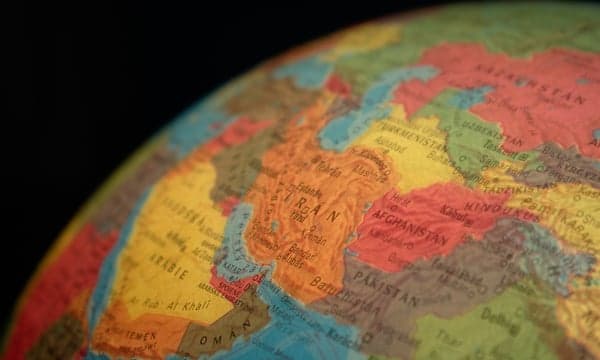
Iran's most powerful strategic lever in any negotiation — or conflict — remains its ability to threaten the Strait of Hormuz, the narrow waterway through which roughly 20 percent of the world's oil and a significant share of liquefied natural gas (LNG) passes each day. While Australia is itself a major LNG exporter, its trading partners across Asia are among the most exposed consumers of Hormuz-dependent energy supplies.
Japan, South Korea, and China — three of Australia's most critical export markets — rely heavily on Gulf energy flows. A disruption to Hormuz transit, whether triggered by an Iranian response to hardline deal conditions or by the collapse of negotiations altogether, would send energy price shocks reverberating through Asian economies. Reduced demand, economic slowdown, and diplomatic turbulence in Australia's primary export markets would follow with near certainty.
This is the indirect but very real way in which the new Trump Iran deal matters to Australian households and businesses. The question is not whether an Iranian missile will land in Sydney. The question is whether an escalation in the Gulf will throttle the economic engines that keep Australian export revenues flowing.
Alliance Obligations and the ANZUS Dimension
Australia's strategic calculus is further complicated by its alliance architecture. The ANZUS treaty and the deeper Five Eyes intelligence partnership with the United States mean that Australia is rarely, if ever, a passive bystander when Washington acts in the Middle East. The Iraq War and the Afghanistan deployment are instructive precedents: Australia followed the American lead, committing troops and resources to conflicts that were not, strictly speaking, existential threats to Australian territory.
A new Trump Iran deal that unravels — or that locks in conditions Iran finds intolerable — raises the spectre of renewed military confrontation in the Gulf. Were the United States to become involved in hostilities with Iran, the pressure on Canberra to contribute, whether through naval assets, intelligence sharing, or diplomatic solidarity, would be significant. Australia's room to manoeuvre is constrained by the depth of its alliance commitments, even when its direct national interest in the outcome is ambiguous.
Australia's Quiet Diplomatic Interest in a Stable Deal
Given these overlapping vulnerabilities, it is in Australia's clear national interest that any Iran nuclear agreement — under Trump or any other administration — achieves genuine, verifiable stability rather than a short-term political win that sows the seeds of future escalation. A durable deal reduces the risk of Hormuz disruption, dampens pressure on Australia's alliance commitments, and contributes to the rules-based international order that Canberra has consistently championed as a middle power.
Australia has little direct leverage over the terms being negotiated between Washington and Tehran. But through its diplomatic relationships in Washington, its partnerships with Gulf states, and its voice in multilateral forums, Canberra can and should advocate for an outcome that prioritises verifiable compliance and regional de-escalation over punitive posturing.
The Broader Indo-Pacific Lens
Perhaps most importantly, Australian strategists must view the Trump Iran deal through the lens of what it signals to China and other regional actors watching closely. A chaotic or collapsed negotiation emboldens revisionist powers who see American unpredictability as an opportunity. A credible and enforced agreement, by contrast, reinforces the message that multilateral diplomacy backed by American resolve can still deliver results.
For Australia, navigating the new Trump Iran deal is less about the Middle East itself and more about what the outcome means for the rules, norms, and power dynamics that will shape the Indo-Pacific for the next decade. That is the Australian view — and it is one that deserves to be heard.