
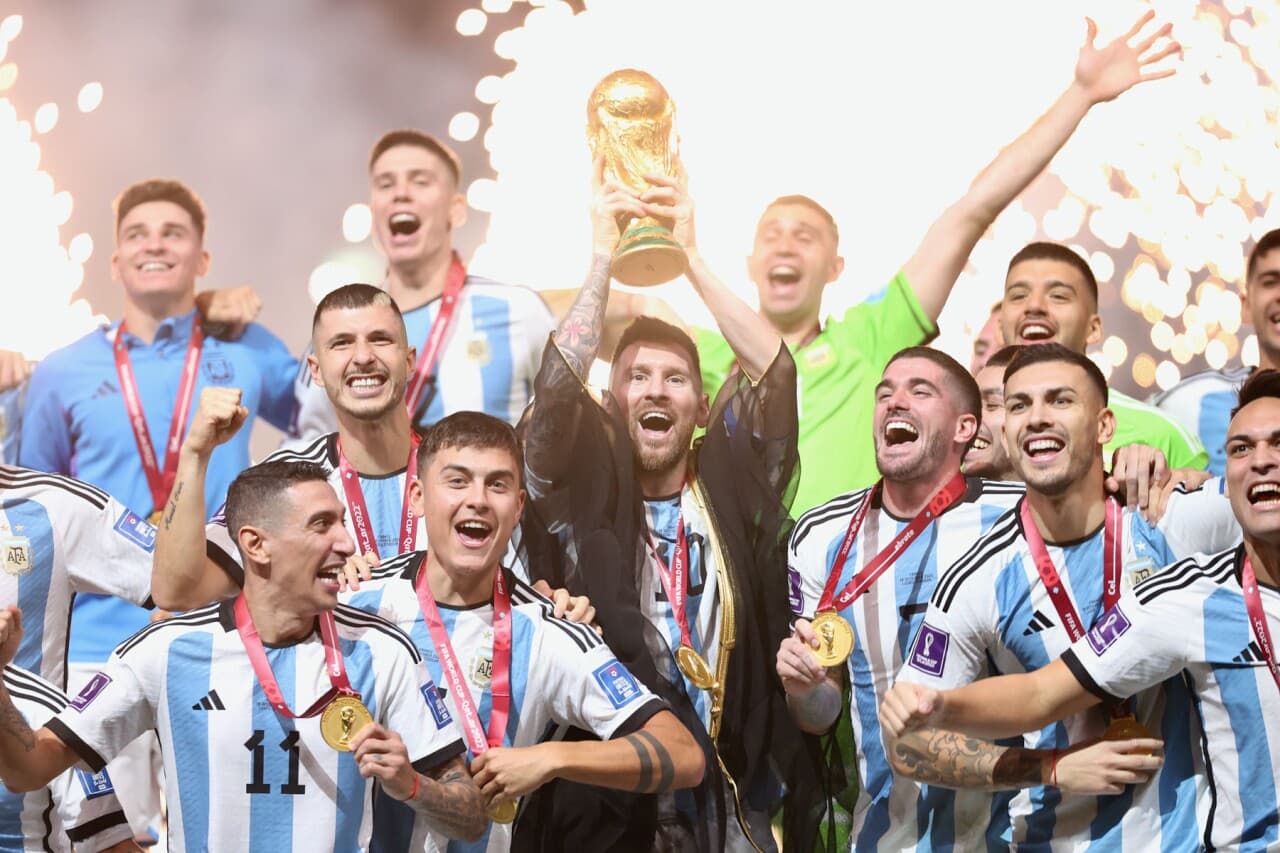
FIFA World Cup 2026 Prize Money: The Champion Will Take Home a Record-Breaking $62.5 Million
Lifting the FIFA World Cup has always been the pinnacle of international football. But in 2026, raising that golden trophy will mean something more financially significant than ever before. FIFA has officially approved the largest prize pool in the history of the tournament, setting aside a staggering $871 million to be distributed among the 48 nations that will compete across the United States, Canada, and Mexico. At the top of that financial mountain, the World Cup 2026 champion stands to collect at least $62.5 million — a number that would have seemed unimaginable just a decade ago.
The Record-Breaking $871 Million Prize Pool
FIFA's decision to expand the World Cup from 32 to 48 teams for the 2026 edition was always going to have financial implications, but the scale of the prize pool upgrade goes well beyond simple expansion math. The total prize fund of $871 million represents a roughly 15% increase compared to the $727 million distributed at the 2022 World Cup in Qatar, which was itself a record at the time. This continued upward trajectory reflects both the tournament's explosive commercial growth and FIFA's stated commitment to reinvesting revenue into the global game.
What makes the 2026 structure particularly notable is not just the size of the pot, but the way it is designed to be distributed. Unlike previous editions where smaller nations risked receiving relatively modest returns for their participation, the new framework guarantees a meaningful payout to every single qualified team — before a single match is even played.
Guaranteed Money: Every Team Earns Before Kickoff
One of the most significant structural changes in the 2026 prize model is the guaranteed baseline payment. Every one of the 48 participating nations is guaranteed to receive $12.5 million simply by qualifying for the tournament. That figure is broken down into two components:
- $10 million awarded for securing qualification to the World Cup
- $2.5 million allocated specifically to cover preparation costs, including training camps, travel logistics, and pre-tournament operations
This guaranteed floor is a meaningful shift in FIFA's philosophy. Smaller footballing nations that might exit in the group stage — and historically received relatively little for their participation — can now plan their budgets with a guaranteed multi-million dollar inflow. For confederations in Africa, Asia, or the CONCACAF region, where national football associations often operate with limited resources, this baseline payment can be genuinely transformative.
How Much Does the World Cup 2026 Champion Earn?
Now for the headline figure. The team that wins the 2026 FIFA World Cup will receive a $50 million prize for claiming the title. When combined with the $12.5 million guaranteed payment that every participating nation receives, the champion's total FIFA earnings reach a minimum of $62.5 million.
It is worth emphasizing the word "minimum." That $62.5 million figure does not account for any additional commercial bonuses, sponsorship deals, or supplementary federation payments that winning nations may negotiate independently. For major footballing nations with large commercial operations — think Brazil, France, England, or Argentina — the total financial windfall associated with winning the World Cup could substantially exceed even that record number once all revenue streams are factored in.
Prize Money by Stage: A Tiered Reward System
FIFA structures its prize payouts on a tiered basis, meaning teams earn additional money for every round they advance beyond the group stage. While the full breakdown for every stage of the 2026 tournament has been outlined by FIFA, the principle is straightforward: the further you go, the more you earn. The runner-up, third-place finisher, and fourth-place team all collect figures well above the baseline, with the finalist expected to earn in the range of $35–40 million in stage-based prizes before the guaranteed amount is added.
This tiered system incentivizes competitive play at every level and ensures that even teams eliminated in the Round of 32 — a new stage created by the expansion to 48 teams — walk away with compensation that reflects the honor and effort of reaching a World Cup.
Why the 2026 Prize Pool Matters for Global Football
The financial stakes of the 2026 World Cup are not just a story about big numbers. They represent a broader shift in how football's governing body values participation and competitive achievement. By guaranteeing $12.5 million to every qualifier, FIFA is effectively acknowledging that reaching the World Cup — regardless of what happens on the pitch — carries enormous value for a nation's football development.
For developing footballing nations, these funds can be redirected toward youth academies, coaching infrastructure, stadium development, and the long-term growth of the sport at the grassroots level. The ripple effects of a generous prize structure extend far beyond the accounts of a national federation.
A New Benchmark in Football's Financial History
The 2026 FIFA World Cup will be remembered for many reasons — its expanded format, its three-nation hosting arrangement, and what promises to be a spectacular tournament across iconic North American venues. But it will also mark a turning point in how the world's most-watched sporting event compensates the teams and players who make it all possible.
With $871 million on the table, a guaranteed $12.5 million for every participant, and a champion's prize of at least $62.5 million, FIFA has set a financial benchmark that will be difficult to surpass — at least until the 2030 World Cup arrives. For now, every nation dreaming of lifting the trophy in the summer of 2026 knows that glory and record-breaking wealth await at the final whistle.