
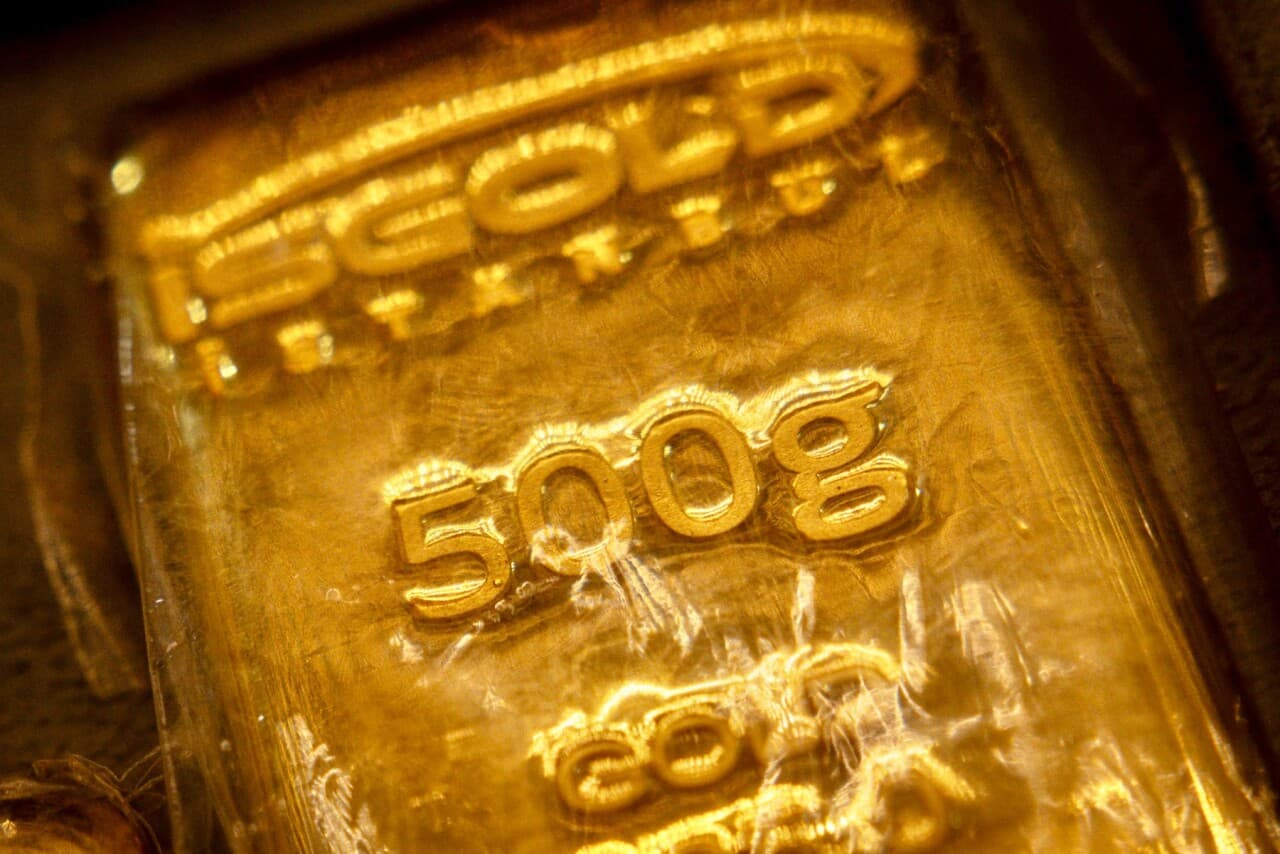
Gold Falls Below $4,000 Per Ounce for the First Time Since November 2025
Gold has surrendered one of its most psychologically important price levels, slipping below $4,000 per ounce for the first time since November 2025. The retreat has been sharp, swift, and driven by a confluence of macroeconomic forces that have caught many investors off guard. At its most recent low, the precious metal touched $3,970 per ounce — a decline that pushed its losses past 20% from the historic all-time high reached in January of this year, meeting one of the most widely accepted technical definitions of a bear market.
For a commodity that had doubled in price over the previous three years, the correction marks an abrupt end to one of the most impressive rallies in modern gold market history. Yet even as the headlines grow alarming, a deeper look at the fundamentals reveals a more nuanced picture — one that still holds meaningful support for gold heading into the end of 2026.
What Triggered the Sell-Off?
Three primary catalysts converged to push gold lower, and understanding each one is essential for investors trying to make sense of the current environment.
A Strengthening U.S. Dollar
The U.S. Dollar Index (DXY) climbed to 100.80 points, its highest reading in twelve months, according to data reported by Monex. Because gold is priced in U.S. dollars on global markets, a stronger dollar makes the metal more expensive for buyers operating in other currencies — effectively reducing international demand and placing downward pressure on prices. When the dollar rallies sharply, gold almost invariably faces headwinds, and this episode has been no exception.
Federal Reserve Rate Expectations
The Federal Reserve reinforced market expectations that interest rates would remain elevated for longer than previously anticipated. This shift matters enormously for gold, which pays no yield or dividend. When Treasury bonds offer attractive real returns, institutional investors have less incentive to hold a non-interest-bearing asset like gold. Analysts at major investment banks have noted that the "higher for longer" narrative coming from the Fed is one of the most significant structural headwinds gold faces in the near term.
Reduced Safe-Haven Demand
A third and equally important driver has been the easing of geopolitical tensions. Progress in peace negotiations between Washington and Tehran reduced the urgency that had previously driven speculative flows into safe-haven assets. When risk-off sentiment fades, gold — which had benefited significantly from geopolitical uncertainty premiums — tends to give back some of those gains quickly. The combination of reduced crisis-driven buying and profit-taking from investors who had accumulated positions during the multi-year rally amplified the downside move.
Does a 20% Drop Mean a Full Bear Market?
A decline exceeding 20% from a peak is the threshold most commonly used by markets to classify the beginning of a bear market. Gold has now crossed that threshold, which has understandably prompted concern among retail investors and longer-term holders. However, financial analysts caution against drawing overly dramatic conclusions from this single metric alone.
It is worth remembering that gold's rally over the previous three years was exceptional by any historical standard. The metal essentially doubled in value during that window, driven by a unique combination of factors including pandemic-era monetary expansion, elevated inflation, geopolitical shocks, and robust central bank purchasing. A correction of 20% from such elevated levels, while uncomfortable, may represent healthy consolidation rather than the beginning of a prolonged structural decline.
Central Banks Are Still Buying: The Bullish Case for Gold in 2026
Perhaps the most important piece of the current gold story is not what retail investors or speculative traders are doing — it is what central banks around the world are planning to do next.
According to the latest survey data highlighted in the source report, a remarkable 89% of central banks expect global gold reserves to increase over the next twelve months. Even more telling, 45% of central banks plan to increase their own holdings during that same period. These are not abstract projections — they reflect deliberate, long-term policy decisions made by institutions that do not trade on short-term price momentum.
Central bank demand has been one of the most consistent and powerful drivers of gold prices since 2022. Nations across emerging markets and beyond have been steadily diversifying their foreign exchange reserves away from the U.S. dollar, with gold playing an increasingly central role in that diversification strategy. This structural buying has historically provided a strong price floor, and there is little indication that the underlying motivation for that shift — reducing dependency on dollar-denominated assets — is going to reverse anytime soon.
Key Risks and What to Watch Going Forward
For investors trying to position themselves wisely in this environment, several factors deserve close monitoring:
- Federal Reserve communications: Any pivot in language around rate cuts could rapidly revive gold's appeal as a non-yielding store of value. Watch Fed meeting statements and economic projections closely.
- Dollar Index (DXY) trajectory: If the dollar begins to weaken from its current twelve-month highs, gold could recover quickly. Currency dynamics remain the most immediate short-term variable.
- Geopolitical developments: The pace and durability of diplomatic progress in the Middle East will influence safe-haven demand. A breakdown in negotiations could send investors back into gold rapidly.
- Central bank purchase announcements: Formal announcements of gold accumulation from major central banks, particularly in Asia and the Middle East, tend to act as powerful positive signals for the market.
- Inflation data: Persistent or resurgent inflation would strengthen the case for holding gold as a store of real value, potentially overriding the pressure from high nominal interest rates.
Analyst Outlook: A Recovery by End of 2026?
Despite the bearish technical picture in the near term, analysts remain cautiously optimistic about gold's trajectory toward the end of 2026. The structural fundamentals — central bank demand, long-term de-dollarization trends, and gold's enduring role as a reserve asset — remain intact. The current pullback, while significant, has not fundamentally altered the reasons why institutions, governments, and long-term investors have been accumulating gold over the past several years.
The consensus view among market strategists is that the current correction, while painful for recent buyers, may present a meaningful entry point for investors with a medium-to-long-term horizon. The question is not whether gold will recover, but rather when the combination of dollar softening, Fed pivoting, and continued central bank accumulation will be enough to reverse the current trend.
Bottom Line
Gold's fall below $4,000 per ounce is a significant development that deserves serious attention. A stronger dollar, the Federal Reserve's higher-for-longer stance, and easing geopolitical tensions have all played a role in the sell-off. But with 89% of central banks expecting global gold reserves to grow and nearly half planning to add to their own holdings, the long-term demand story for gold has not disappeared. Investors who can look past the short-term noise and focus on the structural drivers will find that the fundamentals supporting gold remain more resilient than today's headlines suggest.