
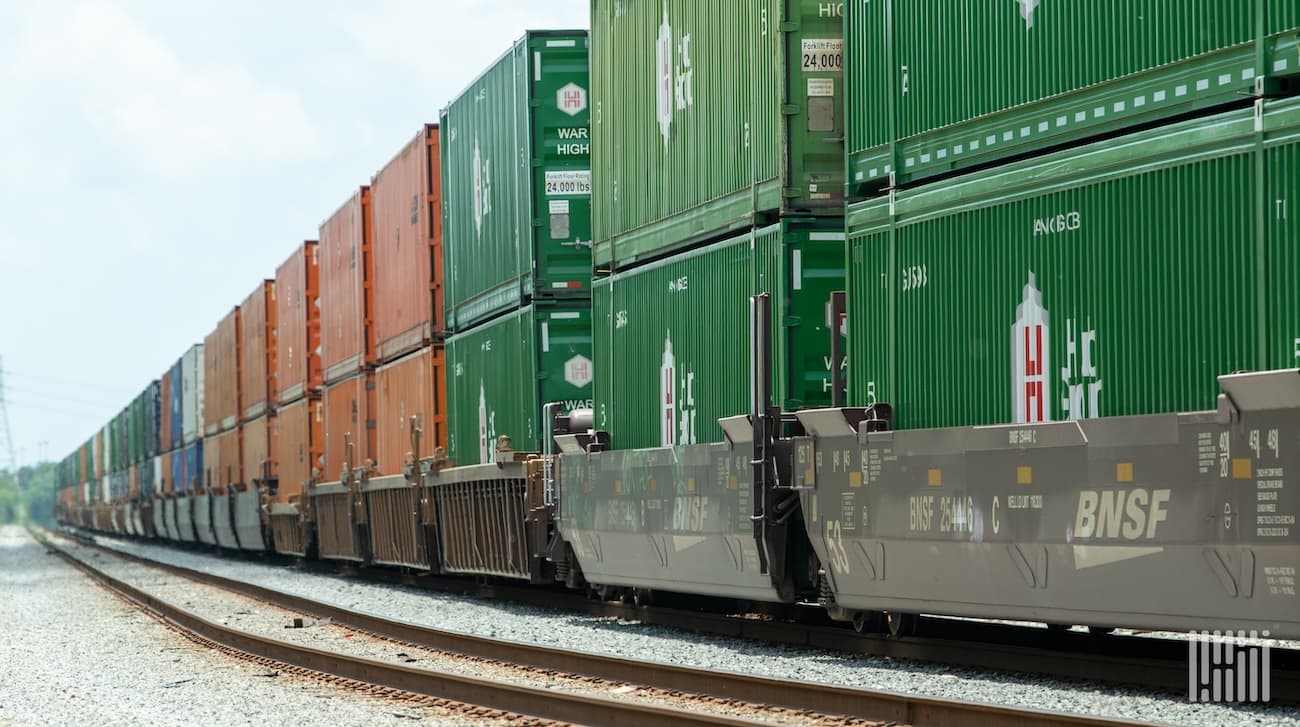
U.S. Rail Freight Climbs 7.2% as Intermodal Demand Takes Center Stage
The American freight landscape is shifting. For the week ending June 13, 2026, total freight on U.S. railroads reached 520,406 carloads and intermodal units — a 7.2% jump compared to the same period one year ago. That headline number tells an important story, but it's the intermodal segment that's stealing the spotlight and reshaping how supply chain managers are thinking about transportation strategy heading into the back half of the year.
Data released by the Association of American Railroads (AAR) revealed that while total carloads came in at 230,959 units — up a solid 2.8% year-over-year — it was intermodal volume that truly outperformed. Containers and trailers moving via intermodal rail hit 289,447 units, surging 10.9% above year-ago levels. For shippers, logistics professionals, and supply chain analysts, these figures deserve a closer look.
Why Shippers Are Making the Switch from Truck to Rail
The most significant driver behind intermodal's impressive growth is straightforward: trucking is getting more expensive. As truck rates continue to strengthen across the U.S. domestic market, shippers are increasingly evaluating rail as a viable — and notably cheaper — alternative for moving goods over medium to long distances.
This truck-to-rail conversion trend, often called "domestic conversion" in the freight industry, is not new, but it has accelerated meaningfully in 2026 as capacity tightens in the over-the-road market and carriers push rates higher. When the cost differential between trucking a load and moving it via intermodal rail becomes wide enough, shippers make the math-driven decision to shift modes. That's precisely what's happening right now, and the AAR data confirms it.
Intermodal rail offers shippers a compelling value proposition: lower cost per mile on longer hauls, reduced driver dependency, and a more predictable capacity environment compared to the volatile spot truck market. As freight volumes build heading into peak season, these advantages are becoming harder to ignore.
An Early Peak Season Is Fueling International Intermodal Volumes
Domestic conversions are only part of the intermodal story. International volumes are also surging, driven by what appears to be an early start to the 2026 peak shipping season. Importers, wary of potential supply chain disruptions and rising costs later in the year, have been pulling forward shipments — a strategy that has flooded U.S. ports with inbound containers at a pace well ahead of typical seasonal norms.
This front-loading of international freight has created a ripple effect through the intermodal rail network. As containers arrive at major coastal gateways, they need to move inland quickly and efficiently. Rail is the primary mechanism for that movement, and the early surge in port activity has translated directly into stronger intermodal unit counts on Class I railroad networks across the country.
The combination of domestic mode-switching and international volume acceleration has created a powerful dual tailwind for rail intermodal — one that industry observers suggest could sustain elevated volume levels well into the third quarter of 2026.
Carload Commodities: Grain and Metals Lead the Way
Beyond intermodal, the broader carload picture showed improvement across a majority of commodity groups. Six of the 10 tracked carload categories posted year-over-year gains, with two commodities standing out as particularly strong performers.
Grain Shipments Post a 21.7% Year-Over-Year Surge
Grain was the top-performing carload category for the week, posting a remarkable 21.7% increase compared to the same period in 2025. That gain is backed by robust U.S. export demand. For the week ending June 11, 2026, U.S. grain exports totaled 2.807 million metric tons inspected and/or weighed for export — up from 2.760 million the prior week and significantly higher than the 2.340 million metric tons recorded in the same week of 2025.
The strength in grain exports reflects healthy global demand for U.S. agricultural commodities, favorable crop conditions in key production regions, and competitive U.S. pricing in international markets. For railroad operators with significant agricultural exposure, the grain surge represents meaningful revenue upside in what could prove to be a strong export season.
Metallic Ores and Metals Rise 19.2%
The second-strongest carload performer was metallic ores and metals used in steelmaking, which rose 19.2% year-over-year. This category's improvement likely reflects a combination of factors: restocking activity at domestic steel mills, steady construction demand, and the broader industrial economy maintaining momentum through mid-year. Rail remains the backbone of bulk commodity transport in the U.S., and gains in metals-related carloads signal underlying industrial health.
Where Weakness Remains: Coal and Seasonal Headwinds
Not every commodity group shared in the week's gains. Coal carloads continued to face pressure, reflecting the longer-term structural decline in domestic coal consumption as utilities increasingly turn to natural gas and renewable energy sources. Seasonal factors also played a role in weaker performance across certain categories, as some commodities naturally see volume fluctuations tied to weather patterns and planting or harvest cycles.
While these softer spots are worth monitoring, they don't alter the fundamentally positive trajectory the overall rail freight market is demonstrating through mid-2026.
What This Means for Supply Chain Strategy
The latest AAR freight data sends a clear message to shippers and logistics managers: intermodal rail is having a moment, and companies that haven't recently evaluated their mode mix may be leaving money on the table. With truck rates rising and rail capacity available, the economics of intermodal conversion are increasingly favorable.
For freight brokers, 3PLs, and transportation managers, the data also signals that the market is tightening. An early peak season combined with growing intermodal demand means capacity across the supply chain — from port terminals to inland rail ramps — will face increased pressure in the weeks ahead. Proactive booking, strong carrier relationships, and flexible routing strategies will be essential tools for navigating the remainder of 2026.
The broader rail freight market's 7.2% volume gain is a positive indicator for the U.S. economy as a whole. When railroads move more freight, it typically reflects real economic activity — goods being produced, traded, and consumed. As intermodal continues its climb and key carload commodities like grain and metals drive additional volume, the rail sector looks well-positioned to sustain its momentum through a pivotal period in the freight cycle.