
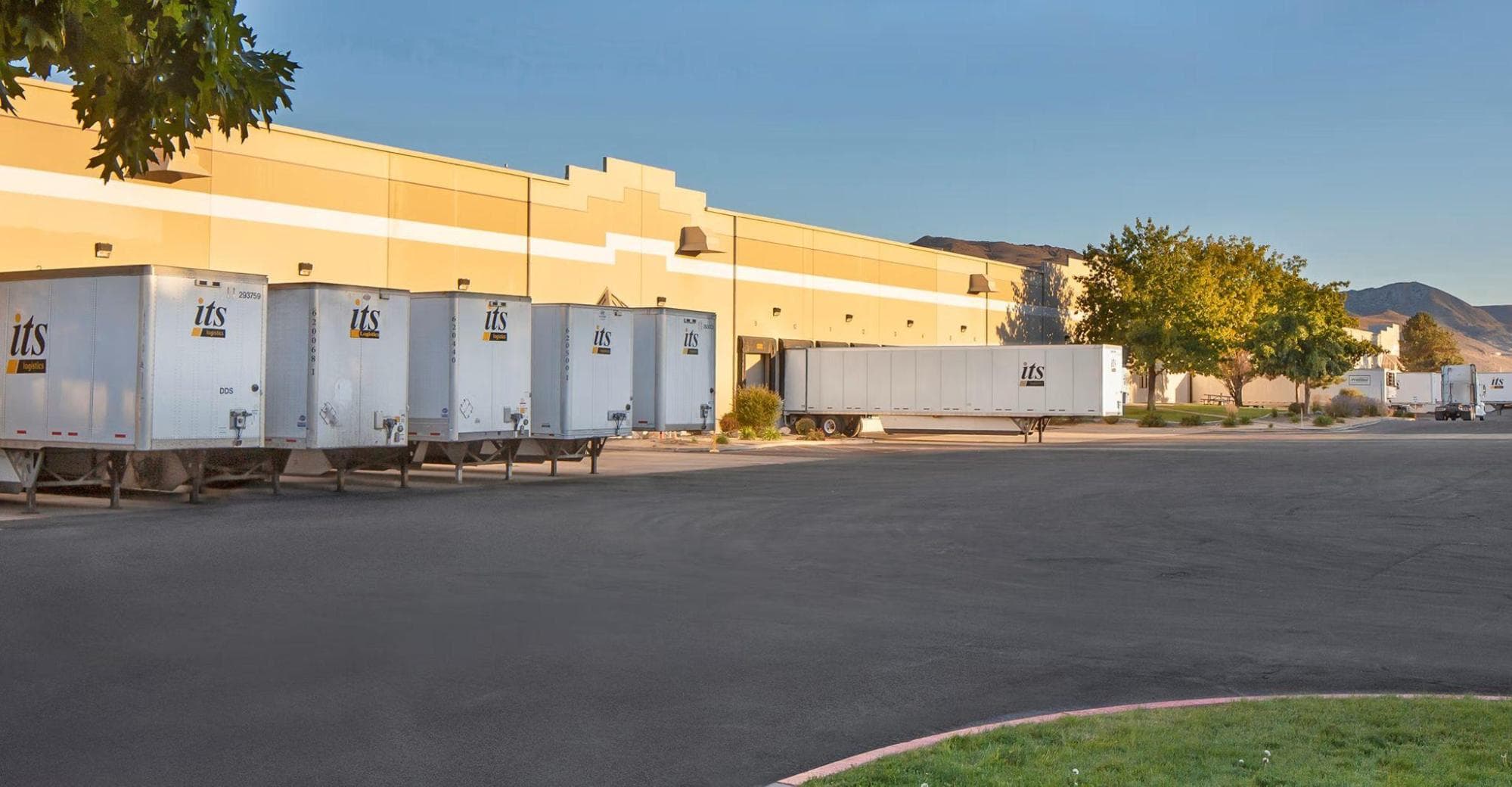
The Freight Market Is Approaching a Breaking Point
For the better part of three years, shippers have enjoyed something rare in logistics: favorable conditions. Rates were low, capacity was plentiful, and transportation costs stayed predictable. But according to Ryan Martin, president of distribution and fulfillment at ITS Logistics, that era is drawing to a close — and many shippers are dangerously unprepared for what comes next.
In a candid interview with FreightWaves, Martin delivered a blunt assessment of where the freight market is headed. "Pain is ahead on the transportation side," he said. "We've been seeing the signs building for months. Shippers don't typically believe it until they start to feel the pain." For large retailers and brands still budgeting for a flat year in transportation spend, that pain may arrive sooner than expected.
Why the Good Times Are Ending for Shippers
The freight market is currently perched on the edge of what Martin describes as a capacity-driven precipice. Several converging forces are shrinking the available carrier base at the same time that freight demand remains a volatile wildcard. Any sudden spike in shipping volumes will not draw the same rapid carrier response that helped stabilize markets during previous demand surges.
According to Martin, the warning signs have been building for months. The key factors stacking up against shippers include:
- Driver exits: Experienced drivers are leaving the industry faster than new recruits can replace them, reducing the available labor pool for carriers of all sizes.
- Carrier closures: Smaller and mid-sized carriers that survived on thin margins during the soft rate environment are shutting down, removing capacity that cannot easily be restored.
- Regulatory scrutiny: Increased oversight of non-domiciled operators is forcing compliance costs upward and pushing some carriers out of the market entirely.
- Surging fuel costs: Rising fuel prices are compressing carrier margins and accelerating the exit of operators who cannot absorb the added expense.
Together, these pressures are quietly eroding the supply side of the freight equation. When demand picks back up — and it will — the market will not have the same cushion of available capacity it has had in recent years.
The Great Inventory Cleanup and Its Hidden Costs
To fully understand where the freight market is headed, it helps to look back at where it has been. The post-pandemic inventory overhang that plagued retailers and brands for years is finally clearing. But the process of working through those excesses has left lasting scars, and the math is catching up with companies that have not yet adjusted their approach.
Martin has watched brands wrestle with a harsh new financial reality: products that once cost a dollar to source now run approximately $1.52, driven by tariffs, higher transportation rates, and rising manufacturing costs. That cost increase turns excess inventory from a manageable inconvenience into a significant cash-flow drain.
"Every customer is pushing for better inventory turns due to the cost of inventory increasing, whether that be through tariffs, transportation rates, etc.," Martin explained. "Customers need to manage their turns much closer from a cash flow standpoint and be a lot more on point with what they buy."
During the pandemic, companies could not manufacture product fast enough. They bought in massive volumes, shipments arrived in waves, and goods kept selling — until suddenly they didn't. By 2022 and 2023, inventories had ballooned, warehouse space was overflowing, and shippers were doing everything they could to avoid bringing in more product. That overhang suppressed freight demand significantly, keeping rates low and capacity accessible.
Now that the cleanup is largely complete, purchasing patterns are beginning to normalize. As inventory levels return to healthier territory, inbound freight volumes are rising again — exactly at the moment when carrier capacity is under pressure from multiple directions.
What Shippers Budgeting Flat Are Getting Wrong
One of Martin's central concerns is the disconnect between how shippers are planning their transportation budgets and what the market is actually telling them. Many large retailers and brands are entering the planning cycle with flat year-over-year assumptions baked into their transportation spend. That approach may have been defensible for the past two or three years. It is not defensible now.
The soft freight market that enabled flat budgets was itself a temporary condition — a product of excess capacity, depressed demand, and an unusual convergence of market forces. As those forces reverse, shippers who haven't built flexibility or contingency into their transportation budgets will find themselves either overpaying at the last minute to secure capacity or failing to move their goods at all during peak periods.
The risks are particularly acute for shippers who rely heavily on spot market coverage rather than contracted capacity. When the market tightens, spot rates are typically the first and sharpest indicator of the shift. Shippers without strong carrier relationships or committed contract capacity will feel the squeeze most acutely.
How Shippers Can Prepare for the Capacity Crunch
The capacity reckoning that Martin is describing is not inevitable doom — it is a foreseeable challenge that well-prepared shippers can navigate with the right strategy. The key is acting before the pain arrives rather than waiting until it forces reactive decisions.
- Reassess transportation budgets now: Build in meaningful contingency for rate increases rather than assuming flat costs. Work with logistics partners to model scenarios based on tighter capacity conditions.
- Strengthen carrier relationships: Prioritize building committed, contractual relationships with reliable carriers rather than relying on spot market access when capacity is available.
- Improve inventory visibility: Tighter inventory management reduces the need for emergency or expedited freight moves, which are disproportionately expensive in a tight market.
- Diversify your carrier network: Relying on a narrow group of preferred carriers increases vulnerability when those carriers are capacity-constrained. Expanding the network provides more options when demand spikes.
- Plan lead times more conservatively: In a tighter capacity environment, last-minute shipping requests become expensive exceptions rather than standard operations. Longer planning horizons create more flexibility.
The Bottom Line: The Reckoning Is Coming
Ryan Martin's warning from ITS Logistics is not alarmist — it is grounded in a sober reading of market data that most shippers have not yet fully absorbed. Driver exits, carrier closures, regulatory pressure, and rising fuel costs are compressing the supply of freight capacity at the same time that post-pandemic inventory cleanup is pushing demand back toward normal levels. The combination is a formula for tighter markets and higher rates.
Shippers who spent the past three years benefiting from rock-bottom transportation costs and abundant capacity need to recognize that those conditions were exceptional, not permanent. Budgeting flat in this environment is not a neutral choice — it is a bet that the market won't change, and right now, that is not a bet worth making.
The shippers who will navigate the coming capacity crunch most successfully are the ones who take Martin's warning seriously today, adjust their planning assumptions, and build the carrier relationships and operational flexibility they will need when the market turns. The signs are already building. The question is whether shippers will act before they start to feel the pain.