
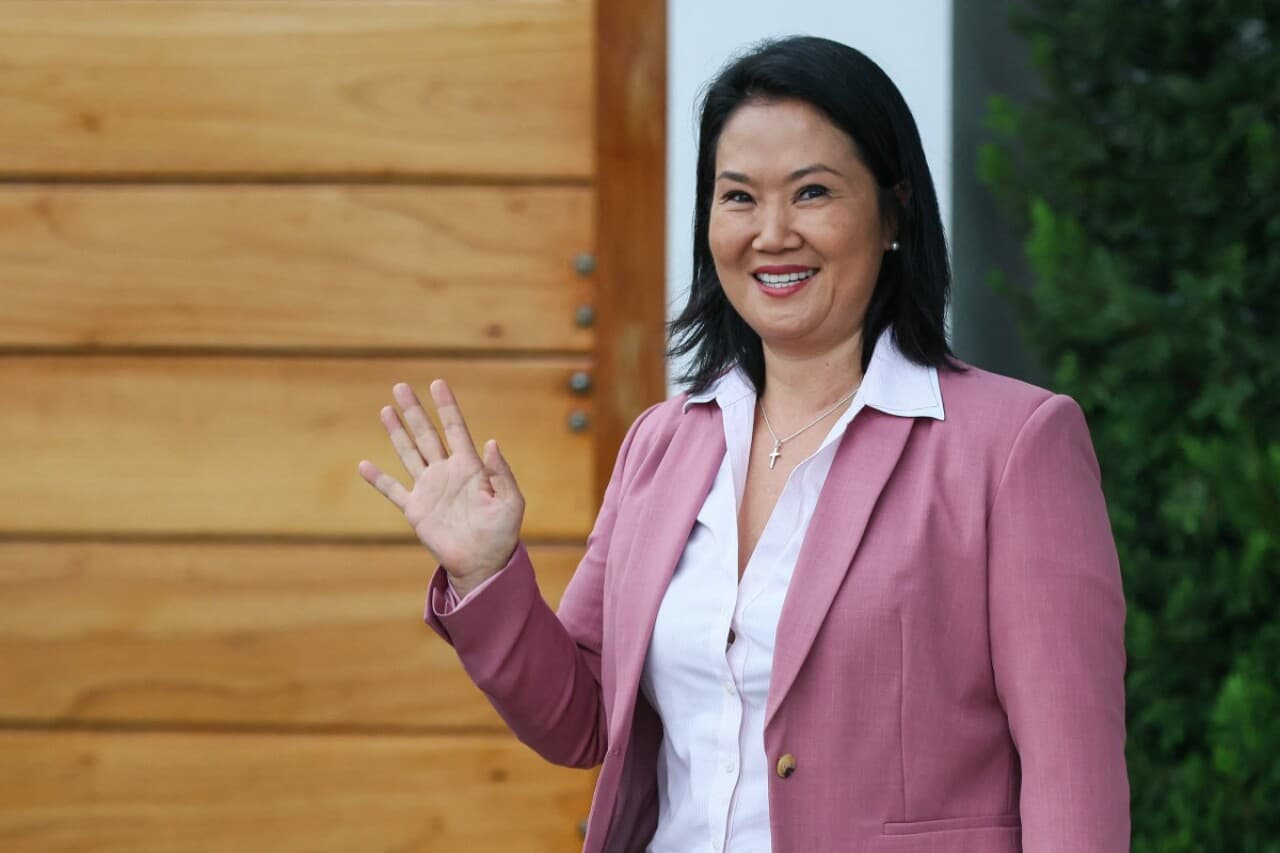
Keiko Fujimori Set to Win Peru's Presidency in One of Latin America's Closest Modern Elections
In what has become one of the most fiercely contested presidential elections in recent Latin American history, right-wing candidate Keiko Fujimori has emerged as the likely winner of Peru's presidential runoff. With nearly all votes counted, Fujimori holds a lead that election analysts and officials say is now mathematically insurmountable, positioning her for a historic return of the Fujimorista political movement to the country's highest office — more than two decades after the fall of her father's controversial government.
The Numbers: A Razor-Thin Margin That Tells a Nation's Story
According to data published by Peru's Oficina Nacional de Procesos Electorales (ONPE), the national electoral body, Fujimori secured 50.118% of the vote compared to 49.882% for leftist rival Roberto Sánchez, with 99.86% of electoral records (actas) already tallied. That translates to a lead of just over 43,000 votes out of more than 19 million votes counted — a margin that is narrow by any standard, but one that has proven decisive.
With only 39,300 votes remaining across 131 outstanding electoral records, the arithmetic simply does not support a Sánchez comeback. Election experts have confirmed that the gap is beyond reach, making Fujimori the de facto president-elect even before the formal announcement of official results. The second round of voting — known in Peru as the segunda vuelta — took place on June 7th, and the country has been on edge ever since as votes were painstakingly tallied.
Official results from the Jurado Nacional de Elecciones (JNE), Peru's national electoral tribunal, are expected to be published within the coming days, according to a spokesperson who confirmed the timeline to AFP.
What a Fujimori Victory Means: The Return of Fujimorismo
A Keiko Fujimori presidency would represent far more than a simple political transition. It would mark the return of Fujimorismo — the political movement built around the legacy and ideology of her father, former president Alberto Fujimori, who governed Peru from 1990 to 2000. Alberto Fujimori's decade in power was defined by a mix of economic stabilization, a fierce crackdown on the Shining Path terrorist organization, and deeply troubling authoritarian practices that ultimately led to his fall from power amid corruption and human rights scandals.
Keiko Fujimori, now 51 years old, has spent years attempting to distance herself from the darker chapters of her father's legacy while simultaneously rallying a loyal political base that credits the elder Fujimori with rescuing Peru from economic collapse and political violence in the 1990s. This election represents her third presidential bid — she narrowly lost runoffs in both 2011 and 2016 — making this apparent victory the culmination of a long and turbulent political journey.
Her supporters argue that she offers Peru stability, economic pragmatism, and a tough stance on crime and security — qualities they feel are urgently needed in a country that has experienced significant political instability over the past decade, cycling through multiple presidents amid impeachments, scandals, and crises.
Sánchez Refuses to Concede: Allegations of Fraud and International Appeals
The road to a final official result, however, is unlikely to be smooth. Leftist candidate Roberto Sánchez has made clear that he does not intend to quietly accept the outcome. In a press conference held Tuesday morning, Sánchez announced he would not recognize a Fujimori government, alleging what he described as "a serious interference with the electoral process," with particular focus on irregularities he claims occurred during voting by Peruvians living abroad.
Sánchez has gone further, requesting the annulment of all overseas votes, a move that, if granted, could theoretically alter the final result. He has also announced his intention to bring his concerns before international bodies and has called for a new public mobilization in Lima on Saturday, urging his supporters to take to the streets in protest.
These allegations and the refusal to concede inject significant uncertainty into what should otherwise be a moment of democratic resolution for Peru. Election observers and international institutions will likely play an important role in validating or challenging the claims being made by the Sánchez camp in the days ahead.
A Nation Divided: The Political Landscape Behind the Vote
The closeness of this election reflects a Peru that is deeply and almost evenly divided along ideological, geographic, and socioeconomic lines. Fujimori drew much of her support from urban centers and coastal regions, as well as from voters aligned with conservative and business-friendly economic policies. Sánchez, on the other hand, found strong backing in rural highland and Amazonian communities, where poverty rates are higher and where left-wing promises of redistribution and social investment resonate strongly.
This urban-rural, coast-highlands divide is not new to Peruvian politics, but it has rarely been laid bare so starkly as it was in this election cycle. Whoever ultimately takes the presidency will govern a country in which nearly half the electorate voted for the opposing vision — a challenging mandate by any measure.
What Comes Next for Peru
In the immediate term, Peru awaits the official proclamation of results from the JNE, which is expected within days. Legal challenges filed by the Sánchez campaign will need to be reviewed and adjudicated by electoral authorities before a winner can be formally declared. Peruvian law provides a structured process for handling such complaints, and the JNE is expected to work through them methodically.
If Keiko Fujimori is confirmed as the winner, she will inherit a country facing serious challenges: economic recovery from the COVID-19 pandemic, persistent inequality, political fragmentation in Congress, and a deeply skeptical portion of the electorate. Her ability to build coalitions and govern from the center of a divided nation will be tested from day one.
For now, all eyes remain on Lima — and on the numbers — as Peru stands at a defining crossroads in its democratic history.