
Korea's Stock Market Is Acting Like a Meme Stock — And the World Is Watching
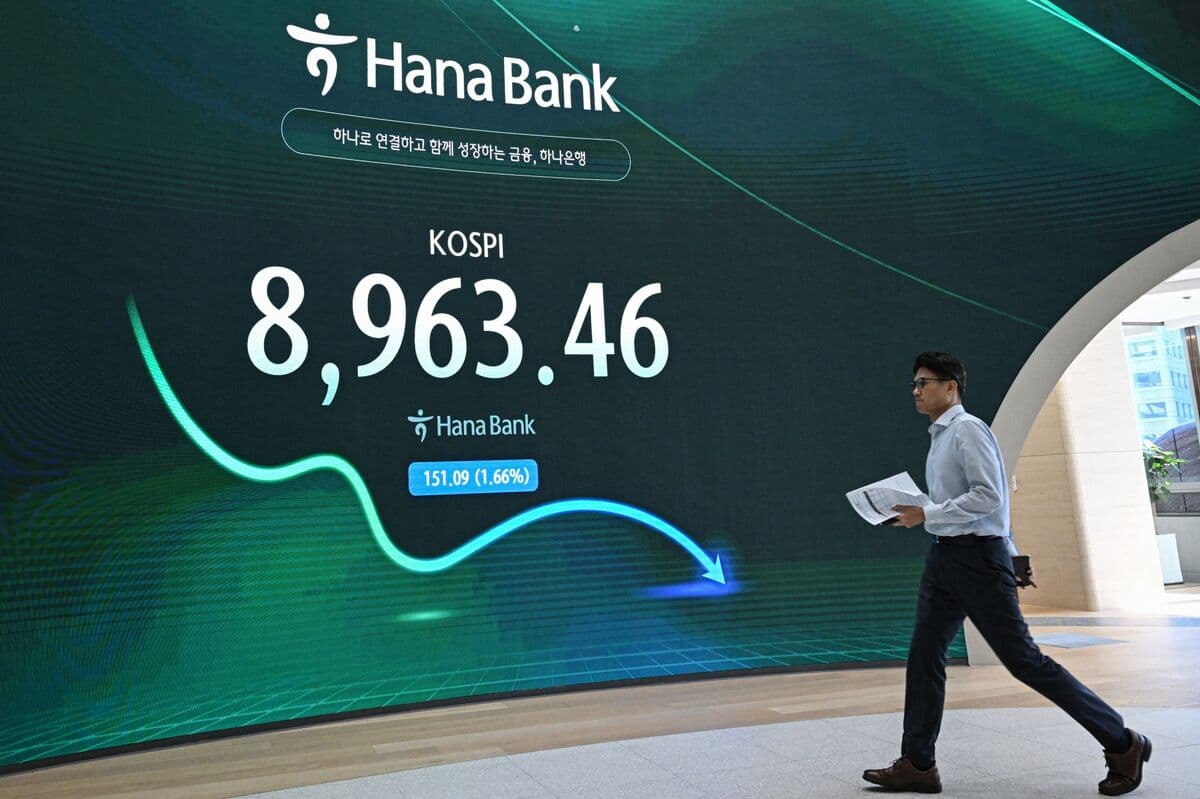
Something unusual is happening on the Korean peninsula — not in its geopolitics, but in its financial markets. South Korea's benchmark equity index has been experiencing intra-day price swings so dramatic and so erratic that seasoned investors and seasoned market analysts are scrambling for comparisons. The one they keep landing on? The meme-stock frenzy. That wild, retail-trader-fueled phenomenon that sent shares of GameStop, AMC, and Bed Bath & Beyond into the stratosphere — and then back down again — is now being invoked to describe the behavior of an entire national stock market. That should give every investor pause.
What Is Happening to the KOSPI?
The Korea Composite Stock Price Index, better known as the KOSPI, is South Korea's primary stock market benchmark. It tracks the performance of all common stocks listed on the Korea Exchange and is widely considered a reliable barometer of Asia's fourth-largest economy. For decades, it has been a relatively straightforward, if sometimes volatile, window into the health of Korean industrial giants like Samsung Electronics, Hyundai Motor, and SK Hynix.
But recently, the KOSPI has been behaving in ways that are far from straightforward. Extreme intra-day volatility — meaning the index is lurching sharply upward and downward within the same trading session — has become disturbingly routine. These are not the gentle fluctuations that characterize healthy price discovery. These are gut-wrenching, position-destroying swings that leave traders confused and risk managers reaching for antacids.
The scale of the moves has been significant enough that multiple market participants have begun making the comparison openly: this looks less like a mature emerging market and more like a heavily shorted small-cap stock caught in a Reddit-fueled short squeeze.
Why the Meme-Stock Comparison Matters
The meme-stock era of 2020 and 2021 was defined by a specific set of characteristics. Retail investors, often coordinating through social media platforms and online forums, drove extreme buying pressure in certain heavily shorted stocks. The resulting short squeezes created violent, non-fundamental price moves. Volatility was enormous. Traditional valuation metrics became temporarily irrelevant. And institutional investors found themselves caught badly off-guard.
When analysts apply that framework to an entire sovereign equity market, they are essentially saying that the normal rules of price discovery have broken down. They are suggesting that momentum, sentiment, and structural quirks — rather than earnings, economic data, and interest rate expectations — are driving prices. That is a deeply unsettling signal for any investor with exposure to Korean equities.
It also raises a broader question: if a G20 economy's benchmark index can exhibit meme-like behavior, what does that say about the structural vulnerabilities hiding beneath the surface of other markets around the world?
Potential Drivers Behind the Volatility Surge
Several factors may be contributing to the extraordinary price swings now being observed in Korean markets. Understanding them is essential for investors trying to navigate the turbulence.
- Retail investor participation: South Korea has one of the highest rates of retail stock market participation in the world. Korean retail traders, known colloquially as "ants," are highly active and increasingly sophisticated. They have shown a willingness to move collectively, which can amplify both upswings and downswings in unpredictable ways.
- Derivatives and leveraged products: The Korean market has a large and active derivatives ecosystem. Leveraged exchange-traded products and options can magnify market moves significantly, especially during periods of elevated uncertainty, as positions are forcibly unwound or hedged at scale.
- Global macro uncertainty: South Korea is a highly export-dependent economy, making it acutely sensitive to shifts in global trade dynamics, semiconductor demand cycles, and currency fluctuations. When the macroeconomic outlook shifts rapidly, Korean equities can reprice sharply and quickly.
- Foreign investor flows: Institutional foreign investors play a significant role in the KOSPI. When global risk appetite shifts — due to Federal Reserve policy, geopolitical tensions, or commodity price moves — foreign capital can exit Korean markets rapidly, exaggerating downward moves and creating disorderly conditions.
- Short-selling dynamics: South Korea has had an on-and-off relationship with short-selling restrictions. Periods of restricted or banned short-selling can distort price signals and contribute to the kind of one-sided momentum that characterizes meme-stock behavior.
What This Means for Investors
For international investors with Korean equity exposure — whether through direct holdings, ETFs tracking the KOSPI, or funds invested in Korean technology and industrial companies — the current environment demands heightened caution and a reassessment of risk parameters.
Volatility of this magnitude makes traditional position sizing dangerous. Stop-loss orders can be triggered on intra-day moves that later reverse completely. Valuation-based entry points can be reached and then blown through in minutes. The normal toolkit of disciplined long-term investing becomes difficult to apply when the market is behaving like a day-trading venue.
At the same time, extreme volatility always contains opportunity for those with the right preparation, the right time horizon, and the right risk tolerance. Markets that overshoot to the downside on panic often create genuinely attractive entry points for patient capital. The key is ensuring that a position can survive the journey without forcing a premature exit at the worst possible moment.
A Warning Sign Worth Taking Seriously
The meme-stock comparison being applied to South Korea's equity market is not a casual observation. It reflects a genuine deterioration in market quality — a departure from orderly, fundamentals-driven price discovery toward something more chaotic and sentiment-driven. Whether this is a temporary disruption or a sign of deeper structural fragility remains to be seen.
What is clear is that investors cannot afford to ignore it. When experienced analysts compare an entire national benchmark index to GameStop, the appropriate response is not amusement. It is vigilance. The Korean equity market is sending a signal. The question is whether the broader investment community is paying attention before the next sharp move — in whichever direction — arrives without warning.