
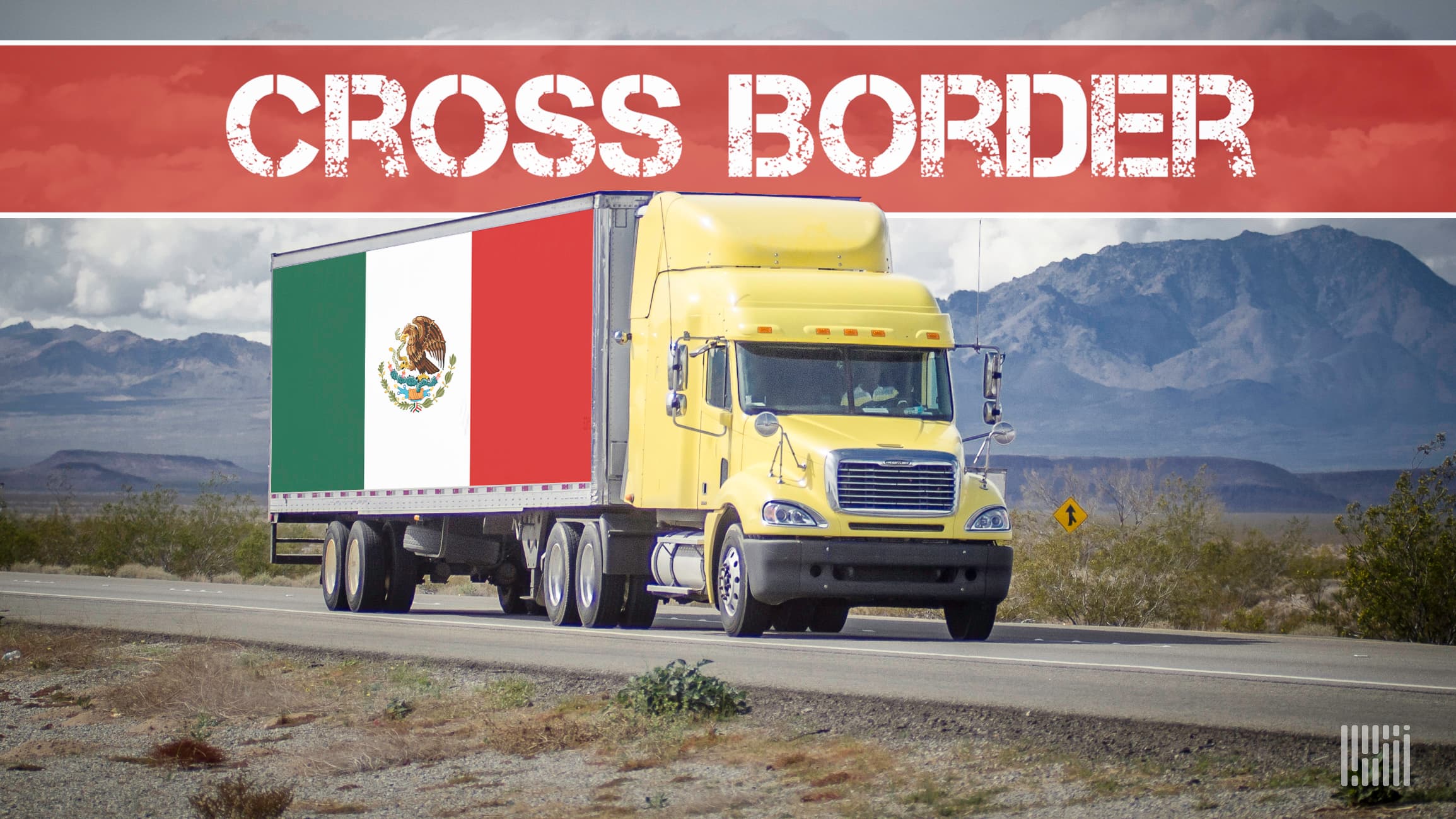
Laredo Summit Takes on the Future of US-Mexico Freight
The US-Mexico border has long been the backbone of North American trade, with Laredo, Texas, serving as the busiest inland port on the continent. As freight volumes continue to grow and regulatory pressures mount, industry leaders gathered this week to address two of the most pressing challenges reshaping cross-border logistics: the rise of automated, driverless freight corridors and the persistent controversy surrounding B-1 visa truck drivers. The 9th Annual Modernization of Cross-Border Trade conference, held in Laredo and hosted by Reliance Partners and Borderless Coverage, drew more than 500 of the industry's most influential voices to debate the path forward.
What Is the Proposed Laredo-Monterrey Automated Freight Corridor?
At the heart of Tuesday's panel discussion was a bold proposal: an automated freight corridor connecting Laredo, Texas, with Monterrey, Mexico — two cities that together form one of the most commercially vital trade arteries in the Western Hemisphere. The concept envisions driverless or semi-autonomous trucks operating along a dedicated route, potentially using US-based truck drivers to complete final delivery legs into Mexican territory.
The "Green Corridors" panel, moderated by Troy Ryley, president of Mexico operations for Echo Global Logistics, featured prominent voices from both sides of the border. Panelists included Marco Antonio González Valdez, secretary of agriculture and regional development for the Mexican state of Nuevo León; Jesus Ojeda, executive vice president of cross-border operations at Redwood Logistics; and José Minarro, managing director of Sunset Transportation's Laredo operations.
The discussion centered on a core challenge: how can the US and Mexico prepare their infrastructure, regulations, and workforce for sustained trade growth while simultaneously tackling congestion at border crossings, escalating compliance demands, and a worsening driver shortage on both sides of the border?
Why Automated Freight Corridors Matter for Cross-Border Trade
The potential of a dedicated automated freight corridor between Laredo and Monterrey is significant. Monterrey is Mexico's industrial capital and home to a growing cluster of nearshoring manufacturers, many of which supply US companies seeking to reduce dependence on overseas supply chains. As nearshoring accelerates — driven by trade policy shifts and supply chain resilience strategies — the freight volumes flowing through Laredo are expected to surge in the coming years.
Automated corridors could address several pain points at once. By reducing the reliance on human drivers for long-haul segments, the corridors could help offset the ongoing driver shortage that has constrained cross-border capacity for years. Dedicated freight lanes could also reduce congestion at border crossings, where delays already cost shippers millions of dollars annually in lost time and spoiled goods.
However, significant regulatory and infrastructure hurdles remain. Mexico's legal framework for autonomous vehicles on public roads is still evolving, and any cross-border automated corridor would require close coordination between US and Mexican federal agencies, state governments, and private stakeholders. Nuevo León's secretary of agriculture and regional development, Marco Antonio González Valdez, emphasized the importance of binational collaboration to make such a corridor viable within a realistic timeframe.
The B-1 Visa Truck Driver Debate: Searching for New Solutions
Alongside the automation discussion, the conference shone a spotlight on a long-running controversy in cross-border freight: the use of Mexican truck drivers operating under B-1 business visas to deliver loads into the United States. The B-1 visa was designed for business visitors, not commercial driving, and its use in cross-border trucking has created a gray area that regulators, carriers, and drivers have navigated carefully for years.
US-based truck drivers and labor advocates have argued that the practice undercuts American jobs and wages. Meanwhile, carriers contend that the current system is a practical workaround for a broken cross-border trucking framework that leaves freight stranded without efficient handoff solutions. The panel at the Laredo summit explored whether alternative visa categories, bilateral agreements, or new regulatory pathways could replace the B-1 workaround with a legitimate, sustainable solution.
Jesus Ojeda of Redwood Logistics and José Minarro of Sunset Transportation both underscored that any replacement system would need to balance workforce protections on the US side with operational realities that keep trade flowing smoothly. A solution that creates excessive delays or costs could erode the competitiveness of the Laredo corridor against other border crossings.
Broader Industry Developments: Cadogan Tate and Toyo Expansion
Beyond the summit's headline debates, the broader US-Mexico trade landscape continued to see notable developments this week. Fine art and luxury goods logistics firm Cadogan Tate expanded its Southwest footprint through an acquisition in Phoenix, Arizona, signaling growing confidence in the region's role as a logistics hub serving both domestic and cross-border markets.
In manufacturing news, Toyo announced plans for a $357 million solar manufacturing expansion in Houston, Texas. The investment reflects the broader trend of companies deepening their US production capacity — a trend closely linked to nearshoring and the reshaping of North American supply chains that is driving so much of the freight growth flowing through Laredo and other border crossings.
What the Laredo Summit Signals for the Future of Cross-Border Freight
The conversations at this year's Modernization of Cross-Border Trade conference reflect a broader truth about US-Mexico freight: the status quo is under pressure from multiple directions simultaneously. Automation, visa policy, nearshoring, infrastructure investment, and regulatory complexity are all converging at once, forcing carriers, shippers, and governments to think strategically about solutions that may have seemed distant just a few years ago.
- Automated freight corridors between Laredo and Monterrey could ease driver shortages and border congestion, but require significant regulatory coordination.
- The B-1 visa issue demands a durable policy fix that protects US workers while keeping cross-border trade efficient.
- Nearshoring growth is accelerating freight volumes and raising the stakes for getting border infrastructure right.
- Private sector investments in logistics and manufacturing — from Cadogan Tate to Toyo — show that capital is following the trade opportunity along the US-Mexico corridor.
As the industry continues to evolve, the dialogue happening in Laredo serves as a bellwether for where US-Mexico cross-border freight is headed. The decisions made today — on automation policy, visa frameworks, and infrastructure investment — will shape the efficiency and competitiveness of the busiest trade corridor in the Americas for decades to come.